Clear Sky Science · en
Latent profile analysis and predictive factors of learned helplessness among nursing students in clinical practice
Why this matters for future patient care
Nursing students are tomorrow’s bedside caregivers. Yet many struggle emotionally during their hospital internships, when they first face real patients, night shifts, and high expectations. This study from China looks closely at a hidden problem in that transition: “learned helplessness,” a pattern of feeling powerless and giving up. By uncovering which students are most at risk and what in their environment makes a difference, the research points to practical steps schools and hospitals can take to protect young nurses and, in turn, patient care.
When effort stops feeling worthwhile
Learned helplessness describes what happens when people repeatedly meet setbacks they feel they cannot change. Over time, they may stop trying, expect failure, and lose faith in the future. For nursing interns, that might look like dreading clinical practice, avoiding new tasks, or quietly accepting poor treatment from others. The authors surveyed 381 nursing students completing long hospital placements in Henan Province. Each student answered detailed questions about feelings of helplessness and hopelessness, their clinical learning environment, their self-esteem, and their background, such as gender, education level, and night-shift workload. 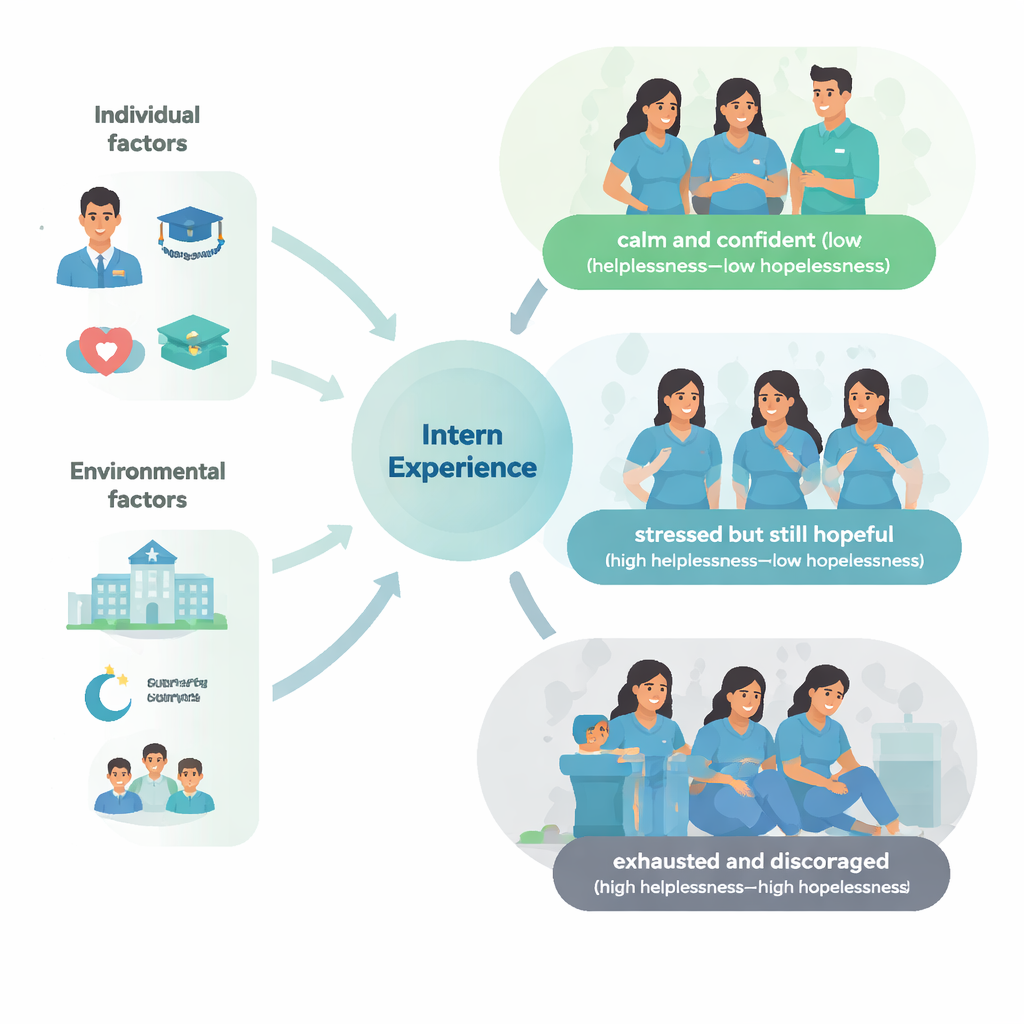
Three emotional paths through an internship
Instead of assuming all interns shared similar experiences, the researchers used a statistical method that groups people by pattern, not by averages. They found three clear profiles. One in three students fell into a “Low Helplessness–Low Hopelessness” group: they generally felt able to cope and did not see their future as bleak. Nearly half, however, belonged to a “High Helplessness–Low Hopelessness” group. These students struggled with day-to-day demands and often felt stuck, yet they had not fully given up on their careers. The remaining fifth were in a “High Helplessness–High Hopelessness” group, marked by strong feelings that nothing they did mattered and that the future looked grim. This last group appears to be at particular risk for poor mental health and dropping out of the profession.
Who is most at risk—and why
The team then asked what predicts membership in these groups. Several patterns emerged. Male students were much more likely to land in the “High Helplessness–Low Hopelessness” group, possibly reflecting gender stereotypes about nursing and awkward encounters in certain hospital departments. Students with associate degrees were far more likely to be in the most distressed “High Helplessness–High Hopelessness” profile, while those pursuing bachelor’s degrees tended to struggle but retain some hope. Night-shift load also mattered: working 4–6 nights a month increased the odds of high helplessness, while 0–3 nights was linked to healthier profiles. Beyond the hospital, a supportive family relationship strongly protected against helplessness, while strained family ties made things worse. 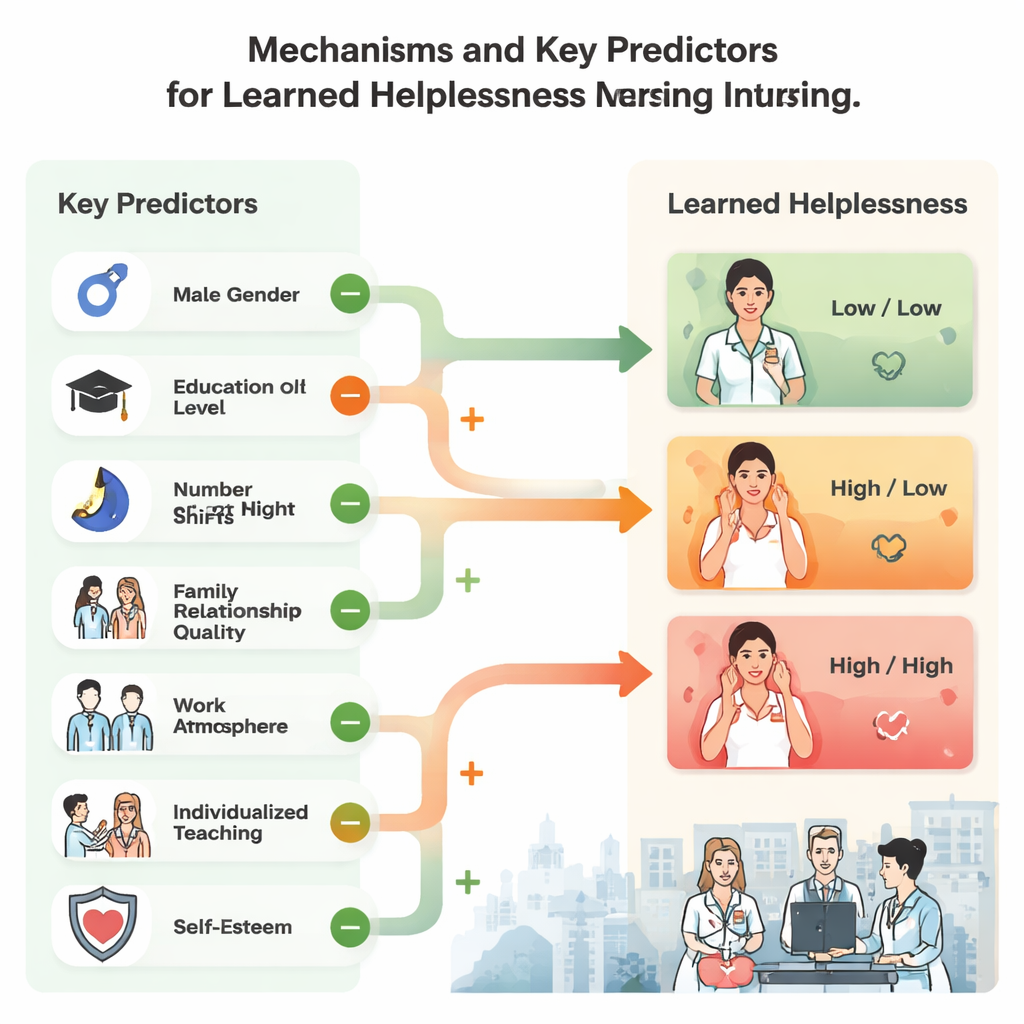
The buffering power of a good workplace and self-belief
Conditions in the clinical learning environment proved crucial. Students who described a positive work atmosphere—where staff treated them respectfully and teams functioned smoothly—were more likely to fall into the low-helplessness group. So were those who felt teaching was tailored to their needs rather than one-size-fits-all. Self-esteem played a similar protective role. Interns who believed in their own worth and abilities were less likely to slide into feelings of helplessness and despair, even when faced with stress. Together, these findings suggest that both the climate around students and their internal sense of self can tilt the balance between growth and burnout during training.
Turning insight into action
For a lay reader, the take-home message is straightforward: many nursing students suffer in silence during clinical training, and their sense of power—or powerlessness—shapes whether they stay in the profession. This study shows that helplessness is not random; it clusters into clear patterns that can be spotted and addressed. Limiting excessive night shifts, strengthening family and peer support, creating kinder and more structured teaching on the wards, and building students’ self-esteem could keep more young nurses hopeful and engaged. By investing in these changes, universities and hospitals can help ensure that the next generation of nurses enters the workforce not defeated, but confident and ready to care.
Citation: Li, X., Jiao, Y., Liu, Q. et al. Latent profile analysis and predictive factors of learned helplessness among nursing students in clinical practice. Sci Rep 16, 5354 (2026). https://doi.org/10.1038/s41598-026-37867-3
Keywords: nursing interns, learned helplessness, clinical learning environment, self-esteem, nurse burnout