Clear Sky Science · en
Smart CaCO3-coated probiotics relieve constipation by enhancing intestinal motility and modulating microbial enzymes in a loperamide-induced rat model
Why Gut-Friendly Pills Matter
Constipation is more than an occasional inconvenience; for many people it is a long‑term problem that brings pain, bloating, and a lower quality of life. While laxatives can offer quick relief, they are not ideal for everyday use and often ignore a deeper issue: an unhealthy balance of microbes living in the gut. This study explores a new way to deliver probiotics—the “good” bacteria—so that they survive the harsh journey through the stomach and can work where they are needed most: in the intestines.
A Protective Jacket for Good Bacteria
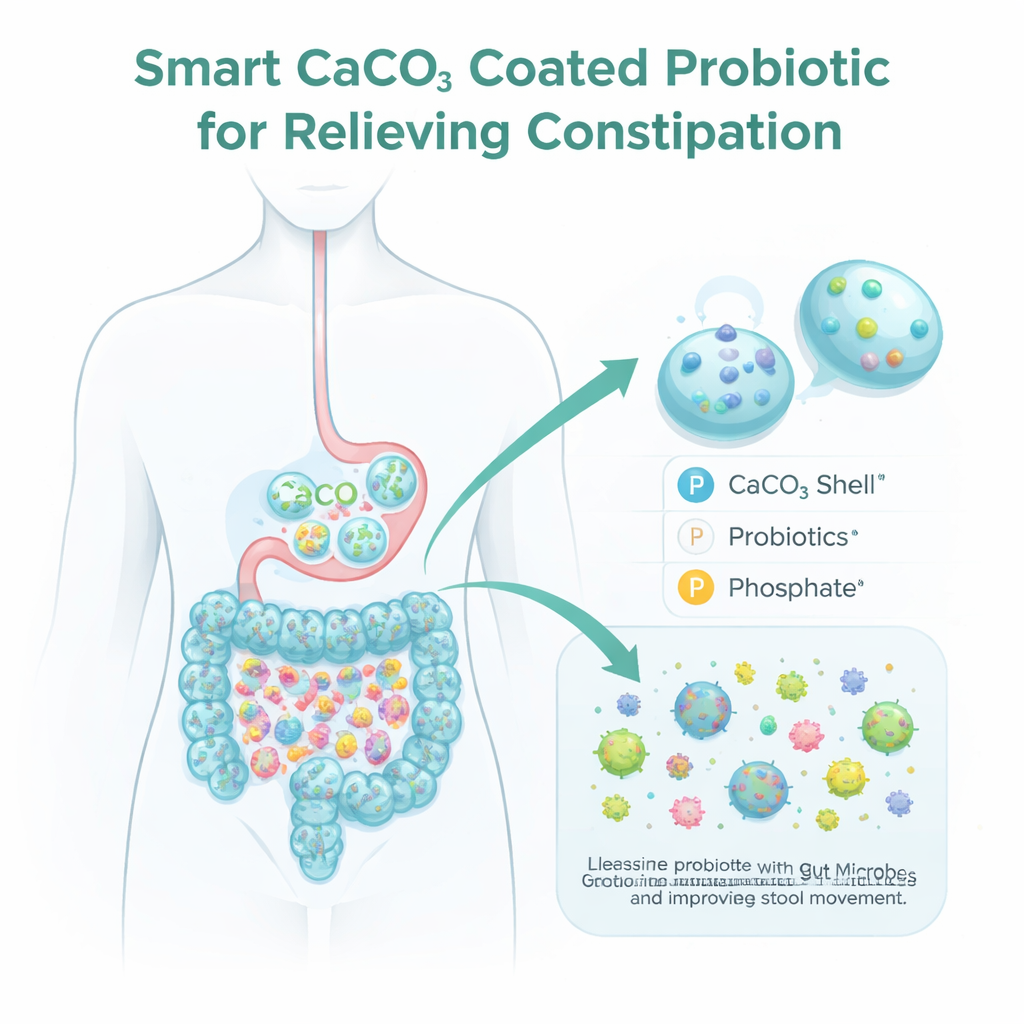
The researchers developed a simple but clever coating made of calcium carbonate, a mineral also found in seashells and some antacids. They used it to cover five different probiotic strains that are known to help with gut health and bowel movements. This one‑layer shell is designed to stay solid in the acidic stomach, keeping the bacteria safe, and then slowly break apart in the intestine where phosphate levels are higher. Once there, the coating changes its structure and releases the live bacteria. By relying on natural changes in acidity and minerals along the digestive tract, this “smart” delivery system aims to get more probiotics to the right place at the right time.
Putting the Idea to the Test
To see whether this coated probiotic system could actually ease constipation, the team used rats given loperamide, a drug that slows the gut and is commonly used to model constipation. The animals were divided into groups: some remained healthy, some received loperamide alone, and others received loperamide plus different doses of the coated probiotics. Over seven weeks, the scientists tracked body weight, food and water intake, stool frequency, stool moisture, and how quickly material moved through the intestines. They also examined chemical markers in the stool and blood that reflect gut microbial activity and inflammation.
Better Stools and a Faster Gut
Rats that received loperamide alone developed classic signs of constipation: fewer and smaller stools, drier feces, and a slower movement of contents through the intestines. In contrast, animals treated with the coated probiotics passed more stool pellets, produced heavier and moister stools, and showed a recovery of intestinal transit, especially at the highest dose. In the top‑dose group, stool moisture and movement through the gut were restored to nearly normal levels. Importantly, these benefits appeared without changes in overall body weight, food intake, or water intake, suggesting that the treatment improved bowel function without disturbing general health.
Tuning Gut Chemistry, Not Just Movement
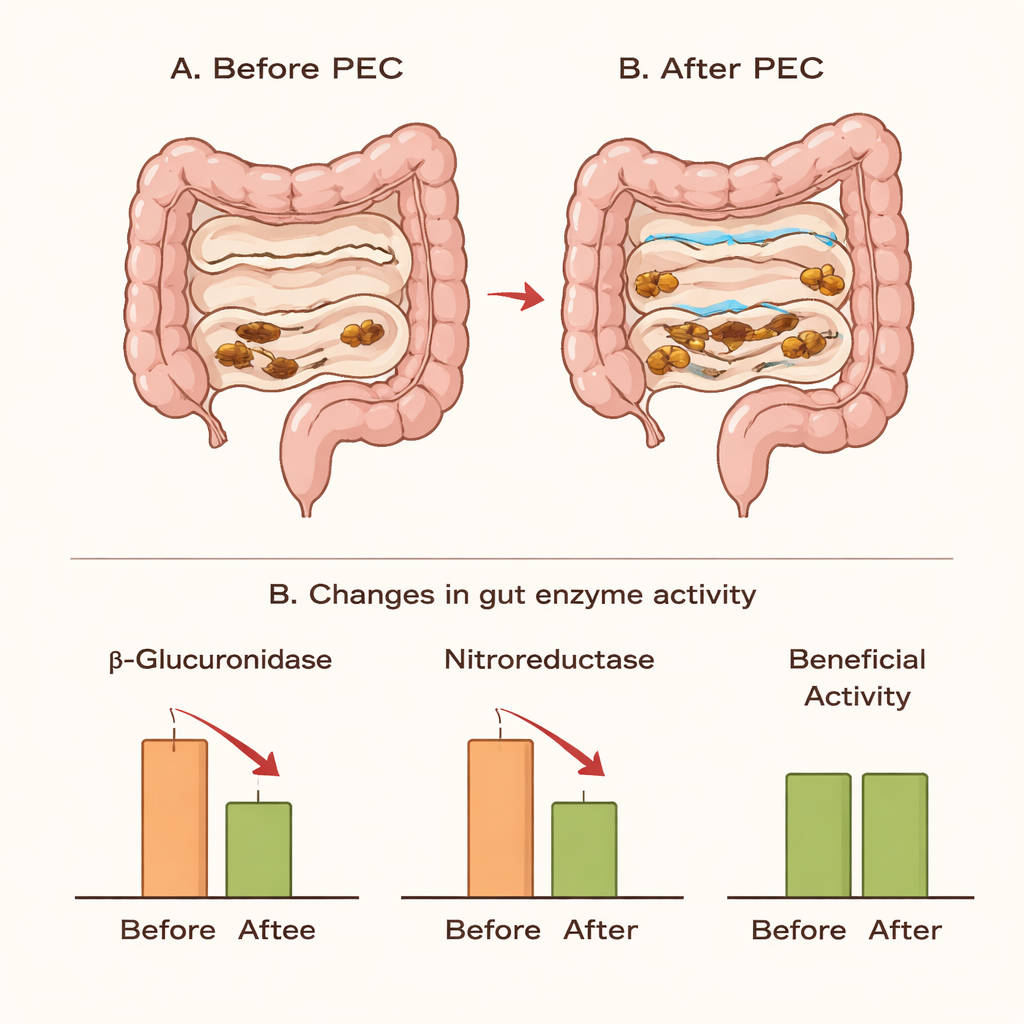
The study also looked at enzymes produced by gut microbes that can either harm or help the body. Under constipated conditions, enzymes like β‑glucuronidase and nitroreductase tend to increase and are linked to the formation of toxins and cancer‑related compounds. The coated probiotics selectively lowered these harmful enzyme activities, while leaving a helpful enzyme, β‑glucosidase, unchanged. This pattern suggests that the treatment may nudge gut chemistry in a healthier direction rather than wiping out microbial functions across the board. Blood markers of inflammation showed a slight, though not statistically solid, trend toward improvement, hinting that better bowel function and a healthier microbiome may also ease whole‑body stress over time.
What It Means for People with Sluggish Bowels
Overall, this work shows that giving probiotics a mineral “jacket” can help them survive the stomach and act more effectively in the intestine, at least in this animal model. The coated probiotics improved stool frequency, softened hard stools, sped up intestinal transit, and toned down certain harmful microbial enzymes, bringing many measures close to normal. The study does not yet prove how much of the benefit comes from the coating itself versus the probiotics, and it was done in rats, not humans. Still, the approach points toward future foods or supplements that deliver friendly bacteria more reliably and could offer a gentler, microbiome‑friendly option for people struggling with chronic constipation.
Citation: Jeong, Sn., Kim, MJ. Smart CaCO3-coated probiotics relieve constipation by enhancing intestinal motility and modulating microbial enzymes in a loperamide-induced rat model. Sci Rep 16, 7040 (2026). https://doi.org/10.1038/s41598-026-37864-6
Keywords: constipation, probiotics, gut microbiome, drug delivery, calcium carbonate