Clear Sky Science · en
High prevalence of iron deficiency and predictive value of nutritional risk scores in critically ill geriatric emergency patients: a prospective cross-sectional study
Why this matters for older patients in the ER
As people live longer, more older adults arrive in hospital emergency rooms with complex, serious illnesses. Many of them feel weak, short of breath, or confused—and behind these symptoms there is often a hidden problem: not enough iron and poor nutrition. This study asks how common iron deficiency really is in critically ill older patients in a busy emergency department, and whether simple bedside nutrition scores can flag who is most likely to be iron deficient and in need of further testing.
A closer look at iron in very sick older adults
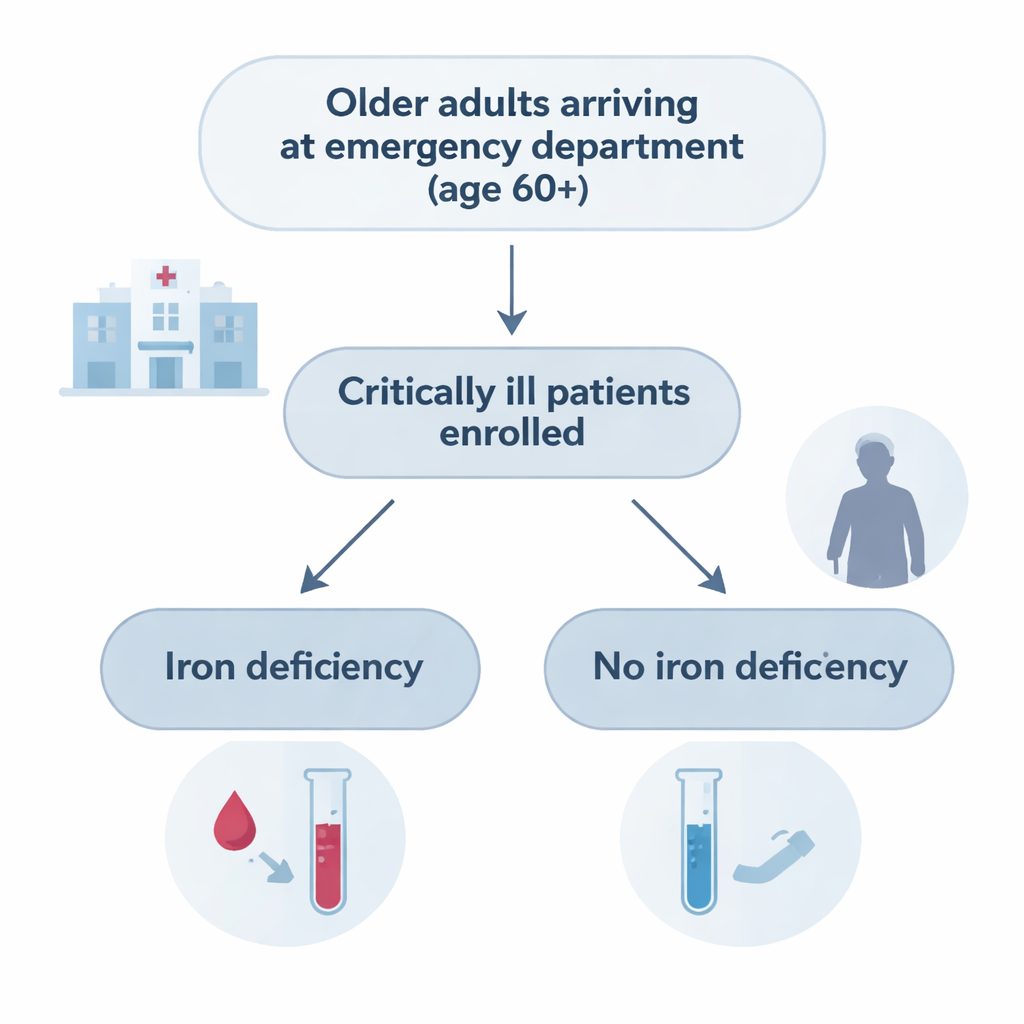
Iron is best known for its role in making red blood cells, but it also powers muscles, the brain, and the heart. When iron is low, people can feel tired, short of breath, and mentally foggy. The researchers followed 443 critically ill patients aged 60 and older who were treated in the resuscitation area of a major Beijing emergency department. These patients had conditions such as heart failure, kidney injury, strokes, severe infections, or breathing failure. Within 48 hours of arrival, blood tests were taken to measure iron stores and other markers, and doctors also rated each patient’s nutrition risk using two standard tools commonly used in intensive care and hospital wards.
How common was hidden iron shortage?
The team defined iron deficiency using a combination of blood tests that look at stored iron (ferritin) and how much iron is actually available in the bloodstream. They found that nearly half of these very sick older patients—47.4 percent—had iron deficiency. Anemia, or low red blood cell levels, was also frequent, affecting just over half of the group. Iron deficiency was more common among those with anemia than those without, but it also appeared in many patients whose red blood cell counts were still within the usual range. People with iron deficiency tended to have lower hemoglobin, lower blood protein (albumin), and lower vitamin B12 levels, all of which point to fragile nutrition status.
Nutrition scores as early warning signs
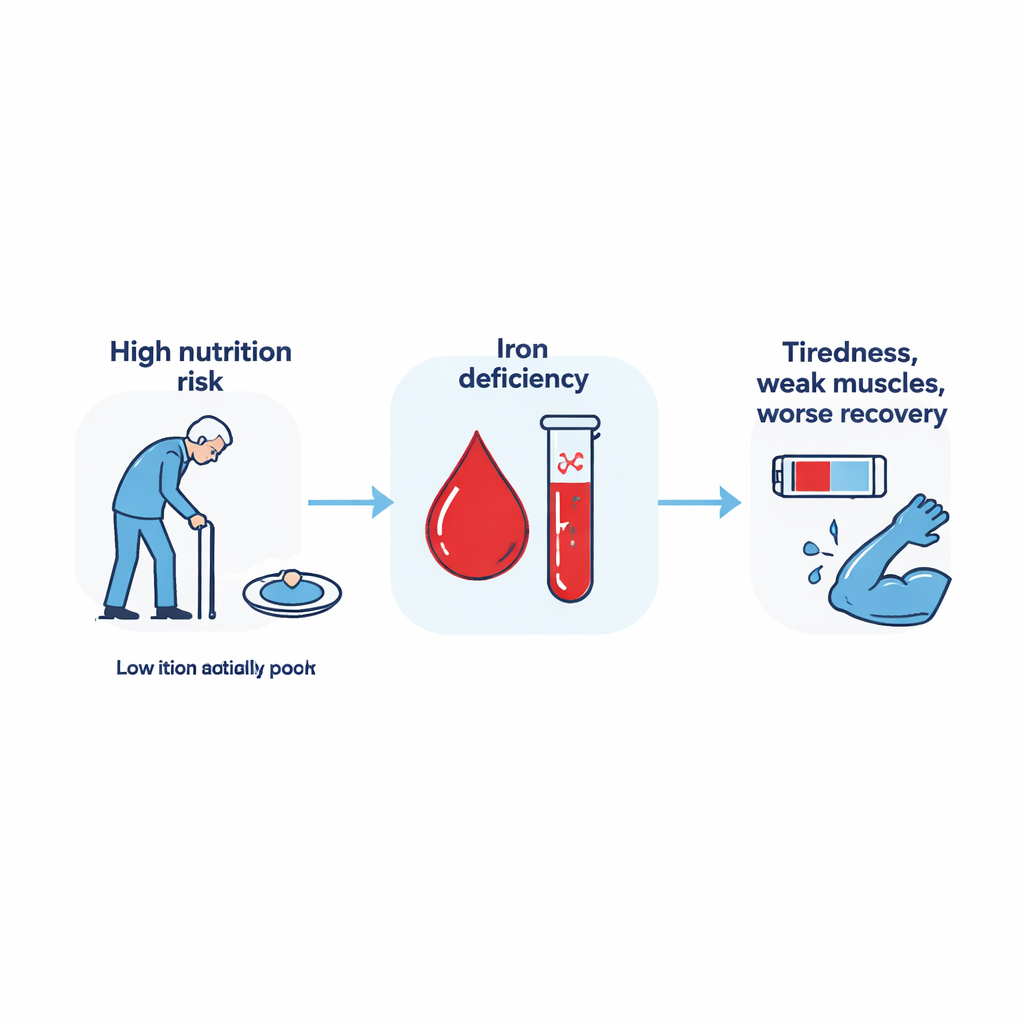
Because emergency departments are fast-paced, doctors need quick ways to recognize which patients are at highest risk of problems like iron deficiency. In this study, every patient received two simple bedside ratings: the mNUTRIC score, designed for critically ill patients, and the NRS-2002 score, widely used in hospitals to screen for nutrition problems. The researchers showed that higher scores on both tools went hand in hand with iron deficiency, even after accounting for other factors. Patients with worse nutrition scores were much more likely to be iron deficient, and lower albumin levels also signaled higher risk.
Which tools worked best?
The team then tested how well each measure could predict who actually had iron deficiency. They used a standard approach that looks at how accurately a test separates high- and low-risk patients. The mNUTRIC score performed the best: a score of 4 or more correctly captured about four out of five patients with iron deficiency while still avoiding many false alarms. The more general NRS-2002 score and blood albumin level were also helpful, but not as strong. This suggests that a tool originally created to guide nutrition support in intensive care can also guide decisions about checking iron status in older adults who are critically ill in the emergency room.
What this means for patients and families
For families and patients, the main takeaway is that iron deficiency is extremely common—but often silent—among older people who are severely ill in emergency departments. Poor nutrition and iron shortage often travel together and may contribute to weakness, slower recovery, and poorer quality of life. The study suggests that when an older loved one is critically ill and scores high on a nutrition risk tool like mNUTRIC, doctors should strongly consider checking iron levels. While this research does not yet prove that treating iron deficiency improves survival or shortens hospital stays, it makes a clear case for routine iron screening in high-risk older patients. Earlier recognition opens the door to timely treatment and, potentially, better recovery.
Citation: Zhang, C., Liu, Y., Li, S. et al. High prevalence of iron deficiency and predictive value of nutritional risk scores in critically ill geriatric emergency patients: a prospective cross-sectional study. Sci Rep 16, 6707 (2026). https://doi.org/10.1038/s41598-026-37859-3
Keywords: iron deficiency, malnutrition, older adults, emergency care, nutrition screening