Clear Sky Science · en
The effect of light quality on growth, photosynthetic performance and essential oil content of Dracocephalum moldavica in indoor cultivation production
Why the Color of Light Matters for Indoor Herbs
Indoor farms and kitchen grow racks often rely on red and blue LED lamps to raise herbs and leafy greens. But how much red, how much blue, and does the exact mix really matter for the flavor and health-boosting compounds in our plants? This study explored those questions using Dracocephalum moldavica, an aromatic mint-family herb valued for its essential oil, antioxidants, and traditional medicinal uses. The researchers tested different colors of LED light to find which recipe best boosts growth, photosynthesis, and oil content in a tightly controlled indoor setting.
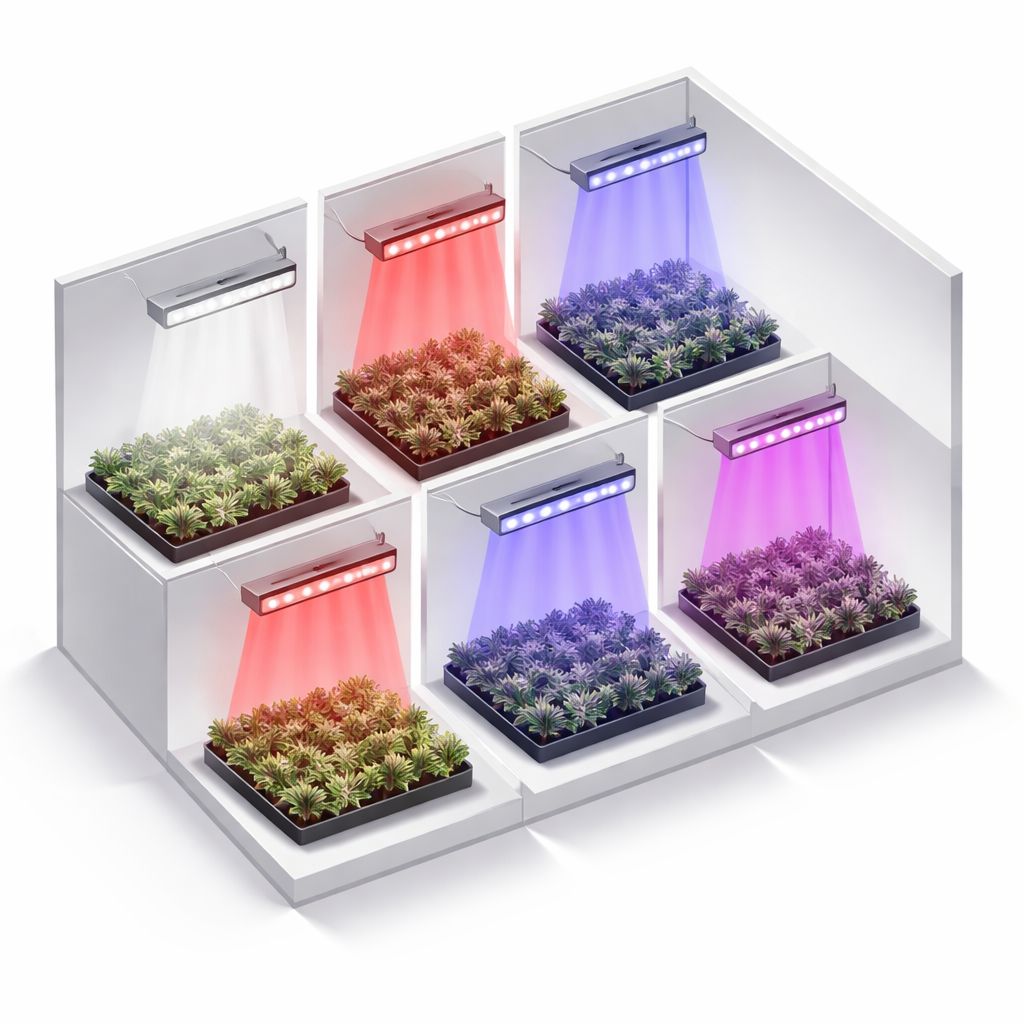
Testing Different Colors in a Plant Factory
The team grew D. moldavica plants for 90 days in a growth chamber, using hydroponic-style pots and a standard nutrient solution. They compared six light setups: pure white, pure red, pure blue, and three red–blue mixes with 70:30, 50:50, and 30:70 red-to-blue ratios, all at the same brightness and day length. By isolating light color while keeping temperature, nutrients, and light intensity constant, they could see how the “quality” of light alone shaped plant form, photosynthetic behavior, and production of valuable chemicals like phenols and essential oils.
Growth: Tall vs. Strong, and Why Mixes Win
The results showed that not all colors grow the same plant. Red light alone produced the tallest plants, but they were not the heaviest or most robust. In contrast, the mix with 70% red and 30% blue produced the greatest fresh and dry mass of shoots and roots, as well as the largest leaf area. Blue light on its own gave the smallest shoot biomass. In practical terms, this means that a plant may look impressively tall under red lamps but still be relatively weak and less leafy, while a balanced red–blue mix builds a fuller, more productive canopy—crucial for growers who sell fresh biomass or leafy herbs.
How Light Color Tunes the Photosynthetic Engine
To understand why some lights worked better, the researchers examined the leaves’ green pigments and their light-harvesting machinery. The 70:30 red–blue mix led to the highest levels of chlorophyll a and b, which directly capture light for photosynthesis. Detailed fluorescence tests—essentially a health check of the photosynthetic engine—showed that red light alone overstressed the system. Under pure red, key efficiency indicators dropped and more absorbed energy was wasted as heat or lost, a pattern linked to “red light syndrome,” in which leaves can become deformed and photosynthesis impaired. Adding blue light restored balance: in the 70:30 mix, the plants showed better electron transport, less energy loss, and healthier photosystem performance, meaning they used light more efficiently instead of being damaged by it.
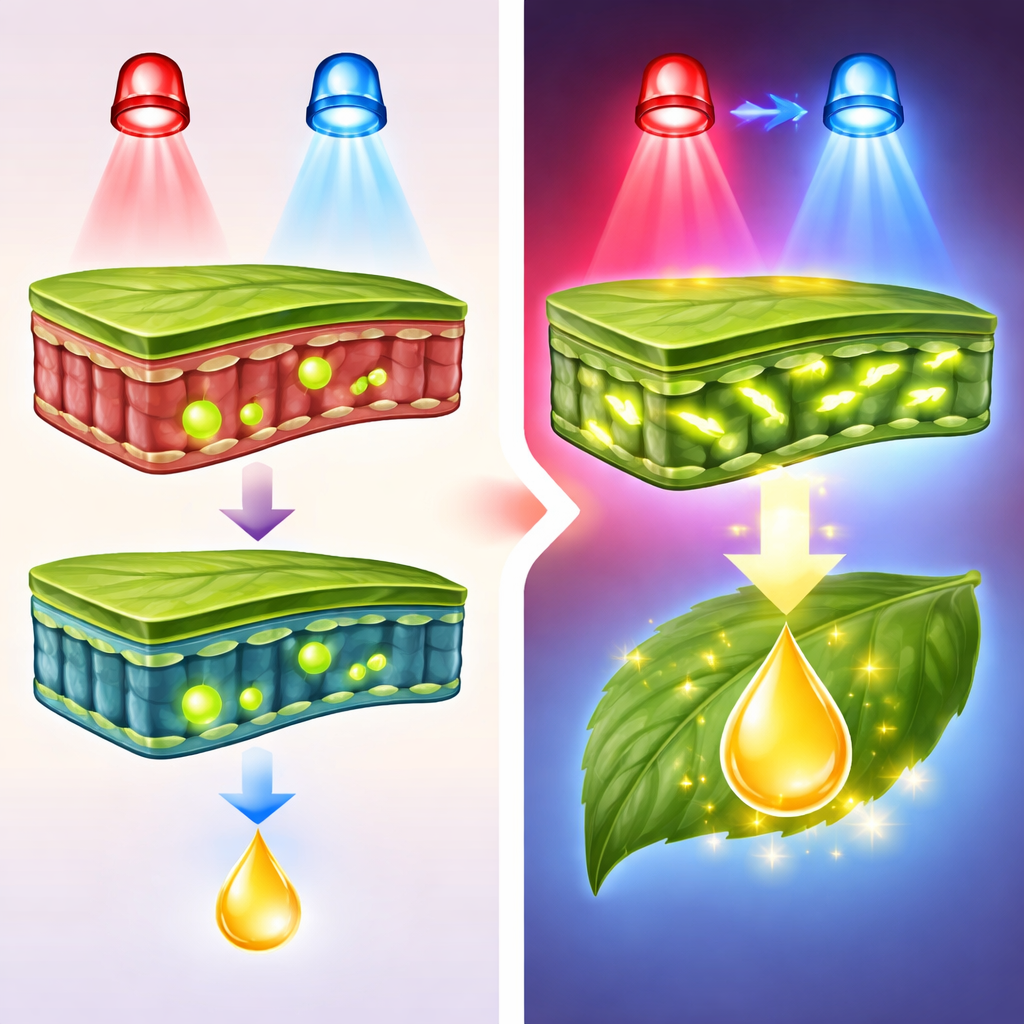
Flavor, Antioxidants, and Essential Oils
Beyond size and color, the study focused on compounds that matter to consumers and the herbal industry. Total phenolic content and antioxidant activity—both associated with plant defense and potential health benefits—peaked under the 70:30 red–blue mix, followed closely by white light and the 50:50 red–blue combination. Red light alone and a blue-heavy mix produced the lowest phenolic levels. The essential oil yield told an even clearer story: plants grown under 70% red and 30% blue produced almost four times more oil than those under pure blue, and more than double the oil of plants under white light. This suggests that the right spectrum does not simply make plants bigger; it also nudges their chemistry toward producing more fragrant and biologically active oils.
What This Means for Indoor Growers
For home gardeners, vertical farms, and medicinal herb producers, the message is straightforward: light color is a powerful tool. Pure red or pure blue LEDs may look striking, but they are not ideal on their own for D. moldavica. A blend dominated by red but enriched with some blue—around 70% red and 30% blue—gave the best combination of vigorous growth, efficient photosynthesis, high antioxidant levels, and maximum essential oil content. In other words, carefully tuned red–blue LED lighting can turn the same plant into a more productive, more aromatic, and potentially more healthful crop, simply by adjusting the color balance of the light.
Citation: Nasrabadi, H.N., Zamanipour, M. & Moradi, M. The effect of light quality on growth, photosynthetic performance and essential oil content of Dracocephalum moldavica in indoor cultivation production. Sci Rep 16, 7081 (2026). https://doi.org/10.1038/s41598-026-37845-9
Keywords: LED grow lights, indoor herb cultivation, plant essential oils, light spectrum effects, Dracocephalum moldavica