Clear Sky Science · en
Yeast prebiotics mitigate lead toxicity in Nile tilapia through physiological and ultrastructural improvements
Why cleaner fish matter to your dinner plate
Farmed fish such as Nile tilapia are a growing source of affordable protein worldwide, especially in regions where other animal foods are scarce or costly. But when fish ponds are contaminated with heavy metals like lead from industrial or agricultural runoff, those pollutants can build up in fish organs and fillets, posing risks to both animal welfare and human health. This study explores a practical question with real-world consequences: can a simple feed ingredient made from baker's yeast help protect fish from lead in their water and reduce how much ultimately reaches our plates? 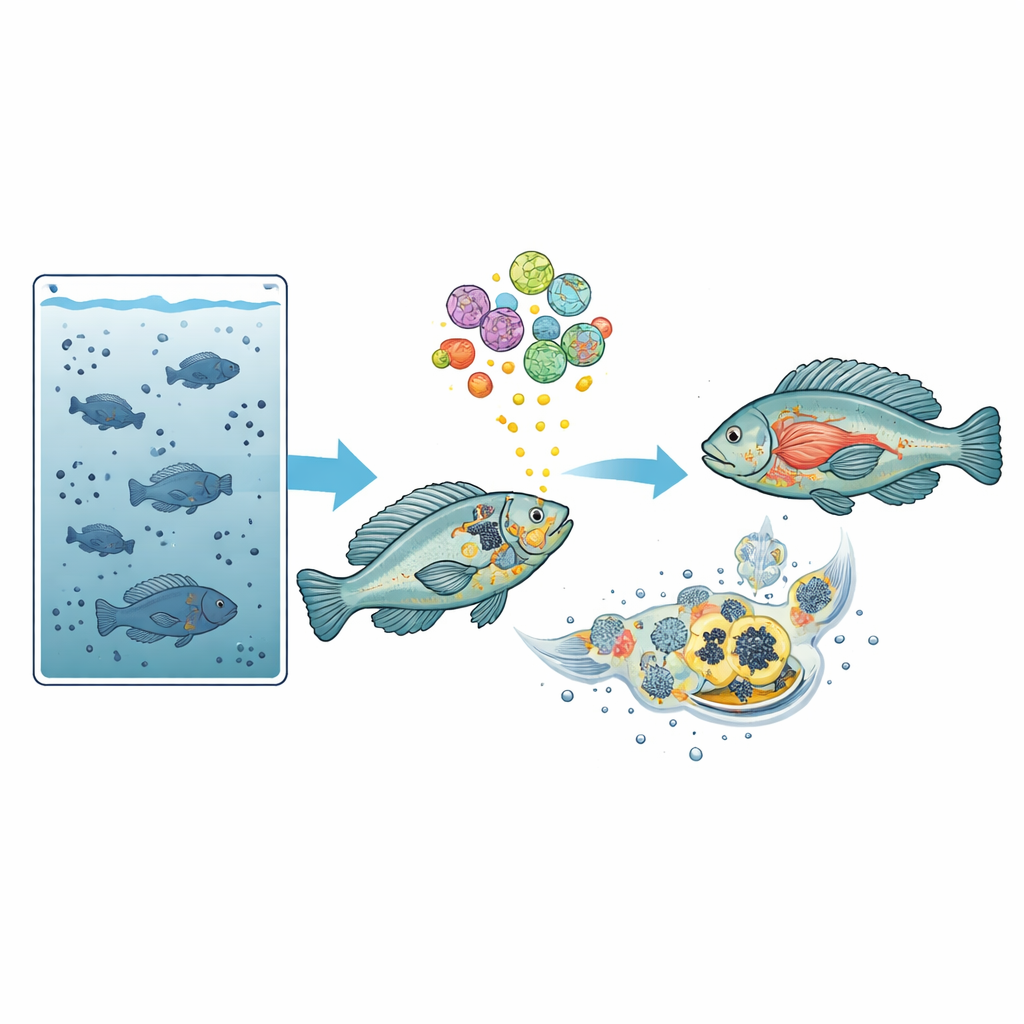
A hidden threat in crowded ponds
Lead is a stubborn pollutant that does not break down in the environment. In aquaculture, it can seep into ponds from nearby factories, drainage canals, and fertilizers. Nile tilapia, one of the most widely farmed freshwater fish, tend to absorb and store such metals in key organs like the liver and gills, and in edible muscle. Lead damages cells by disturbing metabolism, triggering oxidative stress, and weakening the immune system. In many regions, the amount of lead found in market fish already exceeds international safety limits, raising concerns for consumers who rely on fish as a staple food.
Turning yeast into a protective feed ingredient
The researchers tested whether prebiotics derived from the cell walls of common baker's yeast could blunt the harmful effects of lead. These prebiotics, mannan oligosaccharides and beta-glucans, are complex sugars that are not digested like ordinary nutrients but interact with gut microbes and immune cells. They can strengthen the intestinal lining, support beneficial bacteria, and have a natural ability to bind metal ions. In the experiment, juvenile tilapia were divided into four groups and kept for eight weeks: one received a normal diet in clean water, another received the yeast prebiotics in clean water, a third was exposed to high but non-lethal levels of dissolved lead, and a fourth faced the same lead exposure but also ate the yeast-supplemented feed.
What happened inside the fish
Fish exposed only to lead showed clear signs of distress. Routine blood tests revealed lower levels of total protein, albumin, and globulin, hinting at weakened overall health and immune function. Enzymes that signal liver damage rose sharply, indicating that lead was injuring liver cells and leaking their contents into the bloodstream. When the scientists examined thin slices of gills and liver tissue under light and electron microscopes, they saw extensive structural damage: swollen and fused gill filaments, dead and vacuolated liver cells, congested blood vessels, and disrupted cell powerhouses (mitochondria). At the same time, measurements confirmed that lead built up most strongly in the liver, followed by gills and then muscle, with muscle levels far above food safety guidelines. 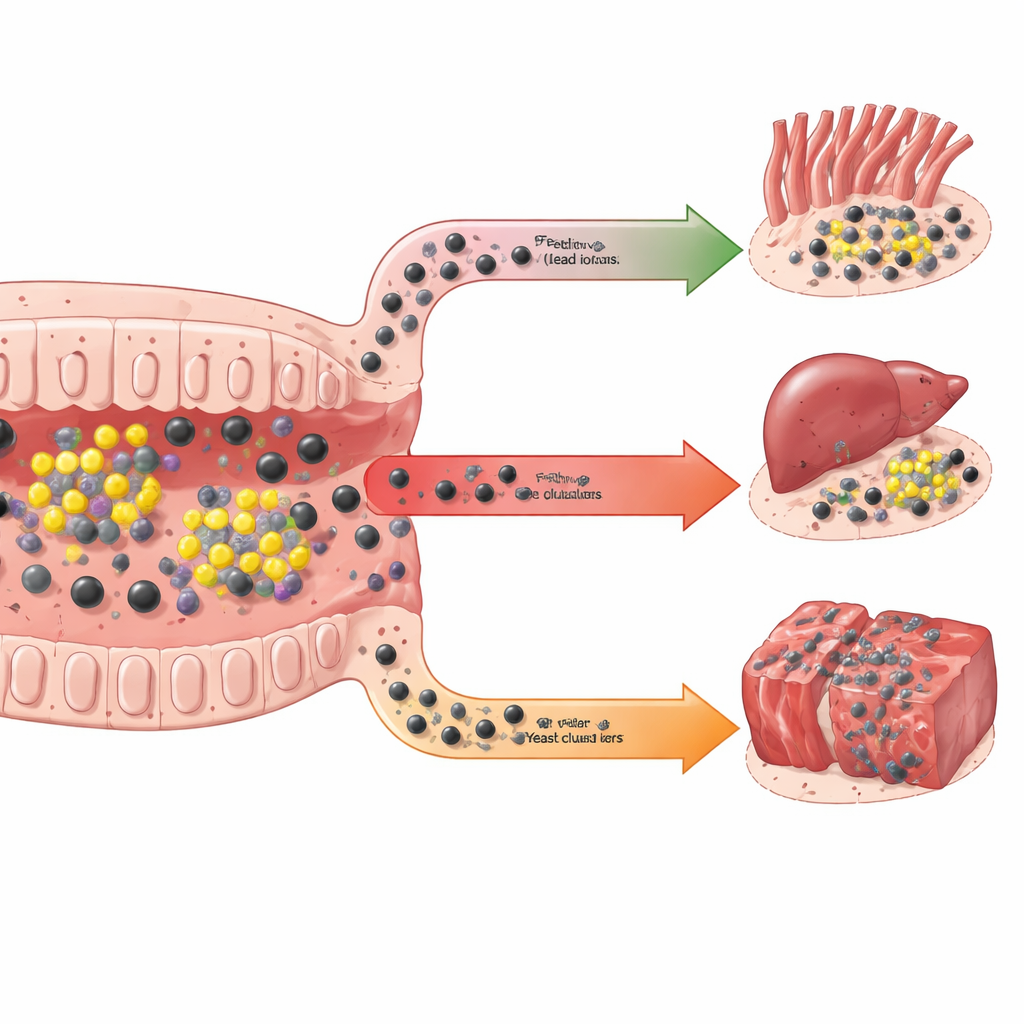
Yeast prebiotics as a shield, not a magic eraser
Adding yeast prebiotics to the diet made a striking difference. In fish given both lead and the supplemented feed, blood proteins rebounded toward normal levels, and liver enzymes dropped compared with the lead-only group, showing that organ function was partially restored. Microscopic examination revealed that gills and liver retained much more of their normal architecture, with less cell death, less swelling, and more intact mitochondria. Most importantly for consumers, lead concentrations in muscle, gills, and liver were significantly lower—by roughly one third to nearly one half—than in fish exposed to lead without the supplement. However, even with this improvement, lead in the fillets still exceeded international limits under the very high contamination level used in the study, meaning the fish would not yet be considered safe for frequent human consumption.
What this means for safer aquaculture
For non-specialists, the take-home message is that a relatively simple change to fish feed can make animals more resilient to pollution and can noticeably reduce the amount of lead that ends up in their bodies. Yeast-based prebiotics act like a protective lining and sponge in the gut, helping to trap metals before they circulate widely, while also supporting the fish’s own antioxidant and repair systems. Yet they are not a license to tolerate dirty water: at extreme lead concentrations, no dietary tweak can guarantee safe food. The authors conclude that yeast prebiotics are a promising tool to bolster fish health and lower contamination risks, but they must be combined with efforts to clean up water sources and limit heavy metal discharges if aquaculture is to remain both productive and safe.
Citation: El-Fahla, N.A., Dessouki, A.A., Mohallal, M.E. et al. Yeast prebiotics mitigate lead toxicity in Nile tilapia through physiological and ultrastructural improvements. Sci Rep 16, 8273 (2026). https://doi.org/10.1038/s41598-026-37841-z
Keywords: aquaculture, lead pollution, Nile tilapia, yeast prebiotics, food safety