Clear Sky Science · en
Knowledge, attitudes, and practices (KAP) regarding physical activity among patients aged 20–60 with coronary heart disease
Why Moving Matters for a Sick Heart
For millions of people living with coronary heart disease, the idea of exercising can be both hopeful and frightening. We are told that movement is medicine for the heart, yet many patients worry that a brisk walk or a light jog might trigger chest pain or worse. This study from a large hospital in eastern China looks closely at what younger and middle-aged heart patients (ages 20 to 60) actually know, feel, and do about physical activity—and what holds them back.
Who Was Asked and What Was Measured
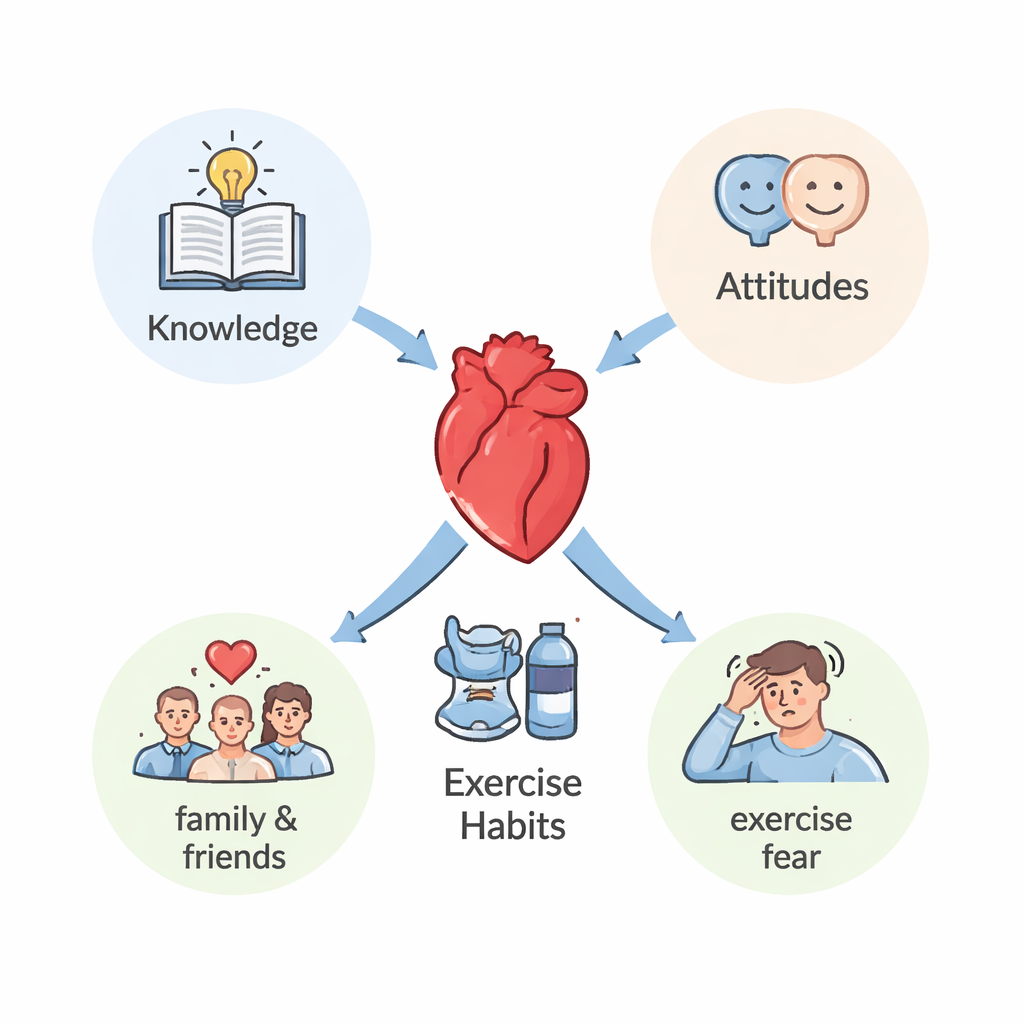
The researchers surveyed 453 men and women with diagnosed coronary heart disease at a major teaching hospital. Most were in their fifties, married, and more than half lived in cities. Instead of focusing on older retirees, the study targeted people in their working years, who must juggle jobs, family responsibilities, and health. The team used a detailed questionnaire to measure three things: patients’ knowledge about safe exercise, their attitudes toward being active, and their actual day-to-day behavior. They also measured how much help people felt they got from family and friends, how confident they were about exercising, and how afraid they were that activity might harm their hearts.
What Patients Know, Believe, and Actually Do
The picture that emerged is mixed. On paper, many patients said they believed exercise is important and helpful for their condition. But their knowledge was often incomplete, and their real-life habits fell short of medical advice. Average knowledge scores were only about halfway to the maximum, and practice scores showed that regular, structured activity was uncommon. More than half had never taken part in professionally guided exercise sessions, and many had never asked a doctor about how to exercise safely or looked up trustworthy information. Basic points—such as when it is safe to be active after a stent procedure or how simple limb movements in bed can prevent complications—were unfamiliar to large numbers of patients.
Fear, Support, and Confidence Shape Behavior
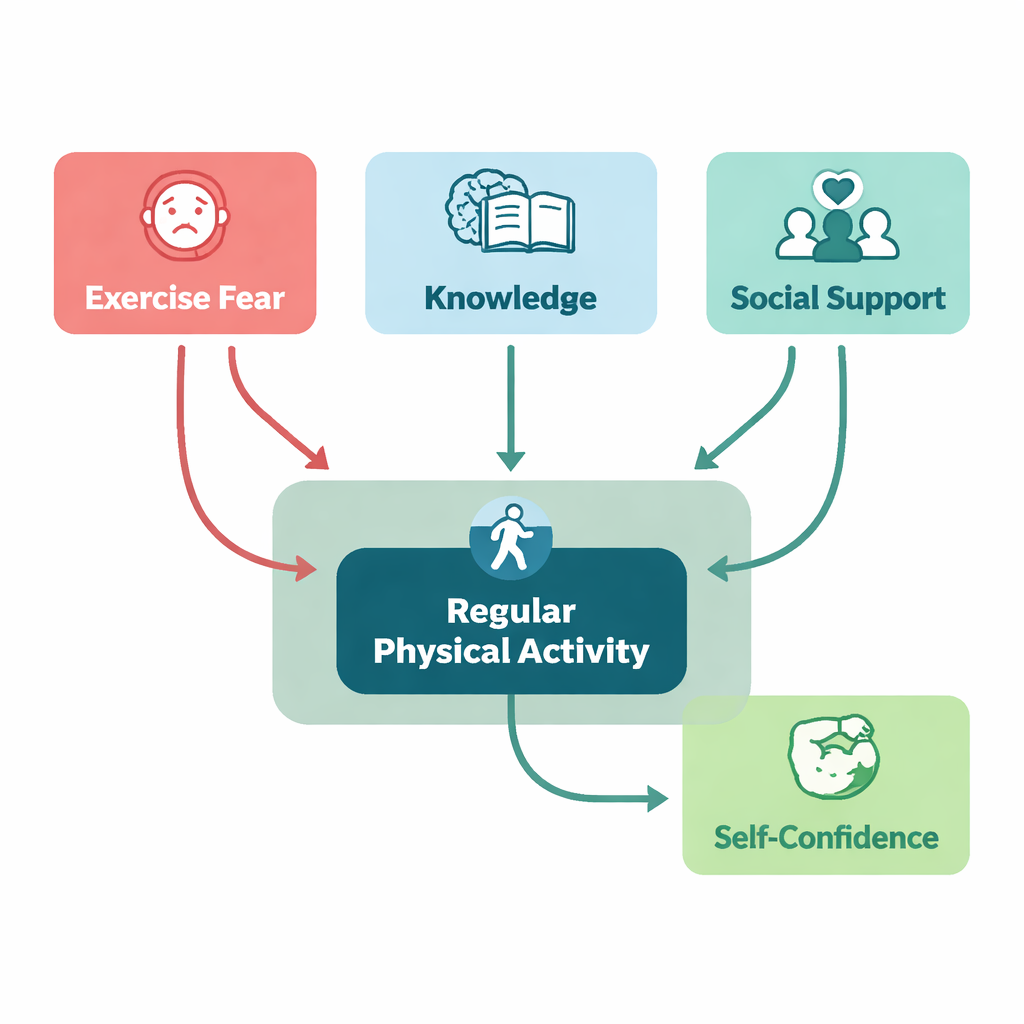
To untangle how these pieces fit together, the researchers used statistical models that track how one factor influences another. One powerful barrier was “cardiac exercise phobia”—a deep worry that physical activity might trigger heart symptoms or an emergency. People with higher fear tended to know less, feel less positive, and exercise less. Fear not only pushed down activity directly, it also seemed to sap people’s curiosity and confidence, making them less likely to learn about exercise or trust that they could move safely. On the flip side, two forces clearly helped: social support and self-confidence. Patients who felt backed by family and friends, and those who believed they could stick with an exercise plan, scored higher on knowledge, had more favorable views of activity, and were more likely to be active. Living in rural areas and drinking alcohol were linked with poorer patterns, suggesting that environment and lifestyle also matter.
Why Attitude Alone Is Not Enough
One surprising finding was that having a positive attitude by itself did not strongly predict who actually exercised. Most patients already agreed that physical activity is good, so there was little difference in attitudes across the group. What really separated active from inactive patients were more practical and emotional factors: whether they had clear, concrete information; whether someone encouraged them and perhaps joined them; and whether their fear of harm was under control. The results suggest that for heart patients, simply telling them that “exercise is good for you” is not enough—fear, doubt, and everyday obstacles can still block the path from good intentions to action.
What This Means for Patients and Families
For people living with coronary heart disease, especially in their working years, this study sends a hopeful but urgent message. Safe physical activity can protect the heart and improve quality of life, but many patients are missing key facts, feel scared to move, or lack guidance and support. The authors argue that heart care should routinely include simple, practical teaching on how to exercise, early screening for exercise-related fear, and ways to build confidence step by step. Involving family members, using group or community programs, and expanding access in rural areas could all help. In everyday terms, the conclusion is clear: with the right information, encouragement, and careful planning, “moving with a bad heart” can shift from something to fear to a powerful tool for staying alive and well.
Citation: Wang, D., Wang, X., Li, Z. et al. Knowledge, attitudes, and practices (KAP) regarding physical activity among patients aged 20–60 with coronary heart disease. Sci Rep 16, 6678 (2026). https://doi.org/10.1038/s41598-026-37839-7
Keywords: coronary heart disease, physical activity, exercise fear, social support, cardiac rehabilitation