Clear Sky Science · en
Prevalence of complementary and alternative medicine use among osteoarthritis patients in a developing country and their level of satisfaction
Why aching joints turn people toward traditional remedies
For millions living with stiff, painful joints, especially in later life, osteoarthritis can make everyday tasks feel like a struggle. In many parts of the world, people don’t rely only on pills and surgery; they also turn to herbal mixtures, massages, and spiritual practices passed down through families. This study looks closely at how people with osteoarthritis in northern Palestine use these complementary and alternative treatments, and how satisfied they are with them, offering a window into how culture shapes the way we cope with chronic pain.
Everyday life with joint pain
The researchers surveyed 399 adults diagnosed with osteoarthritis who were treated at hospitals in several northern Palestinian cities and villages. Most participants were women in their late fifties to late sixties, married, and living in rural areas, where traditional practices remain strong. Many had been living with osteoarthritis for up to five years, trying to manage pain and stiffness that can limit walking, climbing stairs, or even simple chores. While they had access to modern medical care, including pain medications and physical therapy, a large share also reached for remedies they considered natural, familiar, and culturally meaningful.
How common are additional therapies?
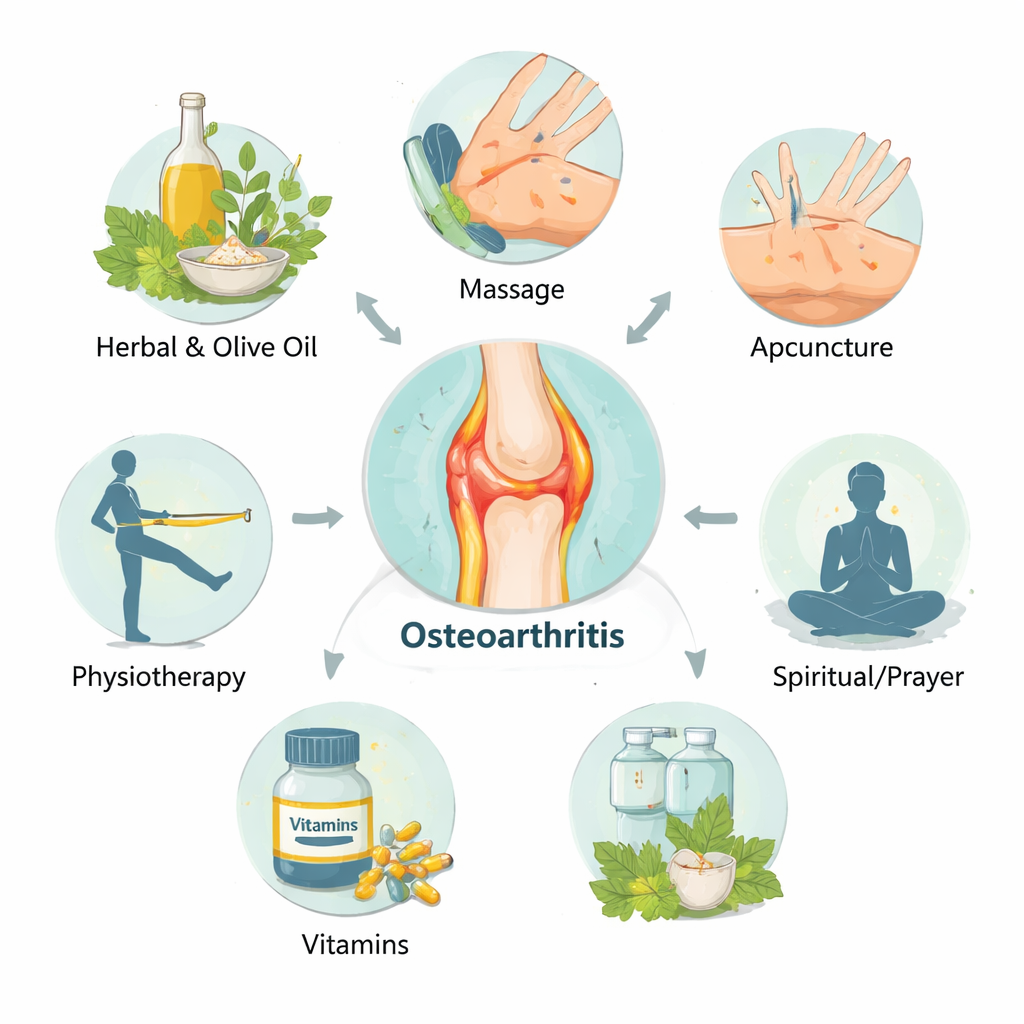
The study found that nearly two-thirds of patients—63.2 percent—used some form of complementary or alternative medicine in the previous six months. The most common approaches were massage therapy, used by almost half the participants, and physiotherapy, used by about a third. Some also tried acupuncture and a variety of folk remedies. These included heated olive oil rubbed into painful joints, herbal teas made from thyme, chamomile, anise, and marjoram, as well as traditional practices such as cupping and bone setting. Many patients also used what they called “prophetic medicine,” rooted in Islamic tradition, such as spiritual recitation (ruqyah), honey, and black seed.
Herbs, oils, and vitamins in the medicine cabinet
Herbal medicine was especially popular: about half of all patients reported using at least one plant-based remedy. Olive oil stood out as the top choice, both taken by mouth and massaged onto joints. Chamomile, anise, marjoram, and thyme teas were widely used as soothing drinks believed to ease pain and inflammation. In addition, about one in four patients took dietary supplements, particularly vitamin D and calcium, which they associated with stronger bones and better joint health. These choices reflect a strong belief that natural products are safer and more gentle on the body than long-term use of synthetic drugs, even though scientific proof of benefit varies from one remedy to another.
Which remedies actually feel helpful?
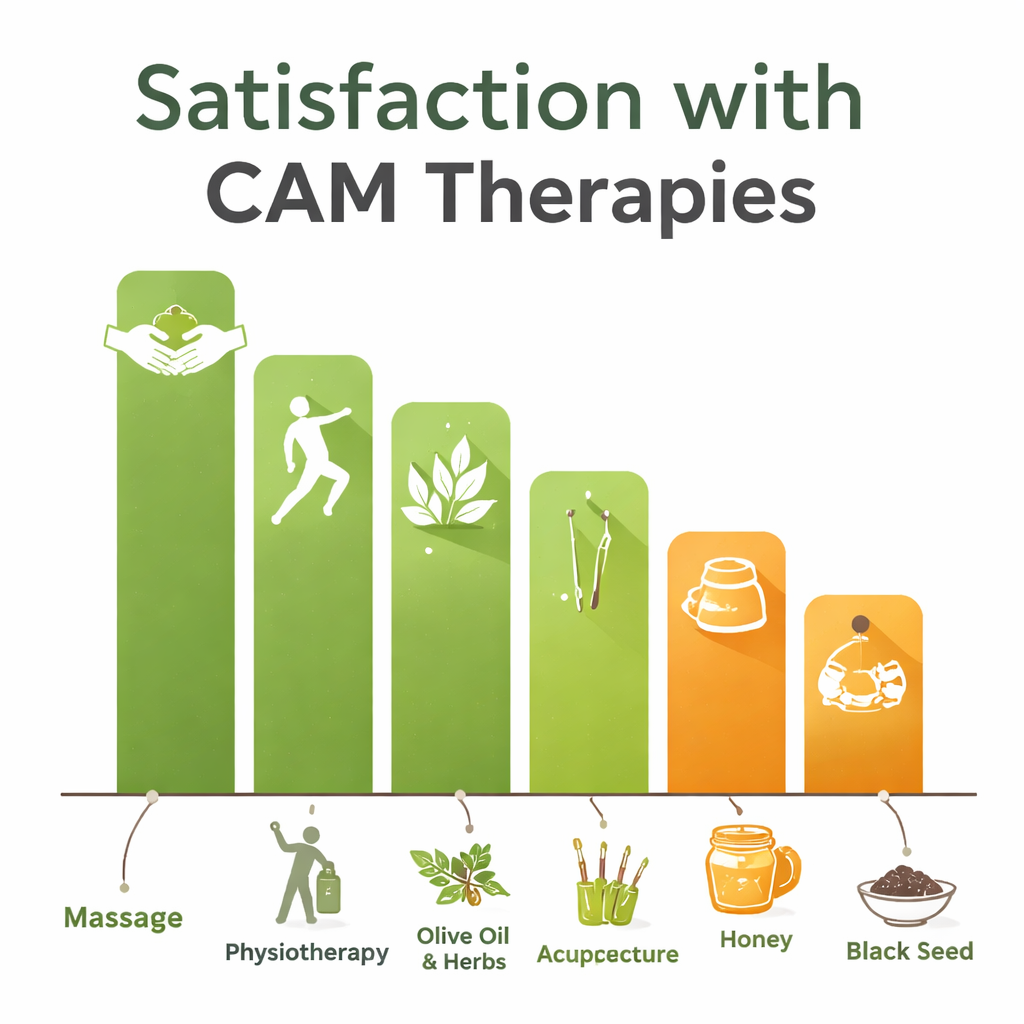
To understand whether people felt these approaches were worth it, the researchers measured how satisfied patients were with their complementary treatments. Overall, there was a clear link: those who used these therapies tended to report higher satisfaction. Massage with olive oil or creams and structured physiotherapy stood out as the most satisfying, likely because they provide immediate relief through touch, movement, and warmth. Patients also reported positive experiences with some herbs, especially olive oil and chamomile, and with spiritual healing practices such as ruqyah, which may offer emotional comfort alongside physical care. In contrast, cupping, honey, and black seed were not clearly linked with greater satisfaction and in some cases appeared slightly disappointing, suggesting that not every cherished traditional practice meets patients’ hopes for pain relief.
What this means for patients and doctors
The study shows that complementary and alternative treatments are woven into how many Palestinian patients live with osteoarthritis, and that many feel these approaches help them cope. At the same time, satisfaction is uneven, and the actual medical benefits of different remedies are not always well tested. For lay readers, the takeaway is that while massages, gentle movement, and certain well-studied natural products may be reasonable additions to standard care, they should not replace medically recommended treatments. The authors argue that doctors should talk openly with patients about these practices—rather than ignoring or dismissing them—so that people can use them safely, avoid harmful interactions, and focus on approaches with the best chance of easing the daily burden of painful joints.
Citation: Jaber, M., Hamza, W., Asab, T.A. et al. Prevalence of complementary and alternative medicine use among osteoarthritis patients in a developing country and their level of satisfaction. Sci Rep 16, 7587 (2026). https://doi.org/10.1038/s41598-026-37826-y
Keywords: osteoarthritis, complementary medicine, herbal remedies, patient satisfaction, Palestine