Clear Sky Science · en
Development and evaluation of recombinant dense granule 14 for serological diagnosis of Toxoplasma gondii infection in domestic cats
Why your cat’s germs matter to you
Toxoplasmosis is a common infection caused by a microscopic parasite that can silently pass between animals and people. Domestic cats are at the center of this invisible network because they are the only hosts that shed the parasite’s hardy eggs into the environment. Knowing which cats have been exposed is crucial for protecting both animal and human health, yet existing blood tests can be costly or hard to standardize. This study describes a new, laboratory-friendly test that uses a single engineered parasite protein to reveal whether a cat has met the parasite before.
A hidden parasite with wide reach
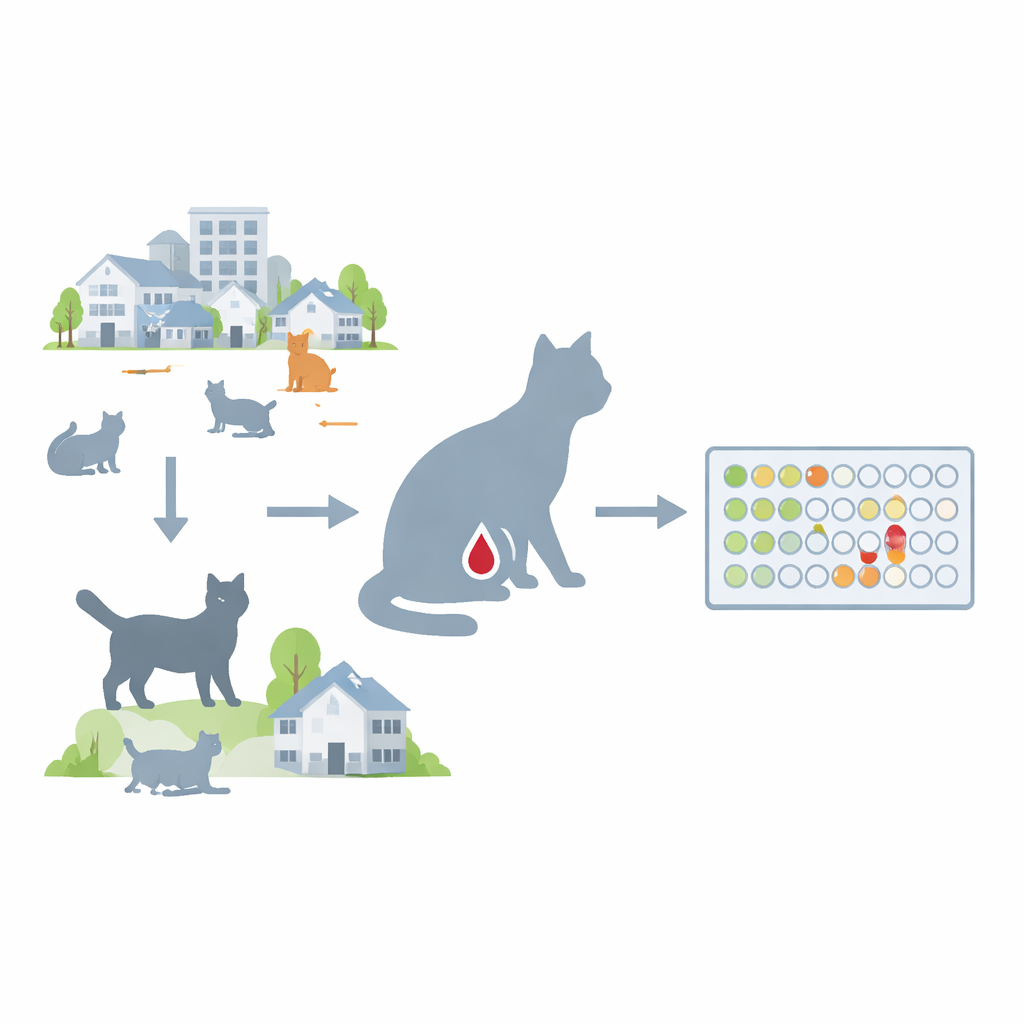
The parasite Toxoplasma gondii can infect almost any warm-blooded animal, including people, livestock, and pets. Many infections cause no obvious illness, but in pregnant women and individuals with weakened immune systems, the parasite can lead to miscarriage, eye disease, or damage to the brain. Farm animals can suffer reproductive losses as well. Cats sit at a key point in this cycle: when they are infected, they can release huge numbers of parasite eggs in their feces, contaminating soil, water, and food. Because most infected cats look healthy, blood tests that detect antibodies—markers of past infection—are the most practical way to track how common the parasite is.
Turning one parasite piece into a test tool
Traditional tests have often relied on mixtures of parasite material grown from live cultures. Those mixtures can be difficult to purify, expensive to produce in bulk, and sometimes raise safety concerns. The researchers instead focused on a single parasite protein known as GRA14, which is released by Toxoplasma soon after it enters host cells and is present during both short-term and long-term stages of infection. Using computer tools, they chose a stretch of the GRA14 protein that is exposed to the immune system and likely to trigger antibody production, while avoiding regions that are hard to work with in the lab. They then inserted the genetic code for this segment into bacteria, which acted as tiny factories to produce large amounts of the same protein.
Building and checking the new blood test
After producing the GRA14 protein in bacteria, the team purified it using a molecular “handle” that allowed them to pull it out of the bacterial soup. They checked its size and purity with standard protein gels and confirmed its identity using mass spectrometry, a technique that reads out precise protein fragments. To be sure that this protein would behave like a real parasite target, they used a blotting method to show that it was recognized by antibodies from Toxoplasma-infected animals, but not by antibodies raised against a related parasite, Neospora caninum. This lack of cross-reaction is important because related parasites can otherwise confuse test results.
Putting cat blood samples to the test
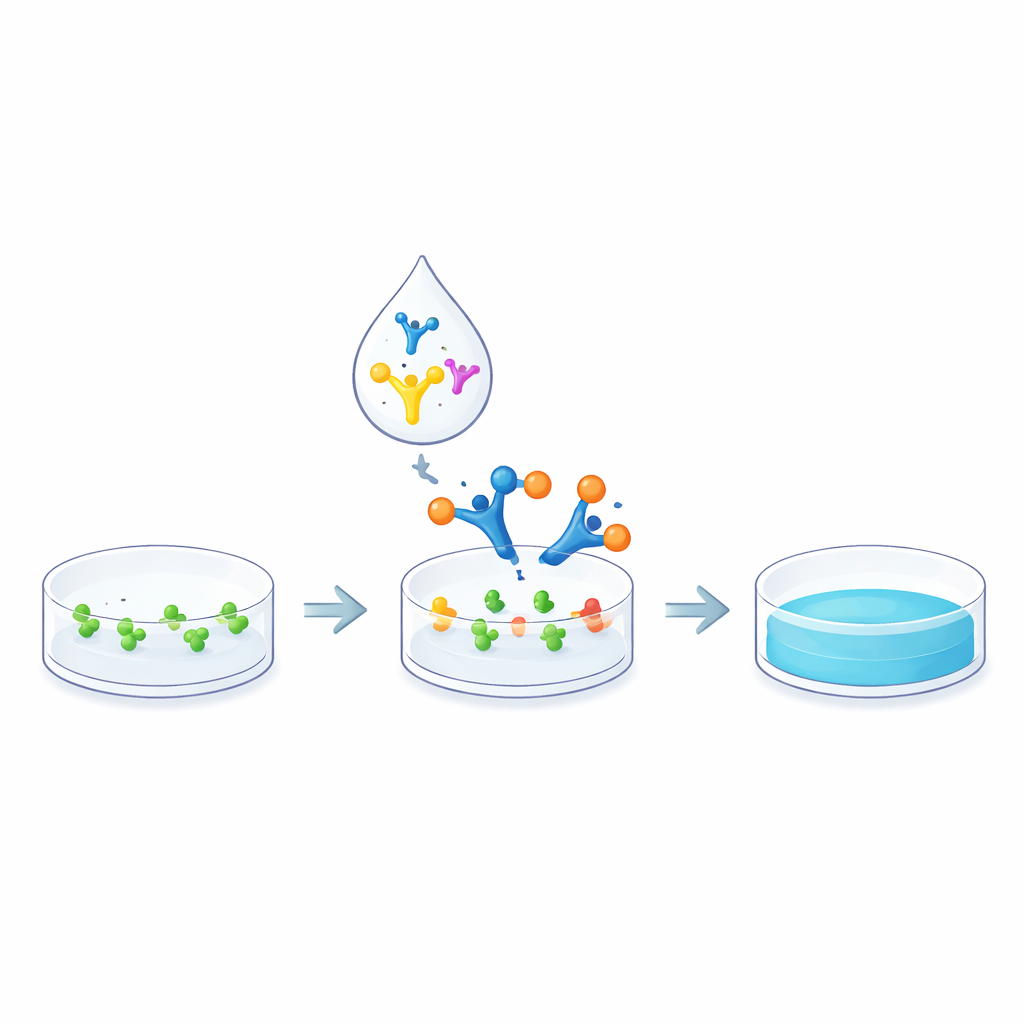
The heart of the study was an indirect ELISA, a common plate-based assay that changes color when antibodies in a blood sample stick to the coated protein. The researchers carefully optimized how much GRA14 protein to attach to each well and how much they should dilute the cat serum so that infected and uninfected samples would separate cleanly. They then tested 149 blood samples from apparently healthy cats collected around Bangkok. Using an established laboratory method called the indirect fluorescent antibody test as a reference, they found that their new GRA14-based ELISA correctly identified about 96% of infected cats and 90% of uninfected cats. Overall, the agreement between the two methods was classified as “almost perfect.” Their ELISA suggested that roughly four in ten cats in the sample set had been exposed to Toxoplasma.
What these findings mean for cats and people
By showing that a single, engineered fragment of the GRA14 protein can form the basis of a sensitive and specific blood test, this work offers a practical tool for large-scale screening of cat populations. Such a test can be produced consistently in many laboratories, without the need to handle live parasites, and could be adapted for other animal species that act as intermediate hosts. In simple terms, the study provides a reliable way to ask, “Has this cat encountered Toxoplasma?” at the level of whole cities or regions. Better answers to that question can guide public health strategies, inform pet owners and veterinarians, and ultimately help limit the silent spread of a parasite that links household pets, livestock, wildlife, and human health.
Citation: Ha, H.T., Suwan, E., Kengradomkij, C. et al. Development and evaluation of recombinant dense granule 14 for serological diagnosis of Toxoplasma gondii infection in domestic cats. Sci Rep 16, 9771 (2026). https://doi.org/10.1038/s41598-026-37821-3
Keywords: toxoplasmosis, cat health, diagnostic tests, zoonotic parasites, ELISA