Clear Sky Science · en
Dynamic simulation of gas-lock instability in an electrical submersible pump induced by annulus valve closure
Why a hidden valve deep underground matters
Far below the Earth’s surface, powerful electric pumps help push oil to the surface and keep wells producing. These workhorses are expensive and hard to replace, especially offshore. This study shows how something as simple as the wrong valve position can quietly set up a slow-motion disaster: wild swings in production, overheating equipment, and a 23% loss in output, all traced back to trapped gas that the system could no longer safely vent.
How deep electric pumps keep oil flowing
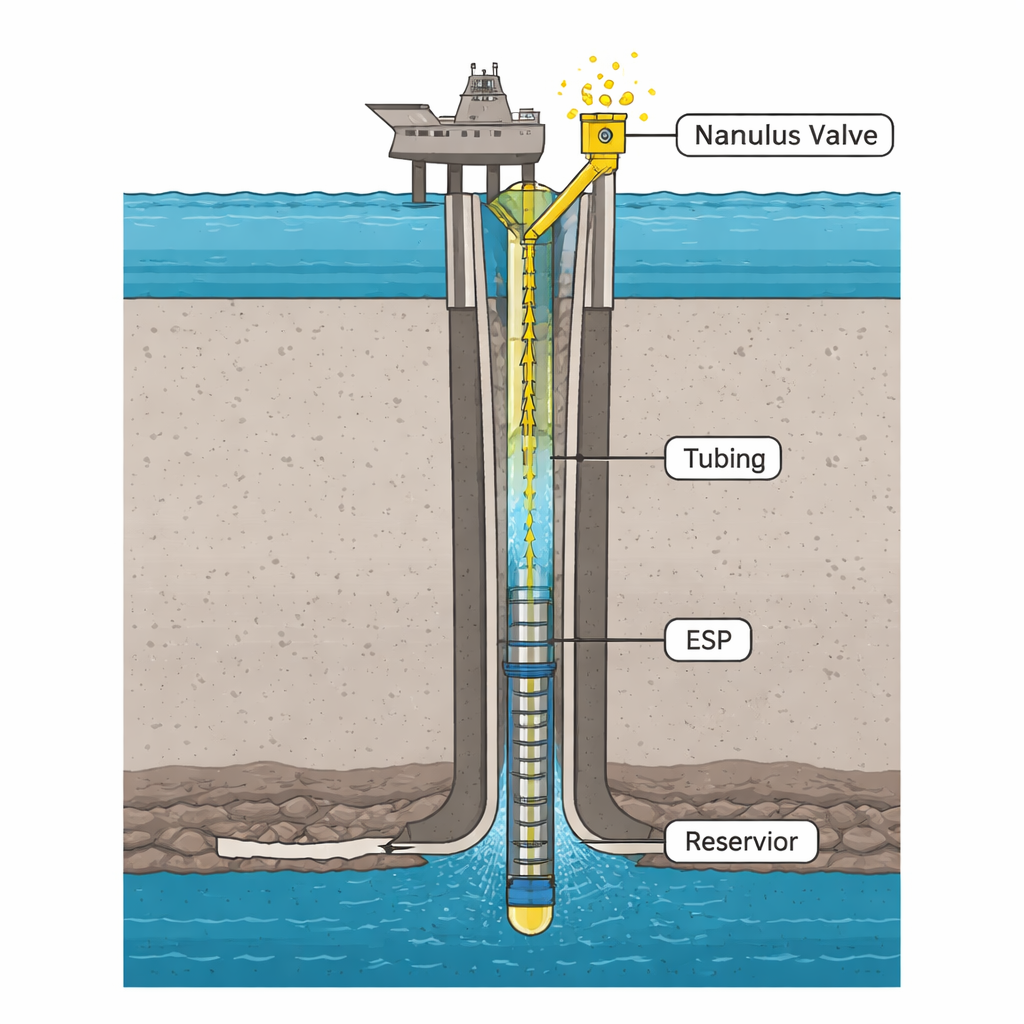
Many oil wells rely on Electrical Submersible Pumps (ESPs), long stacks of spinning stages driven by an electric motor thousands of feet underground. Their job is to lift large volumes of mostly liquid fluid up a steel tube to the surface. Around that tube is a second flow path, called the annulus, where gas separated from the liquid can be routed back toward the surface. Under normal conditions, gas is stripped out before it reaches the pump, vented through the annulus and an annulus valve, and the pump sees mainly liquid, allowing it to run smoothly and stay cool.
When gas has nowhere to go
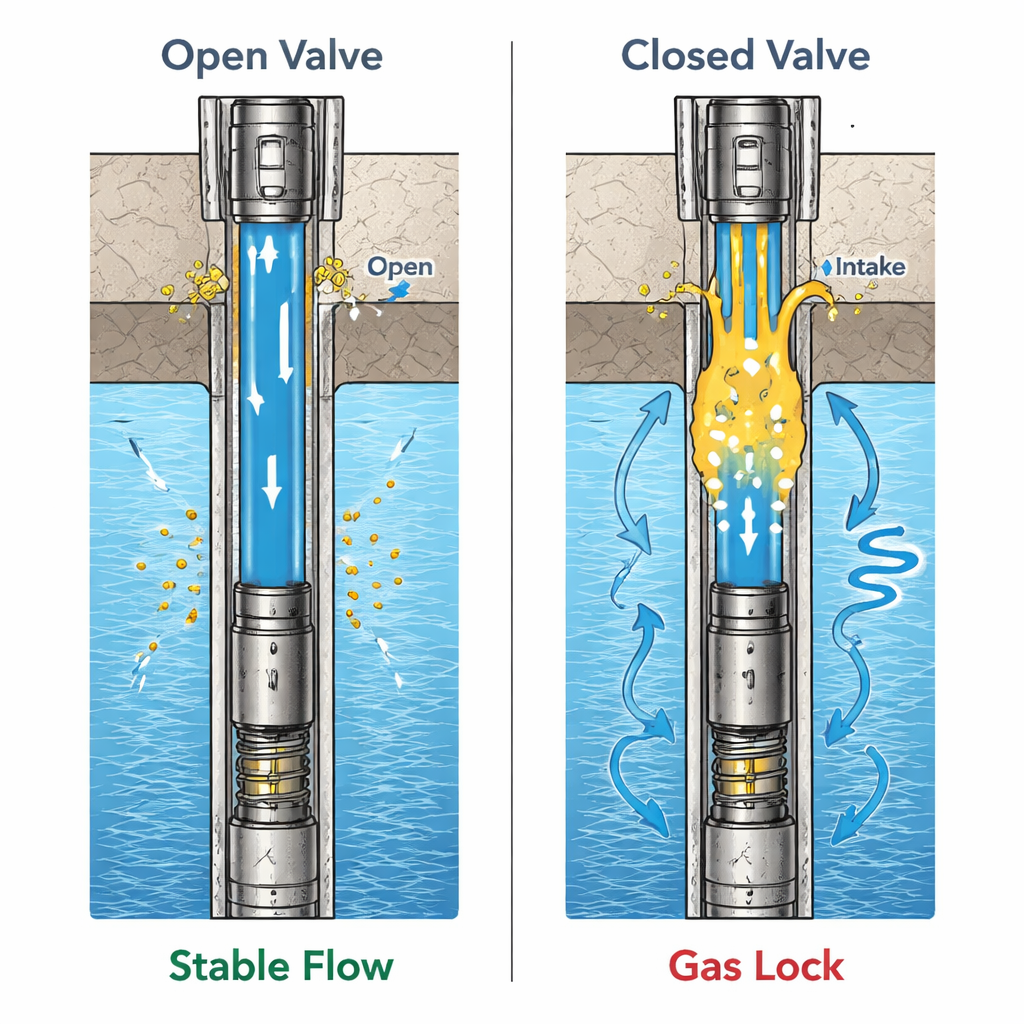
The paper examines a real incident in an offshore Persian Gulf well where, after a restart, the annulus valve was accidentally left closed. At first, everything looked fine at the surface: the motor current and pressures appeared normal, and production seemed steady. But with the valve shut, separated gas began to accumulate in the annulus above the liquid. Over about a day, this growing gas pocket pushed the liquid level downward until gas finally reached the pump intake. What had been a simple valve-position mistake slowly evolved into a high-probability “gas-lock” state, where the pump could no longer lift fluid properly.
Simulating a slow slide into instability
To understand this chain of events, the authors built a detailed dynamic model of the well using a multiphase-flow simulator (OLGA). They included the well’s geometry, fluid properties, pump characteristics, and the actual schedule of when the annulus valve was opened and closed over a 13-day period. The model tracked how gas and liquid moved through the system over time and how the presence of gas at the pump intake would degrade the pump’s pressure boost and efficiency. The researchers then converted the simulated hydraulic power into expected motor current so they could compare the model directly with high-frequency field data from downhole sensors.
Matching the real-world failure
The simulated behavior closely matched what actually happened in the well. After the valve was closed, the model reproduced the roughly one-day delay before trouble started, followed by strong oscillations in motor current between about 40 and 58 amps, pump intake pressure swings of about ±30 psi, and fluctuating intake temperatures. These signs all point to the pump repeatedly ingesting large gas slugs, losing its lifting power, and then briefly recovering. The model also showed how the gas rate at the pump intake roughly doubled (from 0.2 to 0.4 million standard cubic feet per day), while liquid flow through the pump and at the surface dropped sharply and began to surge, cutting overall production by about 23%.
What this means for future wells
By combining real measurements with a dynamic simulation, the study builds a clear, quantitative picture of how a blocked gas vent can drive an ESP system into a damaging, self-sustaining instability. For operators, the message is straightforward: reliable annulus gas venting is not a minor detail but a critical safety and performance requirement. The modeling approach also offers a path toward “digital twin” style tools that can warn of developing gas-lock conditions before they cause major production losses or permanent damage to expensive downhole equipment.
Citation: Abu Bakri, J., Jafari, A. & Khazraee, S.M. Dynamic simulation of gas-lock instability in an electrical submersible pump induced by annulus valve closure. Sci Rep 16, 7005 (2026). https://doi.org/10.1038/s41598-026-37814-2
Keywords: electrical submersible pump, gas locking, multiphase flow, annulus gas venting, oil well production