Clear Sky Science · en
CDMMM: a comprehensive platform of traditional Indian medicinal plant DNA barcodes and metabolite fingerprints database
Why the Plants in Your Medicine Matter
Many of the pills, syrups, and herbal tonics we use today quietly trace their power back to plants. India, a global hub for traditional remedies, supplies huge amounts of medicinal plant material every year. But when the wrong plant, or a poor-quality substitute, slips into a remedy, it can weaken the treatment—or even make it unsafe. This study introduces CDMMM, a new online database designed to verify exactly which plants and plant chemicals end up in herbal medicines, and to help researchers find new drug candidates hidden in traditional Indian remedies.
Sorting the Real Herbs from the Look‑Alikes
Herbal products are often sold as dried roots, powders, or fragments that no longer look like whole plants, making traditional identification by sight, smell, or taste difficult and error-prone. The authors tackle this problem by using “DNA barcodes”—short, tell‑tale stretches of genetic code that act like a supermarket barcode for each species. They collected 67 highly traded Indian medicinal plants and their common substitutes from several states and built a reference library of 89 DNA barcodes. This makes it possible to check whether a raw plant sample truly matches the species printed on a label, even when it has been chopped, dried, or powdered beyond recognition. 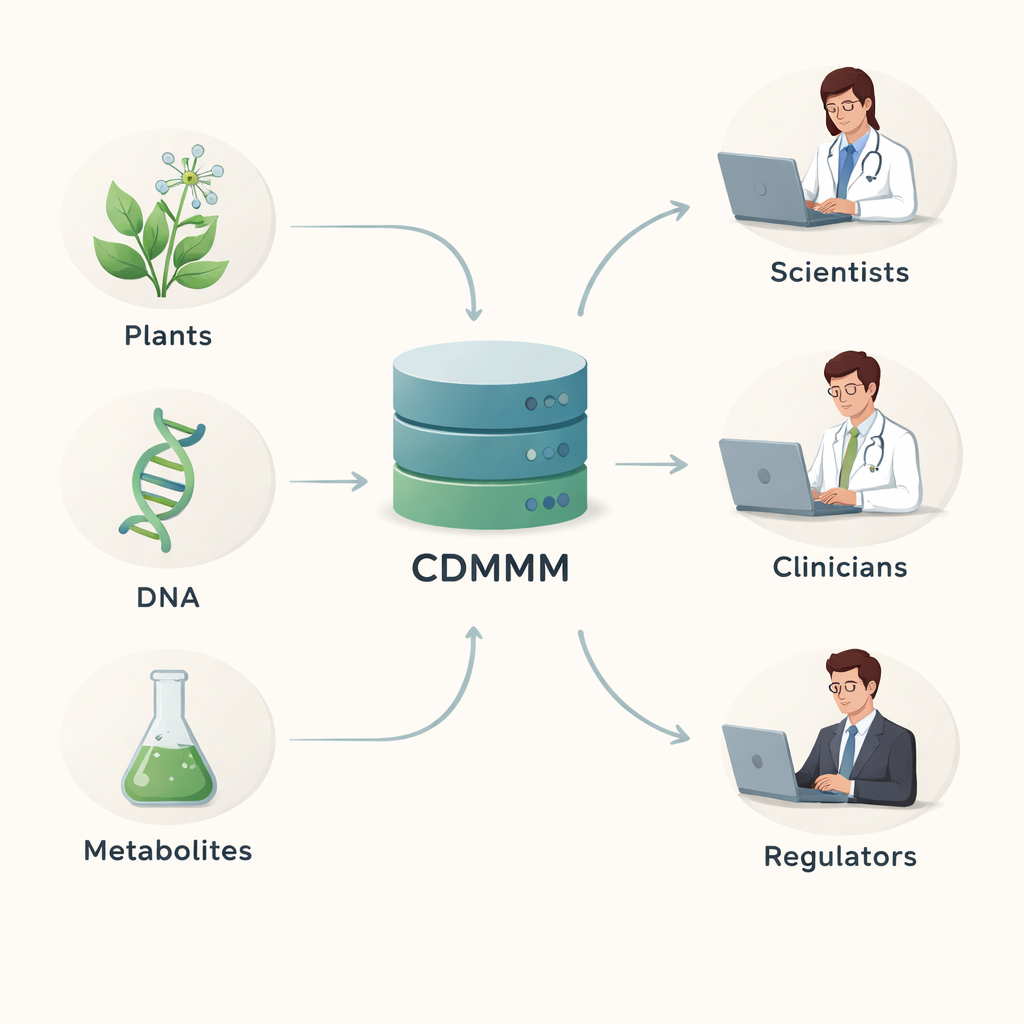
Fingerprinting the Chemistry Inside Medicinal Plants
Knowing which plant you have is only part of the story; what really affects health are the thousands of small molecules that plants produce. The team created chemical “fingerprints” for 20 of the most heavily traded medicinal plants (including both genuine plants and their substitutes) using advanced mass spectrometry. This technology separates and weighs tiny molecules to reveal which compounds are present. From these experiments, they identified 3,033 distinct plant metabolites and sorted them into major families such as flavonoids, lipids, and natural acids. Each compound entry in CDMMM includes details like how it was detected, how it is chemically classified, and links to major chemistry and nutrition resources, giving scientists a one‑stop view of the chemistry behind traditional remedies.
From Plant Compounds to Human Diseases
To understand how these plant molecules might affect human health, the authors predicted which human proteins the compounds are likely to interact with—essentially asking, “Where in the body might this plant chemical land?” Using several computational tools and drug‑target databases, they mapped 2,685 metabolites to 1,414 human protein targets linked to 441 diseases. CDMMM stores not only the predicted target proteins but also the associated diseases and drug-development status of these targets, from early-stage research to approved therapies. This lets researchers quickly see which plant molecules are most promising as starting points for new or improved medicines. 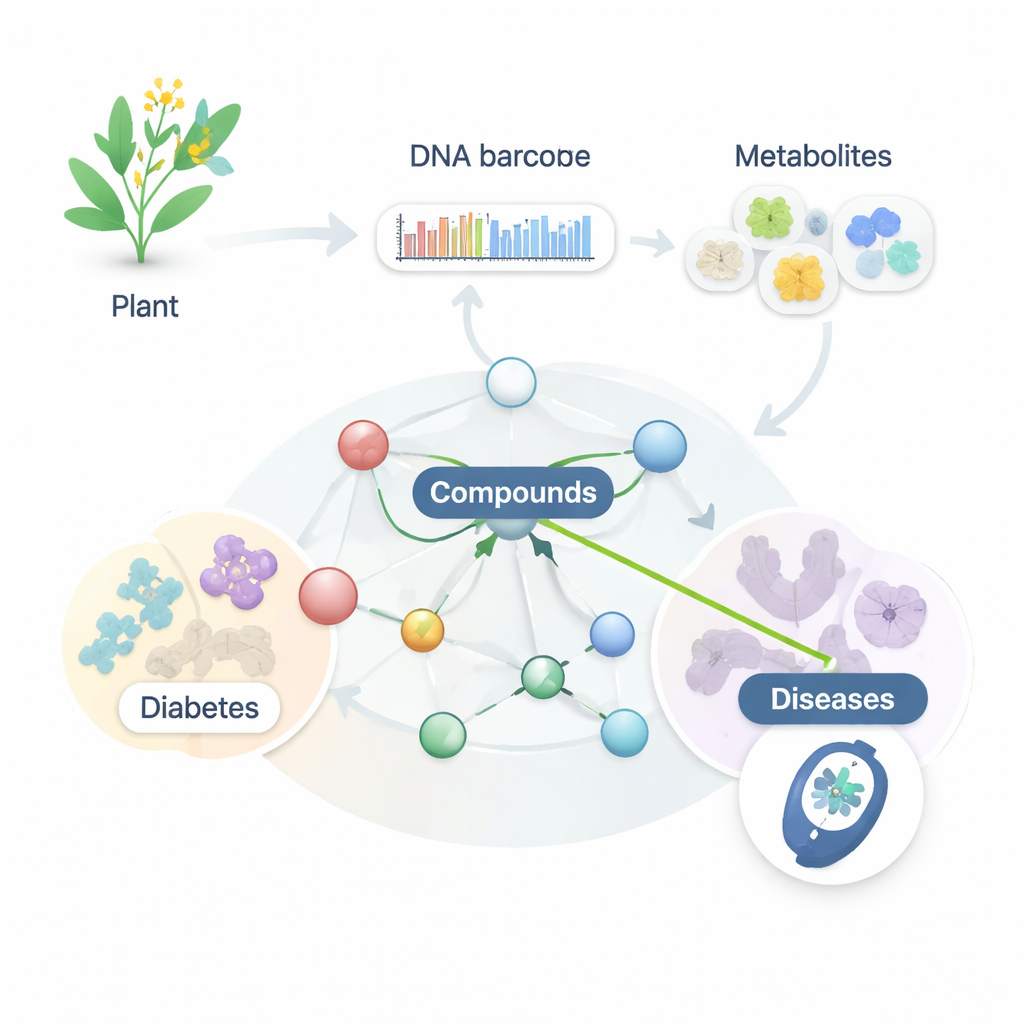
Putting the Database to Work: Checking Herbs and Probing Diabetes
The team demonstrated how CDMMM can be used in practice. In one test, they bought 47 herbal raw drugs from Indian markets and compared their DNA with the new barcode library. Almost half of the samples matched the correct medicinal plants, but several clearly matched cheaper substitutes or adulterants—confirming that mix‑ups and fraud remain real problems. In another example, they focused on diabetes mellitus, a common chronic disease. By combining the database’s compound, target, and disease information, they built interaction networks and used computer docking simulations to see how strongly different plant compounds might bind to key diabetes‑related proteins. Several compounds from herbs such as turmeric and Asparagus species showed strong predicted binding, marking them as potential leads for future diabetes drug research.
A New Map for Safer Herbs and Smarter Drug Discovery
CDMMM offers an open, user‑friendly online platform where anyone—from regulators and manufacturers to doctors and researchers—can look up which plants, genes, chemicals, and disease targets are connected. For laypeople, the takeaway is simple: this kind of database helps ensure that when you buy a herbal medicine, it actually contains the right plant, and it helps scientists turn centuries of traditional knowledge into carefully tested modern therapies. As CDMMM grows to include more species, pathways, and analytical tools, it will increasingly serve as a bridge between age‑old herbal practice and evidence‑based medicine.
Citation: Vinay, C.M., Ware, A.P., Sanjay, K.U. et al. CDMMM: a comprehensive platform of traditional Indian medicinal plant DNA barcodes and metabolite fingerprints database. Sci Rep 16, 7674 (2026). https://doi.org/10.1038/s41598-026-37812-4
Keywords: Indian medicinal plants, herbal drug authentication, DNA barcoding, metabolite fingerprinting, drug discovery