Clear Sky Science · en
Everyday discrimination among middle-aged and older adults in India: a multilevel cross-sectional analysis from the Longitudinal Ageing Study in India
Why Small Slights Matter in Later Life
Being ignored in a shop, spoken to rudely at a clinic, or treated as if you are less capable than others may seem like minor annoyances. But when such slights happen again and again, they can quietly chip away at health and well-being. This study looks at these everyday experiences of unfair treatment among more than sixty thousand middle-aged and older adults in India. It asks who is most likely to face such treatment, how it varies across the country, and what the surrounding community has to do with it. Understanding these patterns can help policymakers design fairer, more supportive environments for India’s aging population.
Unfair Treatment in Daily Life
The researchers focused on "everyday discrimination"—routine experiences such as being treated with less courtesy, getting poorer service in shops or hospitals, or feeling that others assume you are not smart or are to be feared. Using survey questions from the Longitudinal Ageing Study in India, they created a score that summed how often people reported six kinds of unfair treatment in daily life. Only those who could point to at least one reason for this treatment—such as age, caste, gender, religion, disability, or finances—were included. Most participants reported no such experiences, but about one in six said they had faced some form of everyday discrimination. 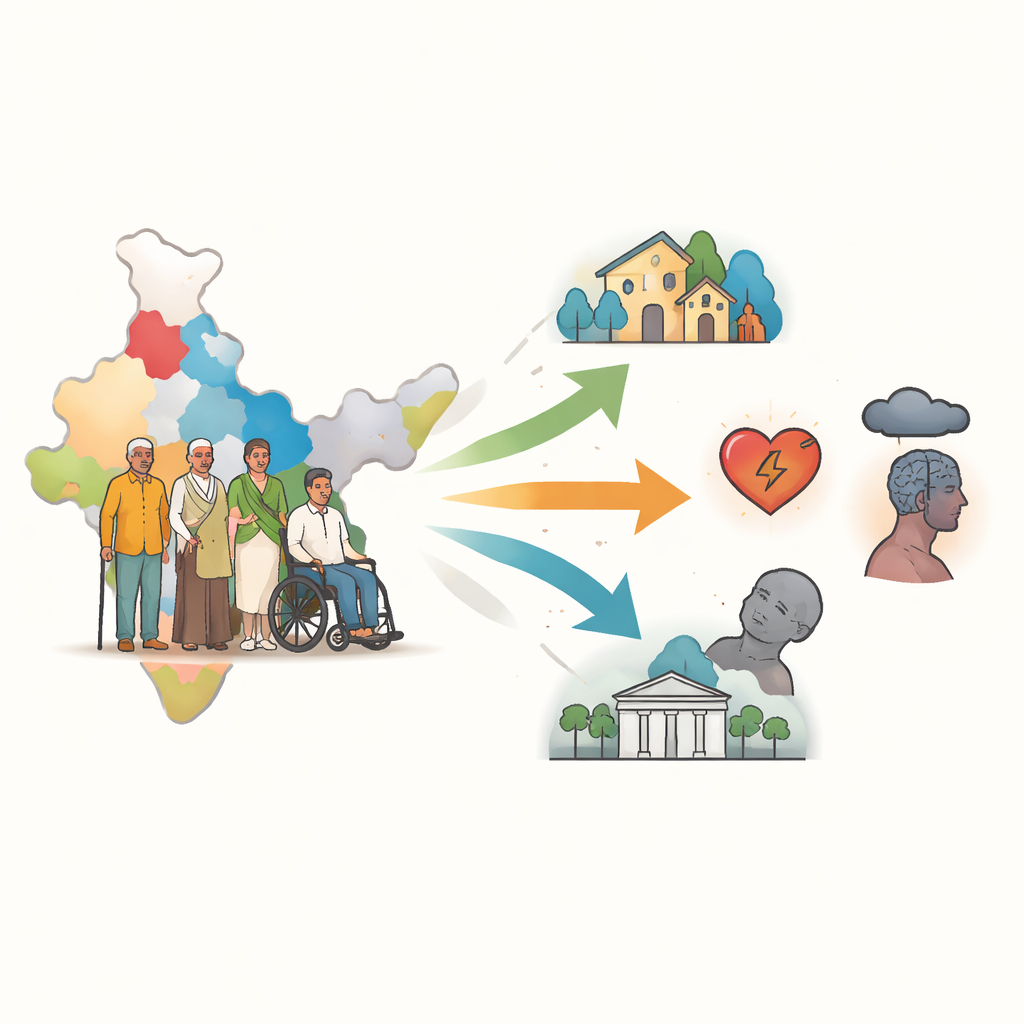
Who Feels the Sting the Most
Although average scores were low overall, some groups clearly reported more unfair treatment than others. Men, people who were not currently married (including widowed or divorced adults), and those who had moved to their current area—especially within the last ten years—reported higher discrimination. Rural residents reported more unfair treatment than city dwellers. Education and household spending power appeared protective: the more years of schooling and the higher the household’s monthly resources, the less likely people were to report discrimination. Caste and religion also mattered. Members of Scheduled Castes had higher discrimination rates than upper-caste adults, while Christian respondents reported lower rates than Hindus.
When Health Problems and Disability Add Up
Health was another strong factor. Adults with at least one difficulty in daily activities—such as walking, bathing, managing money, or shopping—reported noticeably more unfair treatment than those without such limitations. Those who described any physical or mental impairment, including mobility, vision, hearing, or cognitive challenges, had more than double the rate of everyday discrimination. For these individuals, unfair treatment may compound other struggles, such as limited mobility, pain, or loneliness. The findings suggest that people living with disability or chronic health problems are especially exposed to being dismissed, avoided, or treated poorly in routine interactions.
Place Matters as Much as Person
The study also zoomed out to see how these experiences differ across India’s map. Everyday discrimination scores varied sharply among the 36 states and union territories. Some northeastern regions and territories such as Nagaland, Tripura, Mizoram, and Lakshadweep showed very low levels, while places like Jammu and Kashmir, Delhi, Chhattisgarh, and Karnataka had much higher scores, with nearly a third of adults reporting unfair treatment in some of these regions. Yet when the researchers used statistical models to separate out the influence of different geographic levels, they found that local communities—villages and urban wards—explained more of the variation than entire states. In other words, the neighborhood you live in seems to matter more for everyday fairness than the state boundary you fall within. 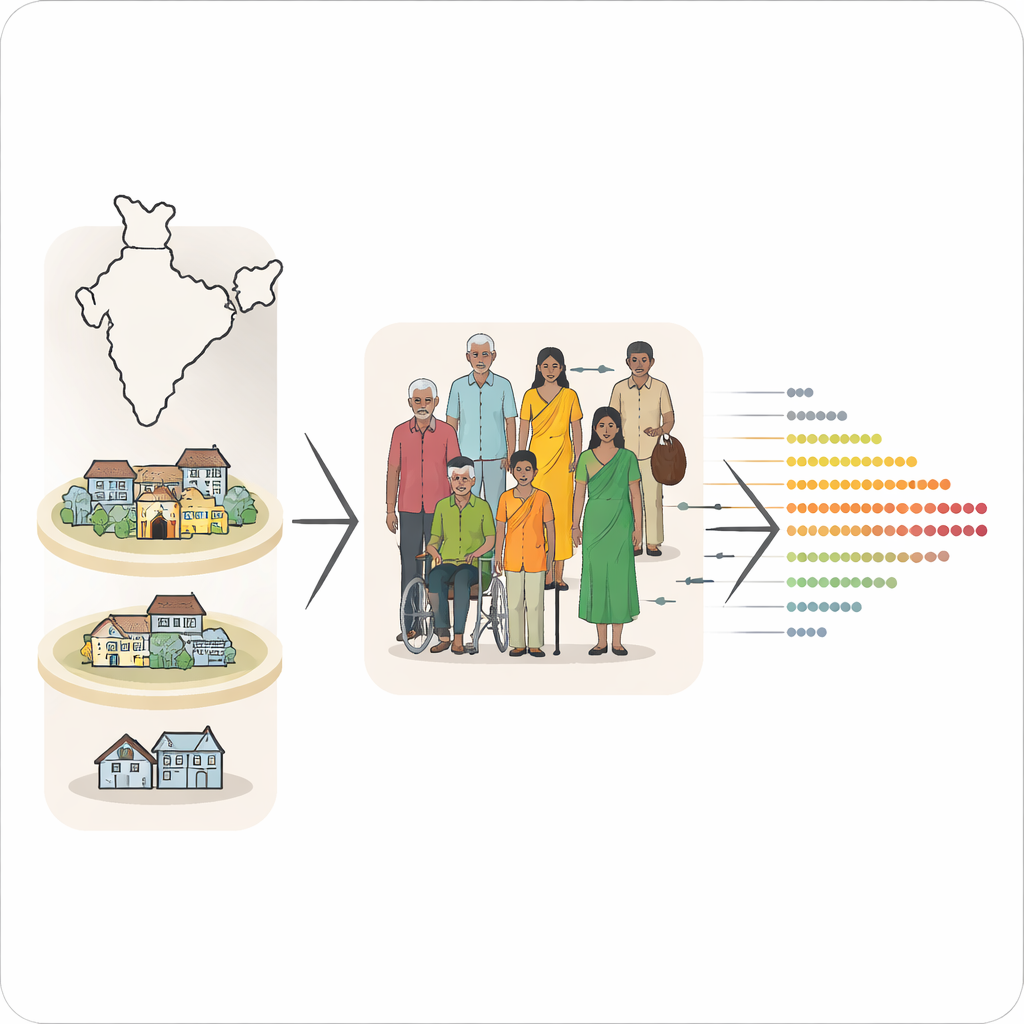
Why These Findings Count
To a lay reader, the message of this study is clear: how people are treated in the ordinary moments of life is not random. It depends both on who they are—such as their caste, marital status, wealth, and health—and on the communities they inhabit. While minor slights might appear trivial, their steady drip can worsen stress and undermine health, especially for older adults already facing disability or financial strain. The research also shows that simple individual traits do not fully explain why unfair treatment clusters in certain places, pointing to deeper local norms, institutions, and power dynamics. Recognizing everyday discrimination as a shared, place-shaped problem is a first step toward designing neighborhoods, services, and policies in India that treat older adults with equal dignity.
Citation: Sadhu, R., Ko, S., Subramanian, S.V. et al. Everyday discrimination among middle-aged and older adults in India: a multilevel cross-sectional analysis from the Longitudinal Ageing Study in India. Sci Rep 16, 9062 (2026). https://doi.org/10.1038/s41598-026-37790-7
Keywords: ageing and discrimination, older adults in India, social inequality, community context, health and well-being