Clear Sky Science · en
Expectations and concerns of primary healthcare patients in rural areas and small towns in Poland regarding artificial intelligence
Why this matters to everyday patients
As powerful new computer programs enter doctors’ offices, many people wonder whether these tools will truly help them or quietly push them aside. This study looks at how patients in rural areas and small towns in Poland—places where internet access and digital skills are often limited—feel about the growing use of artificial intelligence (AI) in healthcare. Their views offer an early glimpse of what it will take to make high‑tech medicine feel safe, fair, and trustworthy for ordinary patients, not just for the digitally savvy.
Life in clinics with too few doctors
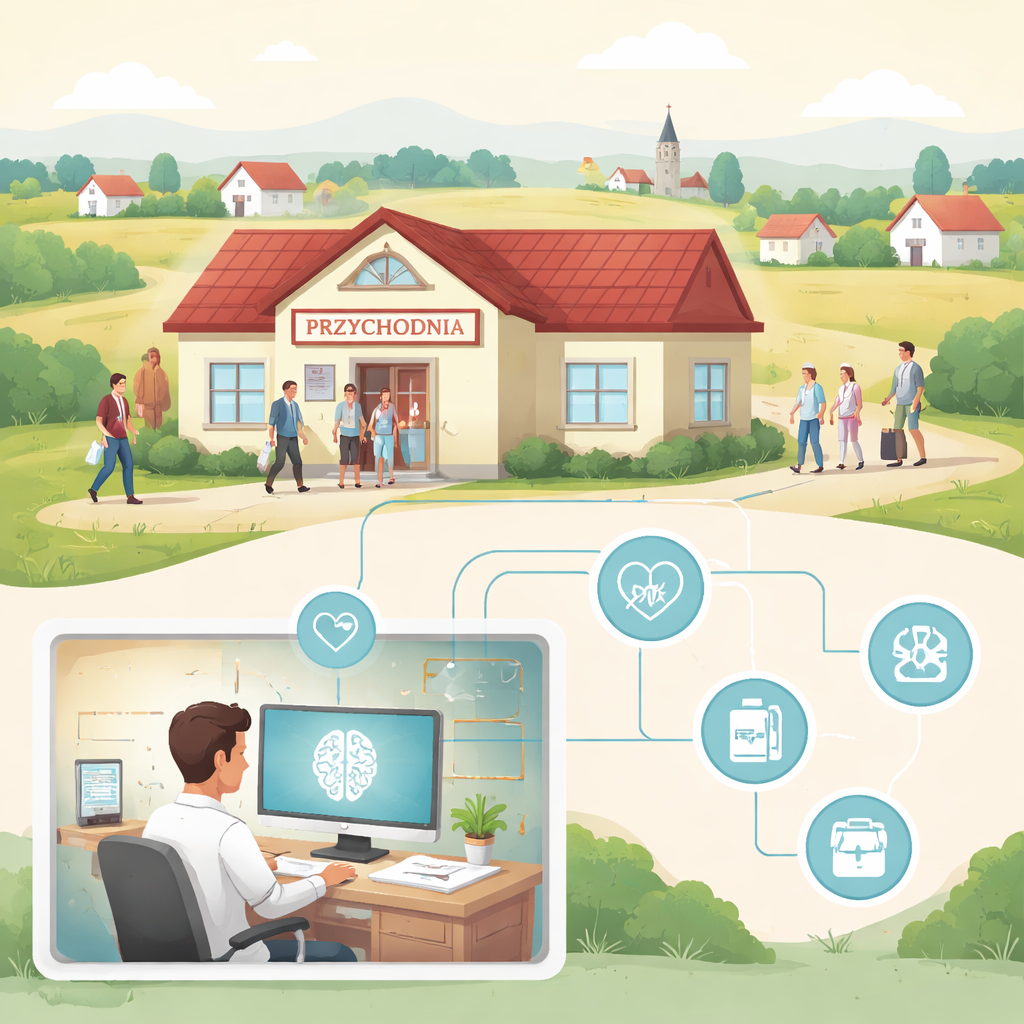
Poland faces a serious shortage of doctors and nurses, especially outside big cities. At the same time, AI tools are being promoted as ways to speed up diagnosis, help choose treatments, track patients’ health, and cut paperwork. For people who live far from large hospitals, such tools could, in theory, make care more available and more accurate. But most research on public attitudes toward medical AI has relied on online surveys, which often miss older adults and those without good internet access. This study deliberately turned to paper questionnaires and in‑person recruitment in three small primary care clinics, so that the voices of digitally excluded patients would not be left out.
Who was asked and what they know
The researchers surveyed 545 adult patients waiting for appointments in primary care facilities located in villages and small towns with fewer than 20,000 residents. The average participant was in their mid‑forties, and many had only basic or secondary schooling. When asked to rate their own technology skills, almost three in ten described them as poor or very poor, and older patients consistently felt less confident than younger ones. Just under half of all participants had heard about AI being used in medicine, and only about one in eight had ever knowingly used an AI‑based health service. Simple online tools to book appointments were fairly common, but health‑monitoring apps on phones were rare.
Mixed feelings and limited trust
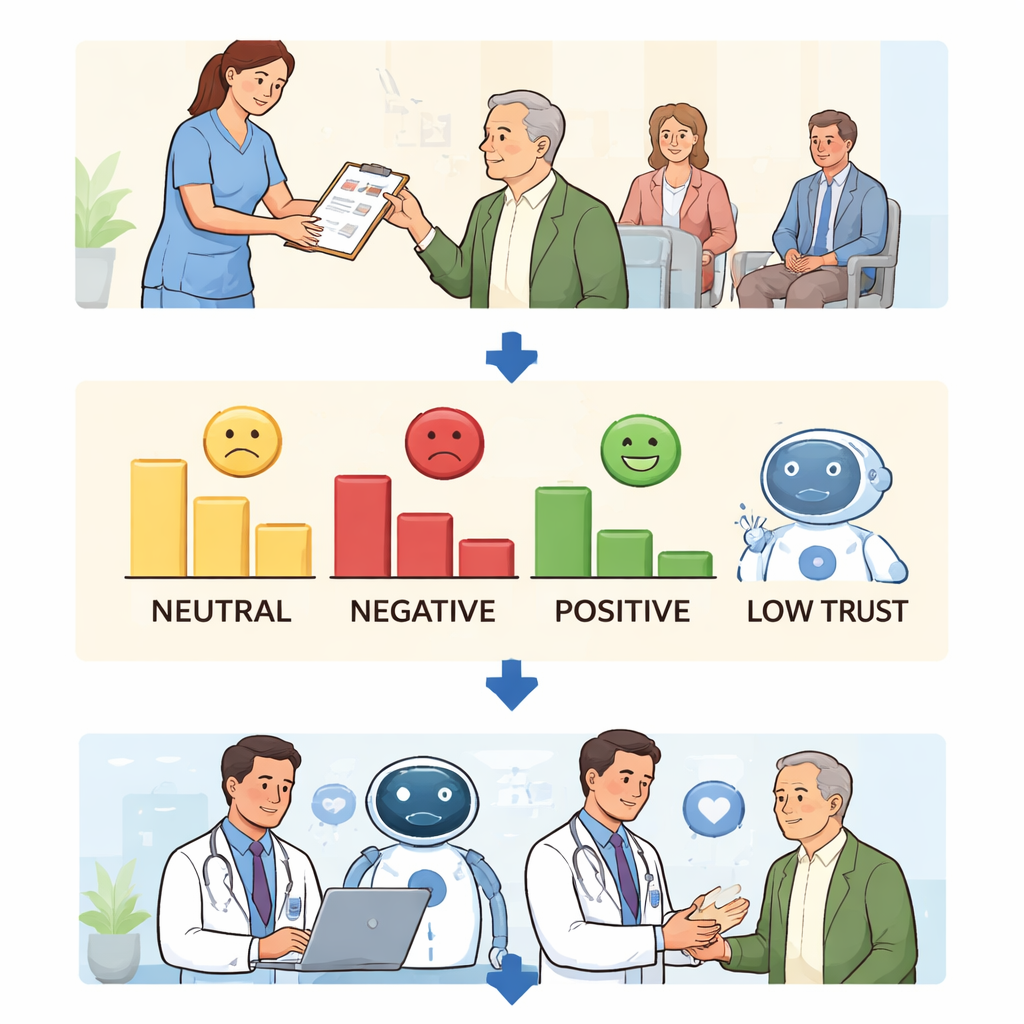
Overall, patients’ feelings about AI in healthcare were cautious rather than enthusiastic. About 43% said their attitude was neutral, 25% felt positive, and 31% felt negative. Younger and better‑educated people tended to view AI more favorably. When the researchers used statistical models, education emerged as the strongest factor: with each step up in schooling, the chance of a more positive view of AI nearly doubled. Age also mattered—each additional year of life slightly reduced the odds of a positive attitude—whereas gender and whether someone lived in a village or small town made little difference. Trust, however, was strikingly low. Only about 6% of patients said they would fully trust an AI‑supported diagnosis even when a doctor was involved, and roughly 41% were unsure whether they would trust such a result at all.
Why the human touch still comes first
Many patients feared that AI could weaken or replace the personal contact they value with their doctors. Almost half believed that a machine could not replace a physician, and another third would accept AI only in a limited, supporting role. The lack of face‑to‑face contact was the most frequently named worry, followed by concern that computers might overlook each person’s unique story and make harmful mistakes. At the same time, more than 86% of respondents said that support from medical staff would be important or very important if they had to use AI‑based systems. Over 40% felt they lacked the skills to manage such tools on their own. Most did not want healthcare to lean more heavily on AI in the future: only 18% supported that direction, while a clear majority opposed it.
What this means for the future of care
For patients in rural Poland, AI in medicine is not mainly a question of clever software but of trust, clarity, and human care. They can see that smart systems might speed up diagnosis or ease staff shortages, but only if doctors remain clearly in charge and personally responsible for decisions. The study suggests that to introduce AI fairly, health systems will need to invest not just in technology but also in plain‑language explanations, patient education, and easy access to human help. In short, people in digitally underserved communities are open to AI as a helpful tool, but they expect it to strengthen, not replace, the relationship with their doctor.
Citation: Kęczkowska, J., Płaza, M. & Henrykowska, G. Expectations and concerns of primary healthcare patients in rural areas and small towns in Poland regarding artificial intelligence. Sci Rep 16, 7062 (2026). https://doi.org/10.1038/s41598-026-37779-2
Keywords: artificial intelligence in healthcare, patient trust, rural health, digital literacy, primary care