Clear Sky Science · en
Safety and exploratory functional effects of topical cord blood serum in glaucoma patients
Why This Eye Study Matters
Glaucoma is one of the leading causes of irreversible blindness, and even with modern pressure-lowering eye drops, some people still lose vision over time. This study explores whether eye drops made from umbilical cord blood serum, rich in natural nerve‑supporting substances, might safely help protect the delicate nerve cells in the eye. For patients and families worried about losing sight despite good pressure control, this kind of research hints at future treatments aimed not just at eye pressure, but at the health of the eye’s wiring itself.
A New Kind of Eye Drop
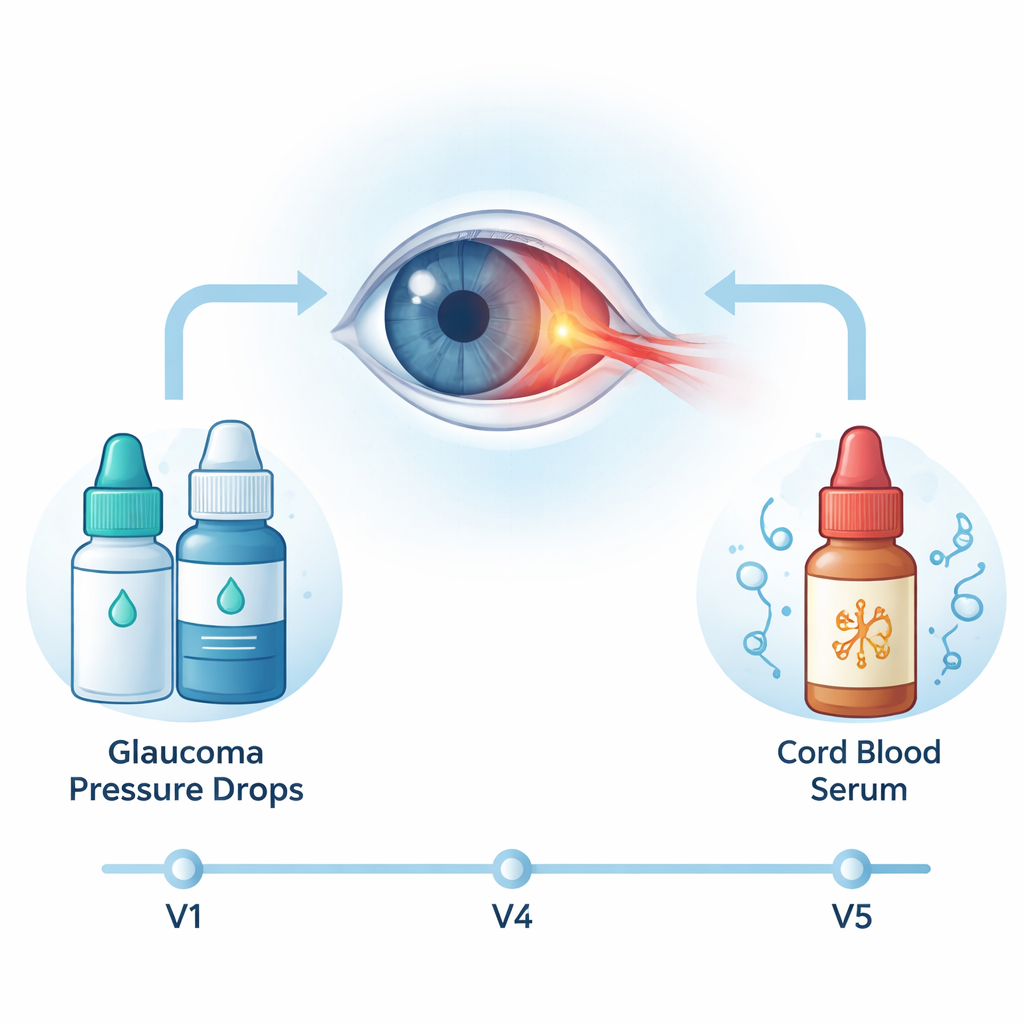
Today’s glaucoma treatments focus almost entirely on lowering the pressure inside the eye. That helps, but it does not directly repair or protect the retinal ganglion cells—the nerve cells that send visual information from the eye to the brain. Umbilical cord blood serum is a natural product collected after birth that contains growth factors such as nerve growth factor (NGF) and brain‑derived neurotrophic factor (BDNF). In animal studies and in people with severe corneal disease, these substances have helped nerves survive and regrow. The researchers asked a straightforward question: if these serum drops are placed on the eye surface of people with glaucoma, are they safe, and do they show any early hints of protecting the eye’s nerve tissue?
How the Trial Was Run
The team conducted a small pilot trial at a single hospital in Italy. They enrolled 20 adults with open‑angle glaucoma, affecting 37 eyes, who had been followed for years and whose eye pressure was already kept below 21 mmHg with standard glaucoma medications. Each patient used cord blood serum eye drops in one or both eyes eight times a day for 60 days, without changing their usual glaucoma drops. The researchers measured several aspects of eye health before treatment, at the end of the 60‑day course, and again 60 days after stopping the serum. Tests included standard vision, eye pressure, visual field testing (which maps side‑vision loss), electrical recordings of retinal function, and imaging of the thin nerve‑fiber layer around the optic nerve.
What the Researchers Found
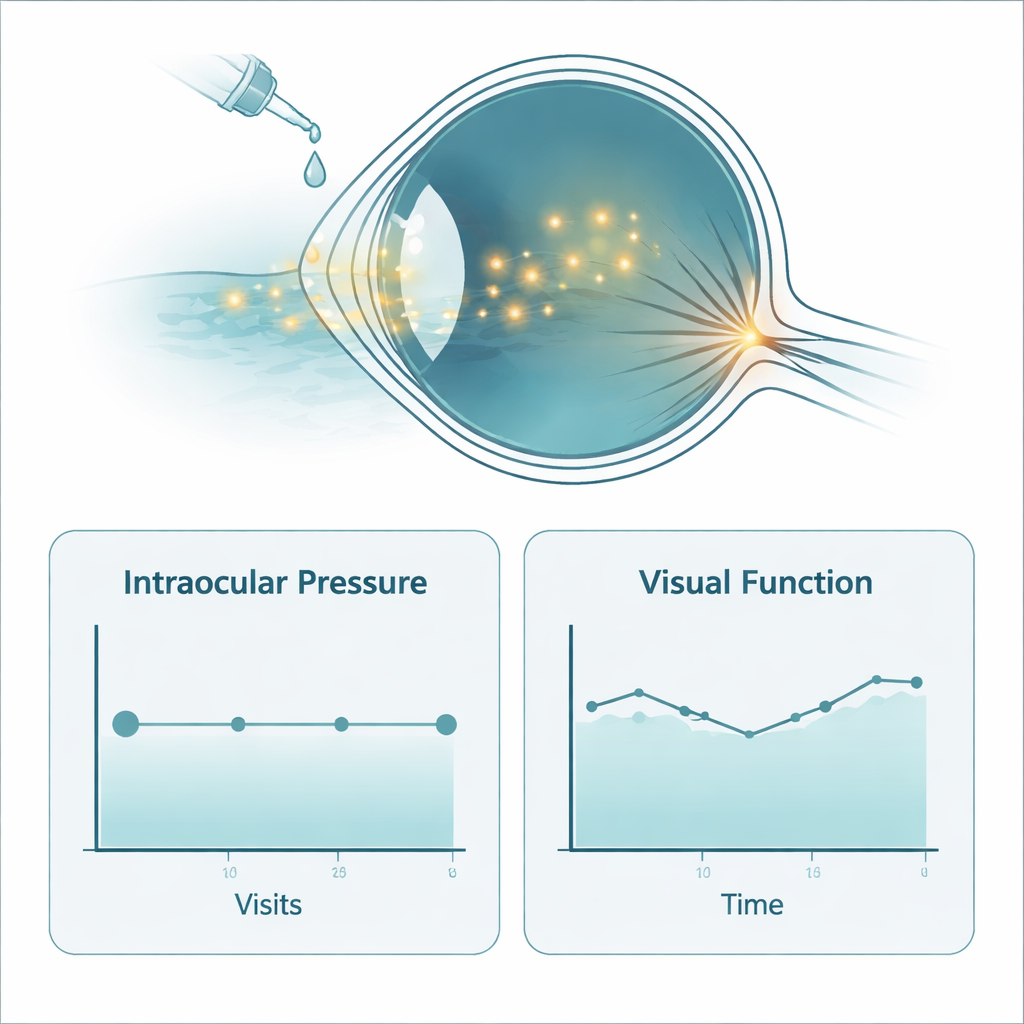
The most important finding was that the cord blood serum eye drops were very well tolerated. No patient stopped the study early, and no local or general side effects were reported. Eye pressure and standard visual acuity stayed stable throughout. The detailed tests of function and structure told a similar story: visual field measures, electrical signals from the retina, and thickness of the nerve‑fiber layer around the optic nerve showed small ups and downs, but none of these changes were statistically convincing or clearly tied to the treatment. A slight thinning seen in one segment of the nerve‑fiber layer appeared to be driven by a few unusual cases and disappeared when those were examined separately.
Hints, But No Clear Benefit Yet
When the team applied more advanced statistics, they saw a modest sign that one particular electrical signal (called the N95 wave) might increase after treatment in patients starting with worse visual field damage. However, this signal was subtle, sensitive to outliers, and did not match clear improvements in day‑to‑day vision. The authors emphasize that such observations should be viewed as exploratory only. With just 20 patients, no comparison group, and only a few months of follow‑up, the study was designed to answer safety questions first, not to provide firm proof that the drops protect vision.
What This Means for People With Glaucoma
For now, cord blood serum eye drops should be seen as an experimental idea rather than a proven glaucoma treatment. This study strongly suggests that frequent use of these drops for two months is safe and does not disturb eye pressure or standard vision in people whose glaucoma is already being treated. At the same time, it did not show clear improvements in vision tests or nerve‑layer thickness. The work sets the stage for larger, carefully controlled trials that can test whether higher doses, different schedules, or longer use can truly slow or prevent nerve damage. In other words, the study opens a door: it reassures that targeting the eye’s nerves directly with natural growth factors appears safe, but it also underlines that more evidence is needed before such drops can be added confidently to routine glaucoma care.
Citation: Lupardi, E., Odorici, S., Buzzi, M. et al. Safety and exploratory functional effects of topical cord blood serum in glaucoma patients. Sci Rep 16, 7033 (2026). https://doi.org/10.1038/s41598-026-37774-7
Keywords: glaucoma, cord blood serum, neuroprotection, eye drops, retinal ganglion cells