Clear Sky Science · en
Blood donor biobank pipeline to collect genome-based samples for research
Why your blood donation matters beyond saving lives
When most people roll up their sleeves to donate blood, they picture their donation helping accident victims or surgery patients. This study from Finland shows that each donation can also quietly power cutting-edge medical research. By building a large “library” of samples from routine blood donors and linking them to health and genetic information, scientists can uncover how our genes, lifestyle, and environment shape health—and even how giving blood may help reduce levels of certain widely feared “forever chemicals” in the body.
Turning everyday donors into a national research resource
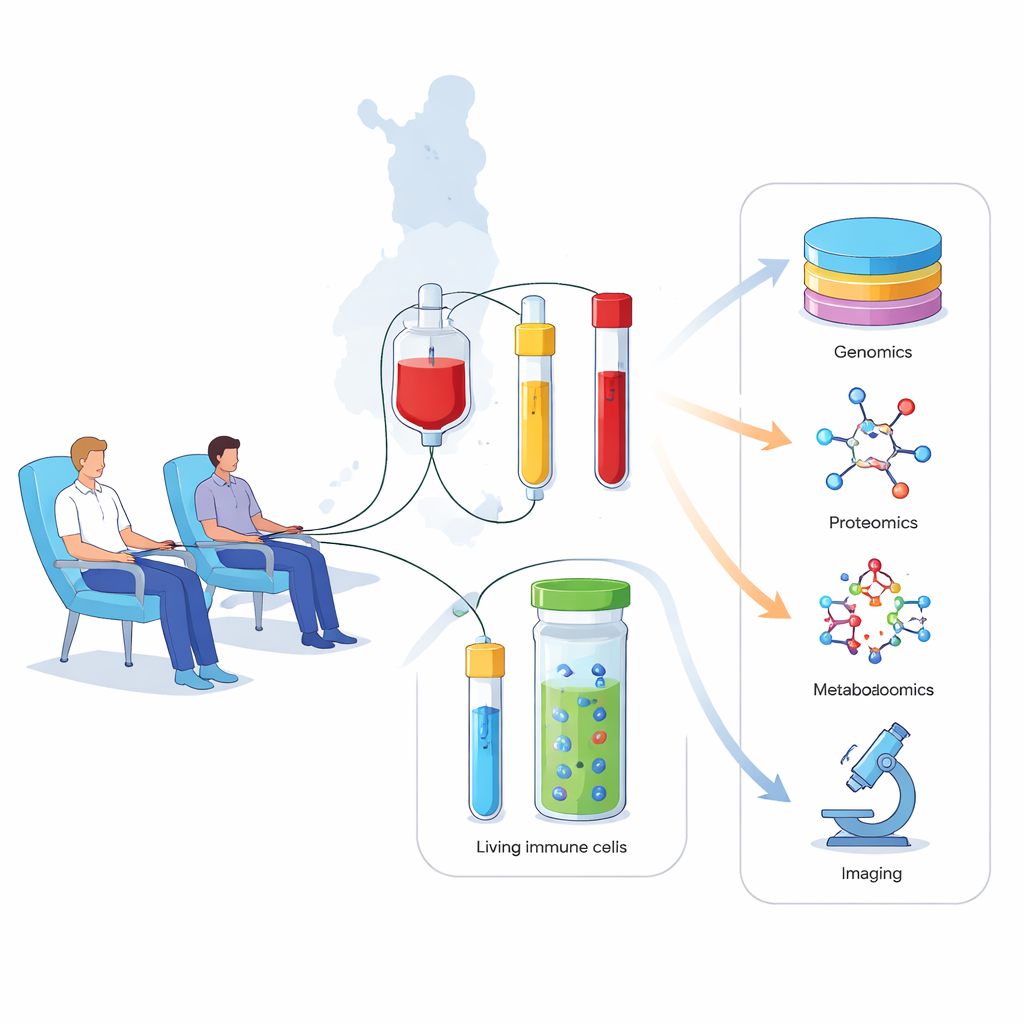
The researchers set up a streamlined system that piggybacks on ordinary blood donation visits. Rather than inviting people to special research appointments, they used the small amount of blood already drawn into a side pouch during regular donations. From this, they prepared high-quality plasma, serum, and living immune cells and stored them in a biobank—an organized collection of samples and data. More than 2,500 Finnish donors were included, all of whom had already contributed genetic data to a large national project called FinnGen that combines DNA with health registry records.
From one tube of blood to thousands of biological measurements
Using these donated samples, the team measured an enormous range of biological markers. They counted blood cells and checked standard clinical chemistry such as cholesterol. They profiled more than a thousand small molecules (metabolites) circulating in the blood, and thousands of proteins using two different high-throughput technologies. They also froze immune cells so they could later study how these cells behave, including how they respond to activation and how their genes are switched on or off. Tests showed that frozen cells thawed well, reacted normally to stimulation, and were suitable for advanced single-cell and imaging studies.
Checking that the samples tell a truthful story
To see whether the material was reliable for research, the scientists asked a simple question: do the patterns in the data match what we already know about biology? The answer was yes. Many metabolites and proteins varied in expected ways with age, sex, body weight, and smoking. For example, markers linked to male hormones were higher in men, and a breakdown product of nicotine was higher in people who had ever smoked. A hormone related to fat tissue closely tracked body mass index. These “sanity checks” showed that the collection and storage pipeline preserved real biological signals rather than introducing confusing noise.
What blood donations reveal about “forever chemicals”
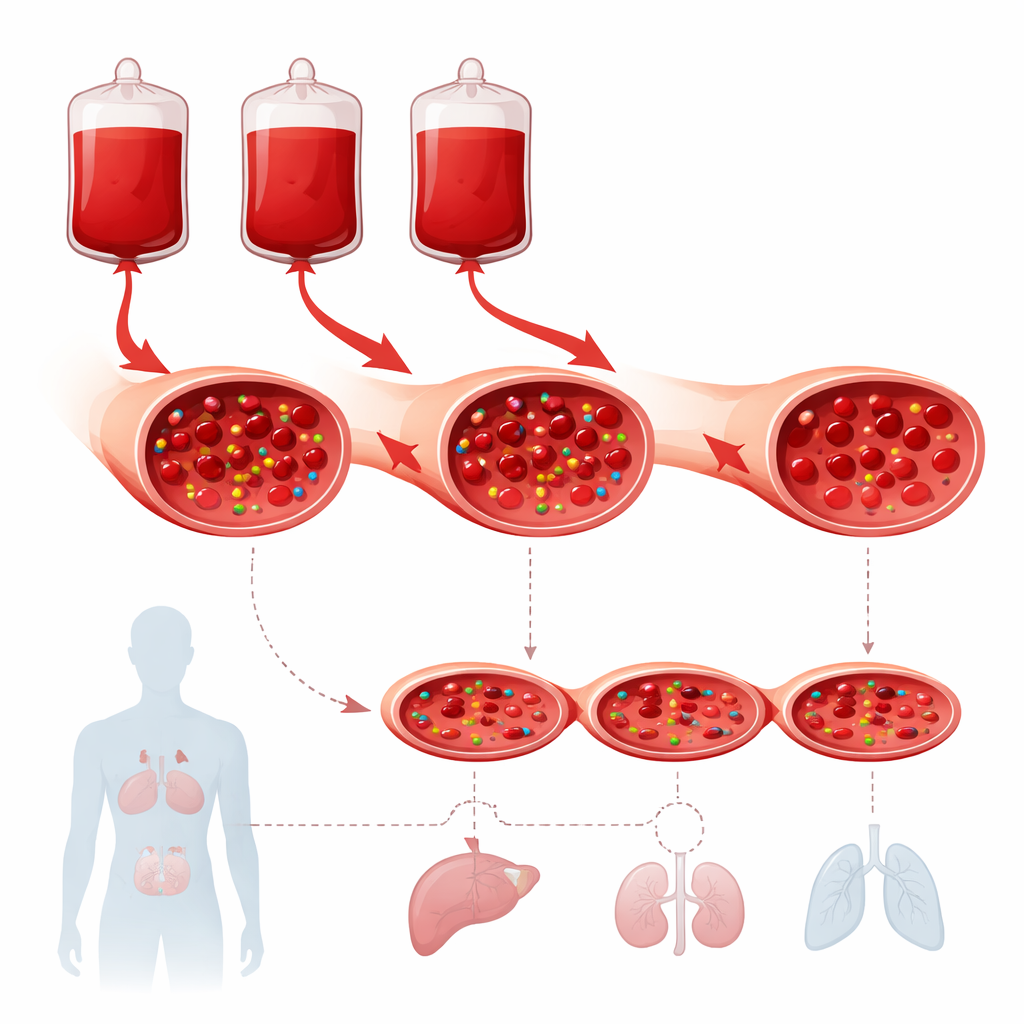
One of the most intriguing findings centered on per- and polyfluoroalkyl substances (PFAS), industrial chemicals that accumulate in the body and have been linked to problems such as impaired reproduction and fetal development. By combining chemical measurements with donation records, the team found that people who had given blood more frequently over the past two years tended to have noticeably lower PFAS levels in their plasma. Older donors generally had higher PFAS, reflecting long-term build-up, but repeated donations appeared to chip away at that burden in both men and women. This supports earlier hints from firefighter studies that giving blood or plasma might help reduce these persistent pollutants in high-exposure groups.
Why healthy donors are powerful partners for genetics
Finland’s unique genetic history means that some rare DNA variants linked to common diseases are unusually frequent there. The study showed that, simply by sampling routine donors, the biobank captured carriers of nearly all the disease-related variants FinnGen is interested in, often with multiple carriers per variant. Because regular donors are generally free of serious illnesses that would bar them from donating, their samples are especially useful for teasing apart the basic biological effects of these variants without the confounding influence of advanced disease or heavy treatment.
What this means for the future of medicine
This work demonstrates that regular blood donation can do double duty: supporting everyday patient care while quietly fueling large-scale research into genes, environment, and disease. With a legal framework and informed consent in place, leftover blood from diversion pouches and immune cells from blood bags can be collected across an entire country in a cost-effective way. The Finnish team shows that such samples are robust enough for the most demanding “multi-omics” studies and can reveal both expected patterns and surprising insights, like the link between frequent donation and lower PFAS levels. For donors, it means that a simple act of generosity not only saves lives today but also helps scientists design better treatments and understand how to protect health in the long run.
Citation: Honkanen, J., Timonen, V.A., Koski, J.R. et al. Blood donor biobank pipeline to collect genome-based samples for research. Sci Rep 16, 10202 (2026). https://doi.org/10.1038/s41598-026-37772-9
Keywords: blood donation biobank, multi-omics, genetic variants, PFAS and health, FinnGen