Clear Sky Science · en
Perceived stress and its association with social support and social factors among lower-middle income mothers of young children in Tunisia
Why this matters for everyday families
Becoming a parent can be both joyful and overwhelming, especially for mothers caring for very young children in places where money and services are limited. This study from Tunisia looks closely at how much stress mothers feel, what kinds of support they receive from family and friends, and how everyday social conditions—like crowded homes or having several small children—shape their mental well-being. Its insights can help families, health workers, and policymakers better understand what mothers need to stay healthy and to care for their children.
Looking at mothers’ stress in real life
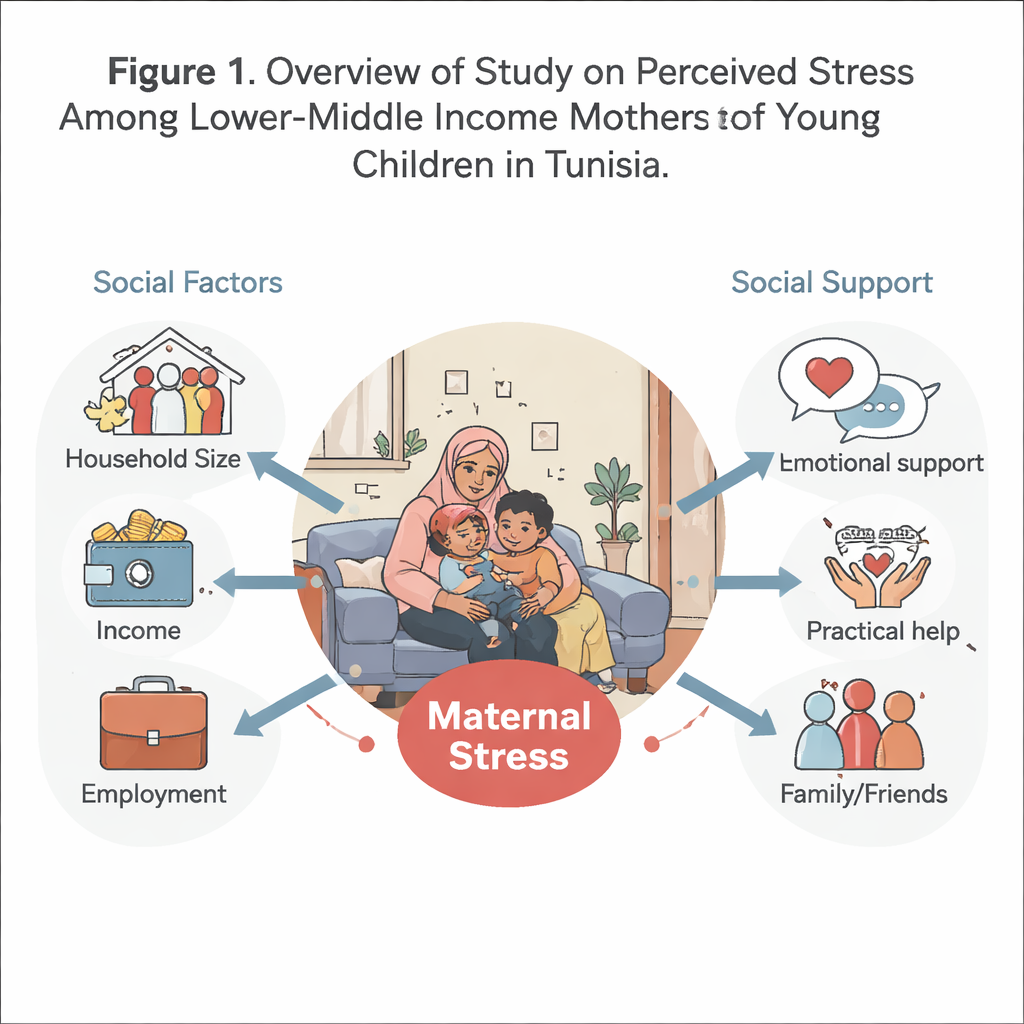
The researchers focused on 200 women in the city of Sousse, on Tunisia’s eastern coast. All were between 18 and 45 years old and had at least one child under the age of five. Many were returning to daily life after maternity leave, juggling childcare, housework, and in more than half of cases, paid employment. Instead of guessing who might be stressed, the team used two established questionnaires: one to measure how stressed the mothers felt over the past month and another to measure how much support they felt they received from people around them, including emotional comfort, practical help, and chances for social interaction.
How common was stress, and who felt supported?
The findings were striking. On average, mothers fell in the moderate range of perceived stress, and nearly nine in ten reported moderate or high stress levels. Only a small minority reported low stress. At the same time, most women said they did receive some form of social support. About 72% had overall good support, and emotional support—feeling understood, reassured, and able to share feelings—was the strongest area. Yet more than a quarter of mothers still lacked adequate support, showing that many women are carrying heavy emotional loads despite living in close-knit communities.
When family size adds to the pressure
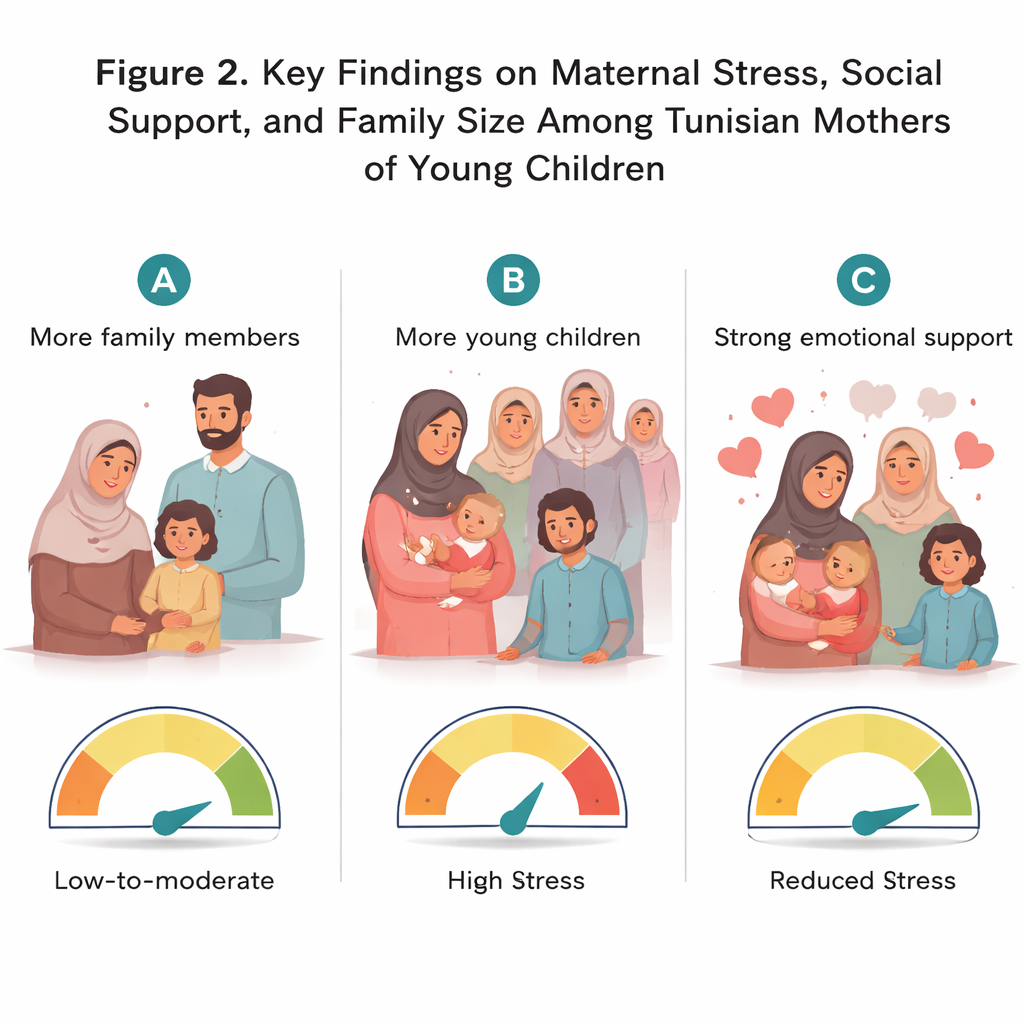
The study also explored how basic social conditions shaped stress. Mothers living in larger households—five or more people—tended to report higher stress than those in smaller homes. Having two or more children under five years old was another important source of pressure. Caring for several very young children at once often means constant attention, interrupted sleep, and more financial strain, especially for lower-middle income families. These realities help explain why, even when income is described as “moderate,” the combination of many dependents and limited resources can leave mothers feeling overwhelmed.
The power of feeling emotionally backed
One of the most hopeful findings was the protective role of emotional support. Mothers who felt they could count on people to listen, show affection, and offer reassurance had noticeably lower stress levels, even after taking household size and number of young children into account. In other words, simply having more people in the home was not enough; what mattered was whether those people—and others in the mother’s circle—provided genuine understanding, kindness, and encouragement. This suggests that small, everyday acts of listening and helping can make a real difference to a mother’s mental health.
What this means for mothers and health services
For a general reader, the takeaway is clear: mothers of young children, especially in resource-limited settings, are under considerable strain, and social support—particularly emotional support—is not a luxury but a lifeline. The authors argue that nurses, midwives, and other health workers should routinely ask mothers about stress during clinic visits, offer basic counseling and stress-management advice, and refer mothers for further help when needed. At the family and community level, creating space for mothers to talk openly about their worries and to receive understanding, practical help, and shared childcare can reduce stress and support healthier, happier outcomes for both mothers and their children.
Citation: Dardouri, M., Ayouni, I., Guesmi, N. et al. Perceived stress and its association with social support and social factors among lower-middle income mothers of young children in Tunisia. Sci Rep 16, 6454 (2026). https://doi.org/10.1038/s41598-026-37771-w
Keywords: maternal stress, social support, young children, Tunisia, family wellbeing