Clear Sky Science · en
Bullying plays a moderated mediation role in the association between emotional intelligence and school engagement through self-esteem
Why Feelings Matter for Staying in School
Why do some young teens feel connected to school while others drift away or even dread going? This study looks at how three inner experiences—how well students understand emotions, how they feel about themselves, and whether they are bullied—come together to shape their bond with school. By examining more than 600 middle school students in Türkiye, the researchers show that bullying can quietly weaken the positive power of emotional skills and self-confidence, making it harder for young people to stay motivated and engaged in class.
Emotions, Confidence, and Showing Up
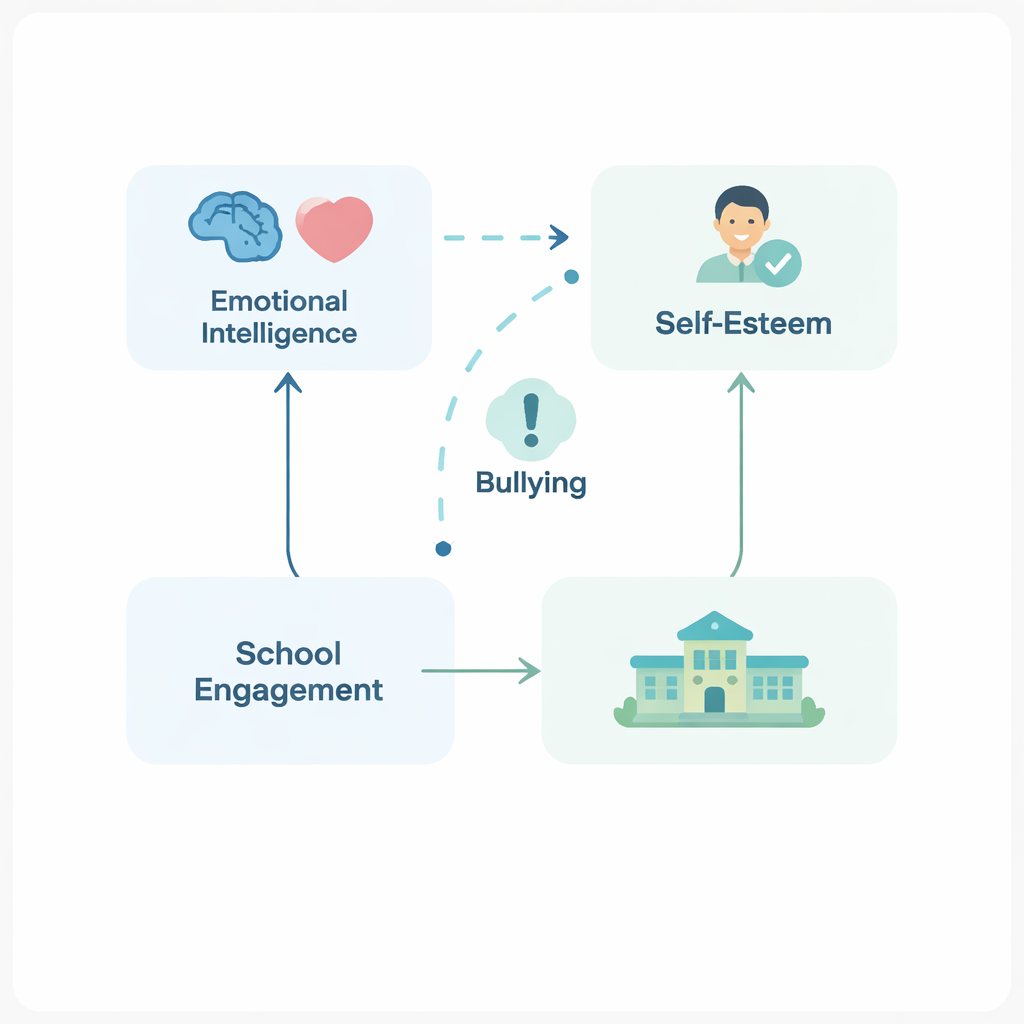
The authors focus on three key pieces of a student’s inner life. First is emotional intelligence: the everyday ability to notice feelings, handle stress, and read others’ emotions. Second is self-esteem: how positively students view themselves overall. Third is school engagement: how much energy, interest, and effort they put into schoolwork and school life. Earlier research suggests that students who manage emotions well tend to feel better about themselves and, in turn, care more about school. But real schools are not always safe havens—bullying can undercut that healthy chain of support.
The Hidden Weight of Bullying
Bullying here means repeated, intentional harm—physical, verbal, or social—usually between students. It is not just a single nasty comment, but a pattern that can leave children feeling unsafe and isolated. The study asks: does bullying simply hurt students directly, or does it also change how emotional intelligence and self-esteem work together to support school engagement? In other words, even if a student is emotionally skilled, does frequent bullying blunt the benefits of those skills and erode confidence and connection to school?
Inside the Study of Middle Schoolers
The researchers surveyed 657 students aged 11 to 14 from public lower secondary schools across seven regions of Türkiye. Students rated their own emotional intelligence, how often they experienced bullying, how they felt about themselves, and how engaged they felt with school. The team used established questionnaires and statistical models designed to look not just at simple links between pairs of factors, but at more complex patterns: whether self-esteem explains part of the link between emotional intelligence and school engagement, and whether bullying changes the strength of that explanation.
What the Numbers Revealed
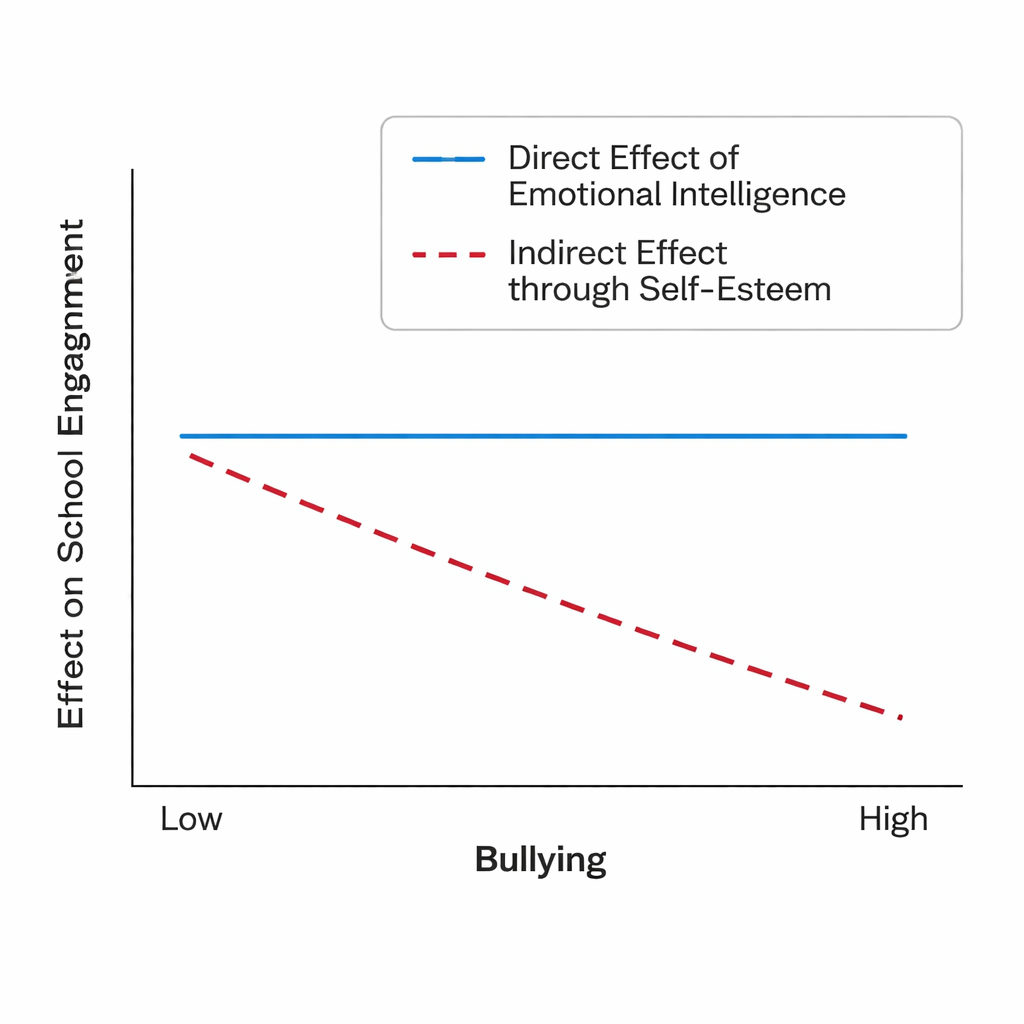
Across the sample, emotional intelligence, self-esteem, and school engagement rose and fell together: students who handled emotions well were more likely to feel good about themselves and to be invested in school. Bullying moved in the opposite direction. Higher bullying scores went hand in hand with lower emotional intelligence, lower self-esteem, and weaker school engagement. When the researchers zoomed in on how these pieces fit, they found that emotional intelligence boosted school engagement partly by raising self-esteem. Crucially, this indirect pathway was strongest when bullying was low and steadily weakened as bullying increased. At high levels of bullying, the positive chain from emotional skills to self-worth to school engagement became much smaller, meaning that the protective effect of being emotionally skilled was partly drowned out by the harm of ongoing victimization.
What This Means for Classrooms
These results suggest that simply teaching students to understand and manage emotions, while valuable, is not enough if the school climate allows bullying to flourish. Emotional intelligence and self-esteem help students feel connected and motivated, but repeated bullying can chip away at both, making it harder for young people to benefit from their own strengths. The authors argue that schools need a two-pronged approach: programs that build emotional skills and self-confidence, and strong, consistent efforts to prevent and respond to bullying. When bullying is kept low, students’ emotional abilities and sense of self can do what they do best—support curiosity, resilience, and a healthy commitment to learning.
Citation: Varlık, S., Akpınar, S., Akpınar, Ö. et al. Bullying plays a moderated mediation role in the association between emotional intelligence and school engagement through self-esteem. Sci Rep 16, 6761 (2026). https://doi.org/10.1038/s41598-026-37764-9
Keywords: bullying, emotional intelligence, self-esteem, school engagement, adolescent mental health