Clear Sky Science · en
Methyl jasmonate-loaded chitosan nanoparticles and biochar improve maize thermotolerance
Helping Corn Keep Its Cool
As heat waves grow more frequent with climate change, staple crops like maize (corn) are increasingly at risk. High temperatures can stunt plants, sap their water, and slash grain yields, threatening food security worldwide. This study tests a creative, eco-friendly combination of two tools—charcoal-like biochar added to soil and tiny, hormone-carrying nanoparticles sprayed on leaves—to see whether together they can help maize stay productive even under intense heat.
Why Heat Is So Hard on Corn
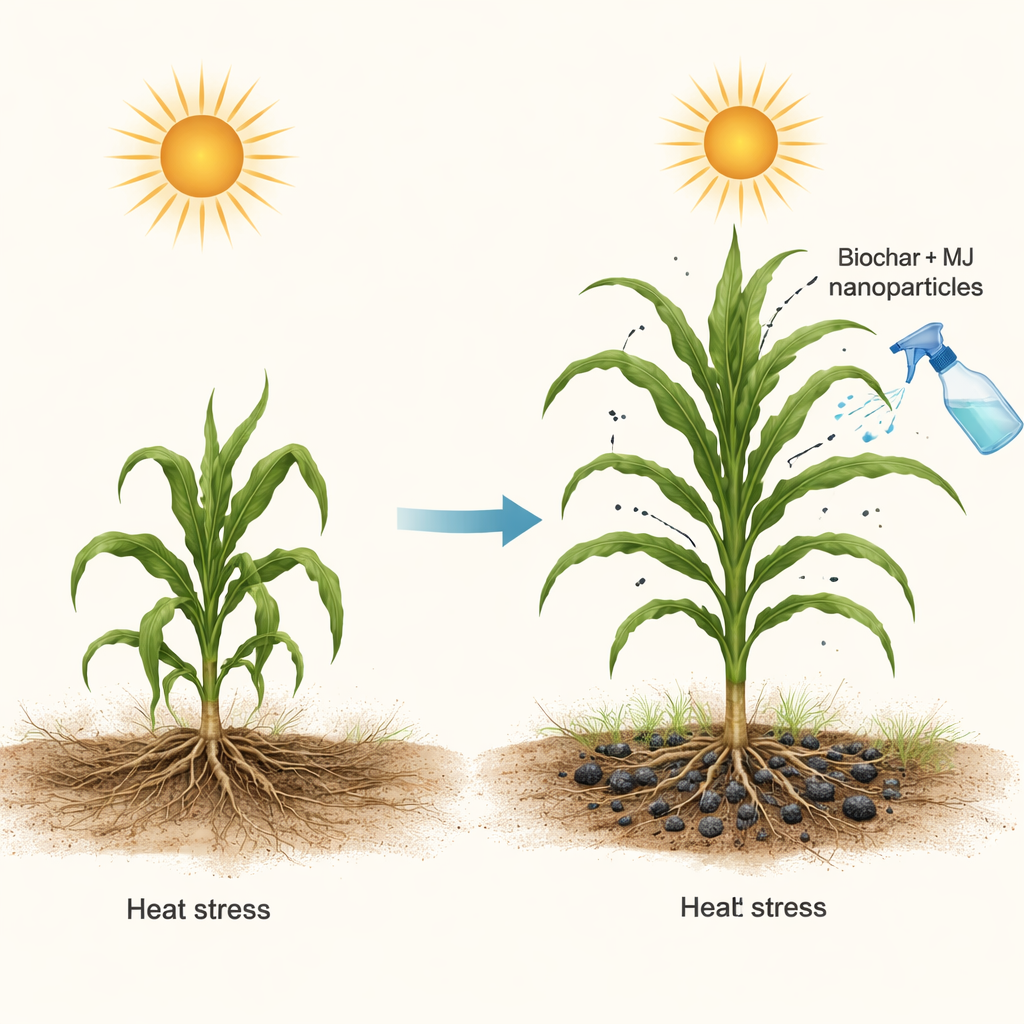
Maize is especially sensitive to high temperatures, particularly around flowering and grain filling. When the air turns hot, corn plants lose water faster, their leaf tissues dehydrate, and the machinery of photosynthesis begins to falter. In this experiment, plants exposed to 40 °C heat without any help grew much shorter, had drier leaves, weaker cell membranes, and produced fewer and lighter grains than plants kept at normal temperatures. In other words, heat stress alone chipped away at nearly every vital function that supports growth and yield.
A Two-Part Protective Strategy
The researchers combined two emerging technologies. First, they mixed the soil with eucalyptus-derived biochar—a highly porous, carbon-rich material that improves soil structure, water-holding capacity, and nutrient availability. Second, they encapsulated methyl jasmonate, a natural plant hormone involved in stress responses, inside tiny chitosan-based nanoparticles. Chitosan comes from natural biopolymers such as shellfish shells and helps protect and slowly release the hormone so it does not quickly break down. Seeds were soaked in the nanoparticle solution, and seedlings received follow-up sprays before facing a controlled heat wave in a greenhouse.
What Happened Inside the Plants
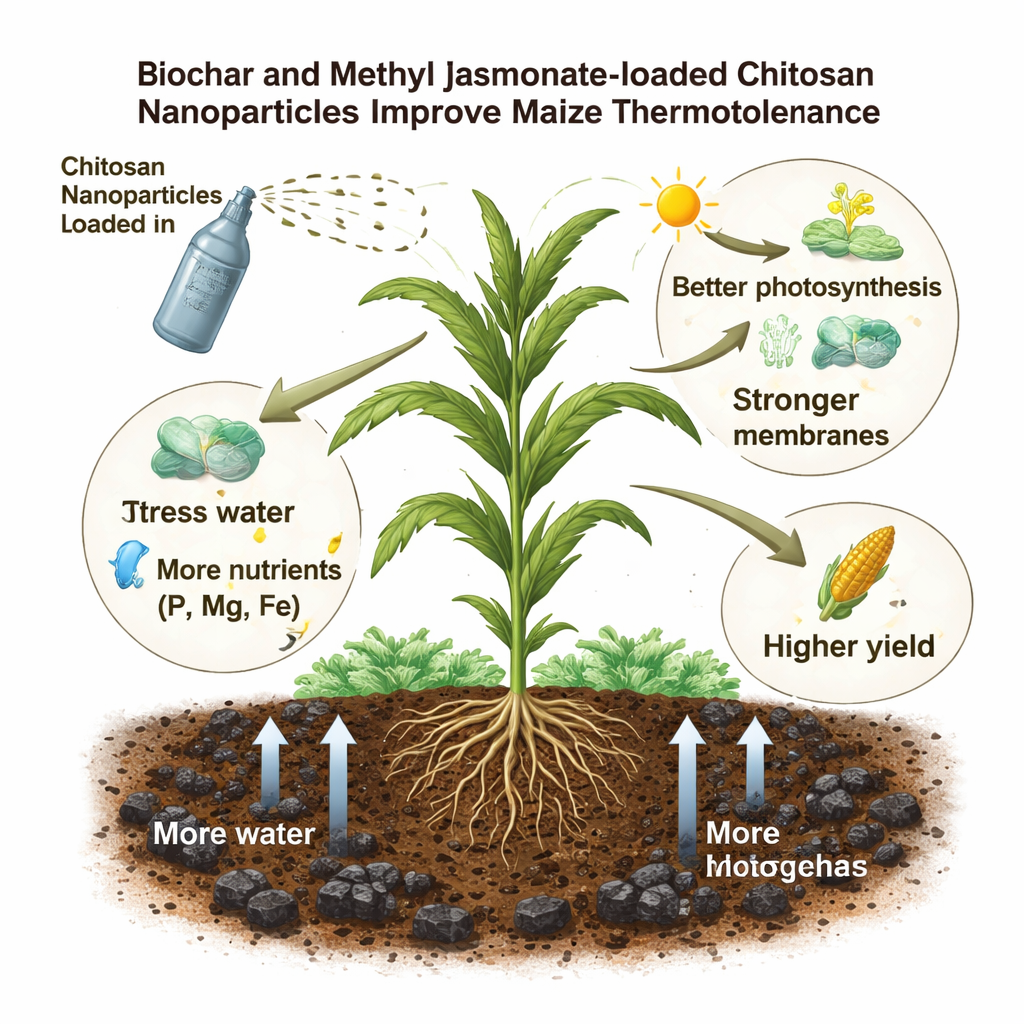
Under heat, the combined treatment of biochar plus methyl jasmonate nanoparticles clearly softened the blow. Compared with heat-stressed plants grown in plain soil, these treated plants were taller, held more water in their leaves, and showed sturdier cell membranes. Their photosynthetic rate rebounded, water-use efficiency improved, and they took up more key nutrients like phosphorus, magnesium, and iron. At the molecular level, leaf tissues switched on a suite of protective genes more strongly than with heat alone. These included genes for heat shock proteins that act like molecular chaperones, proteins that help cells cope with drying, and water-channel proteins that move water more efficiently through tissues. Together, these changes suggest that the plants were not just surviving the heat passively, but actively reprogramming themselves to tolerate it better.
Stronger Harvests Under Stress
The ultimate test of any farm technology is yield. Heat alone reduced both the number of grains per cob and the weight of those grains. Biochar or nanoparticles by themselves helped, but the combination generally did more: under heat, maize receiving both treatments produced more grains and heavier kernels than heat-stressed plants without amendments. While the heat still left a mark, this dual approach recovered a sizable portion of lost productivity, indicating that better water relations, improved nutrient balance, and stronger internal defenses did translate into more food.
What This Means for Future Farming
To a non-specialist, the takeaway is that we may be able to help crops endure extreme heat using smart, nature-inspired materials rather than relying only on more irrigation or conventional chemicals. Biochar works like a soil sponge and nutrient bank, while hormone-loaded nanoparticles act as tiny messengers that tell plants to brace for stress. In this study, together they helped maize stay greener, use water more efficiently, and fill more grains under punishing temperatures. Before farmers can adopt this strategy widely, it must be tested in real fields and evaluated for long-term safety and cost. But the findings point toward a promising, climate-resilient toolkit that could help keep corn yields steadier in a hotter world.
Citation: Soliman, M.H., Abu-Elsaoud, A.M., ALrashidi, A.A. et al. Methyl jasmonate-loaded chitosan nanoparticles and biochar improve maize thermotolerance. Sci Rep 16, 7374 (2026). https://doi.org/10.1038/s41598-026-37762-x
Keywords: maize heat stress, biochar, nanoparticles, methyl jasmonate, climate-resilient crops