Clear Sky Science · en
Field-ready DNA extraction from scat using magnetic nanoparticles for non-invasive wildlife monitoring
Why Animal Droppings Matter for Wildlife Protection
Wild animals can be hard to spot, especially in remote forests and tundra. But they leave behind a reliable calling card: scat, or droppings. Inside those pellets is DNA that can reveal which species passed by and even help track population health over time. This study introduces a fast, low-cost way to pull useful DNA out of scat, right in the field, without bulky lab machines. That could make wildlife monitoring more accurate, more affordable, and easier to do in hard‑to‑reach places.
The Challenge of Telling Look‑Alike Species Apart
Conservation teams often rely on scat to monitor animals like caribou, deer, elk, and moose. The problem is that many of these species produce droppings that look almost identical. In Canada, for instance, caribou scat can be confused with that of white‑tailed deer. Today, the usual fix is to collect samples in the field and ship them, often frozen, to a distant laboratory for DNA testing. This process is expensive, slow, and logistically complicated, especially when samples cross borders and require permits. On top of that, DNA in scat degrades quickly if it warms up during transport, which can ruin valuable samples.
A Simple Magnetic Bead Kit for the Field
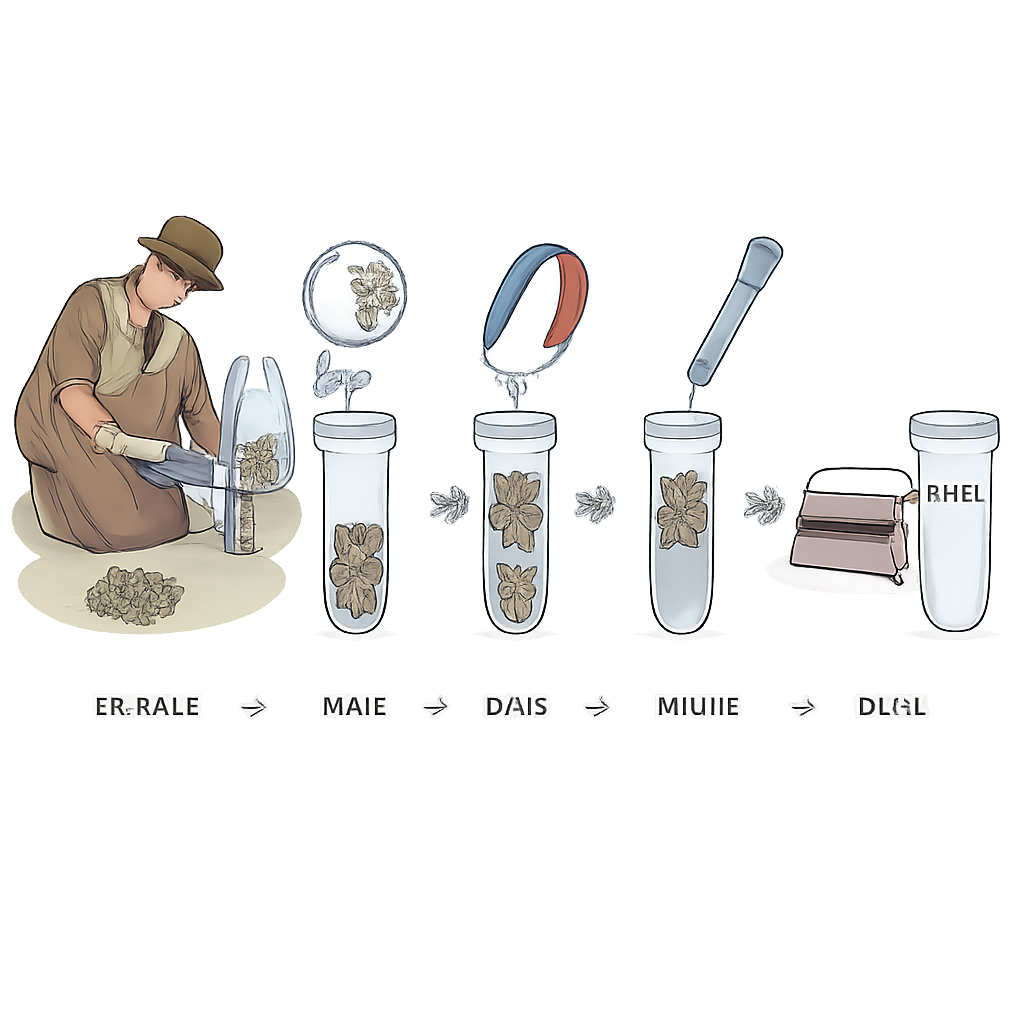
The researchers developed a new extraction method built around tiny magnetic beads coated with silica, a material that naturally grabs onto DNA. The idea is to use only basic tools: small tubes, a magnet, and a few liquid solutions. In under 25 minutes, scat is mixed with a gentle lysis solution that breaks open cells, combined with the beads so DNA sticks to them, washed to remove dirt and inhibitors, and then released into a clean liquid ready for testing. Importantly, the team deliberately avoided harsh, toxic chemicals commonly used in commercial kits, choosing household‑style salts and detergents that are safer for both users and the environment.
Matching or Beating the Lab Gold Standard
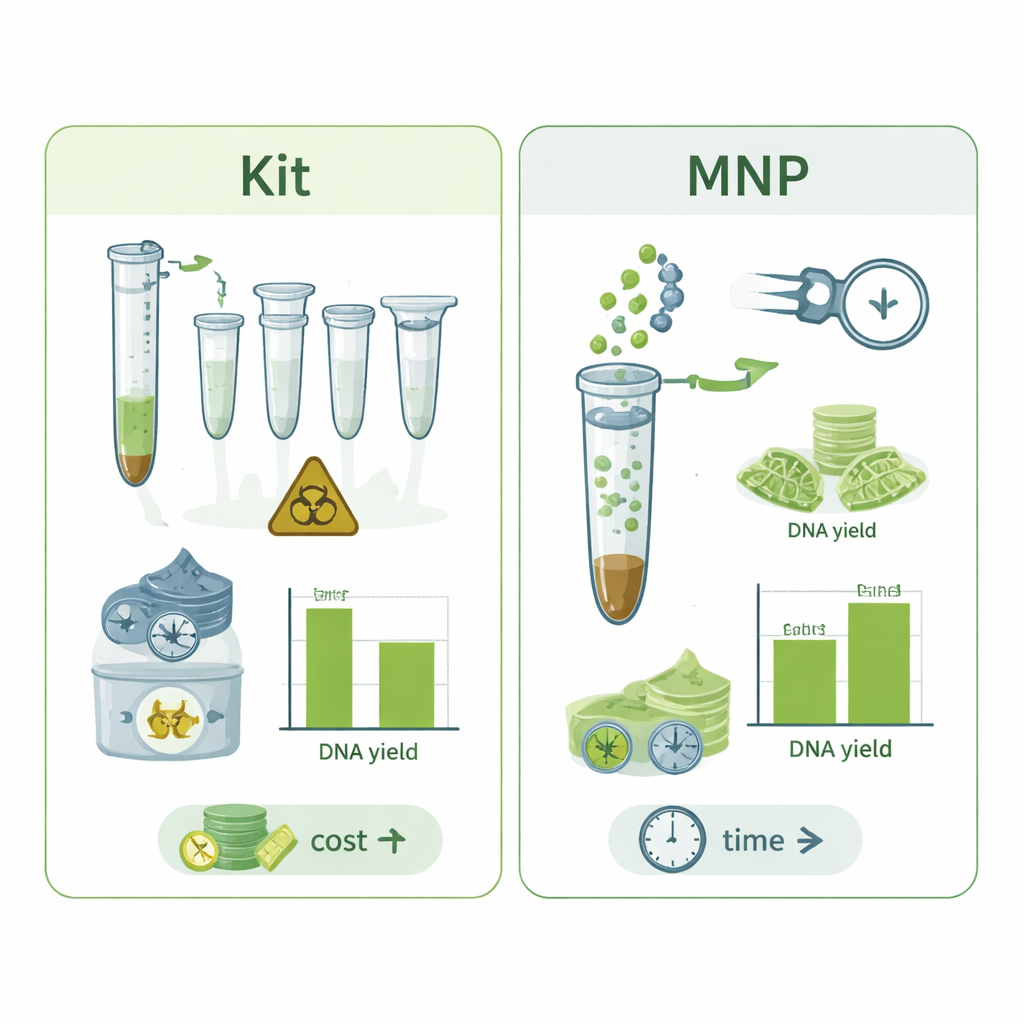
To see how well their method worked, the team compared it against a widely used commercial kit for extracting DNA from stool. They tested 50 caribou scat samples, splitting each one between the two methods. On average, the magnetic bead approach actually produced more DNA than the commercial kit, and that DNA worked just as well in sensitive PCR tests that amplify genetic material. The researchers also created new DNA primer pairs that can either confirm a sample is from caribou specifically or from any member of the deer family. Using these tests, they showed that DNA from their method was clean enough to amplify without extra dilution, meaning inhibitors left over from scat did not get in the way.
Works Across Species and Stands Up to Time
Because conservation work rarely focuses on just one animal, the team also tried their method on scat from white‑tailed deer, elk, and moose. In all cases, they successfully pulled out mitochondrial DNA and, in most samples, nuclear DNA as well—another sign that the extraction is robust. They then asked a practical question: what happens if you extract DNA right away and have to store it? When they left extracted DNA at room temperature or in the fridge for a week, the amount of DNA stayed stable and the samples remained usable for PCR. In contrast, leaving intact scat at room temperature for two weeks, then extracting, led to major DNA losses with both methods. This suggests that doing the extraction quickly, even with simple tools, is a powerful way to “lock in” genetic information before it decays.
From Lab Technique to Backpack Toolkit
For people tracking threatened species like caribou, this work points toward portable, “lab‑in‑a‑box” kits that fit in a backpack. The new method costs under one dollar per sample—far cheaper than commercial kits—and uses far less plastic and no specialized machines. It can also be scaled up in simple racks to handle many samples at once. In plain terms, the authors show that you do not need a high‑tech laboratory to turn animal droppings into reliable genetic clues. With a magnet, a few solutions, and a small PCR device, conservation teams could confirm which species live where, respond faster to population declines, and make better decisions about protecting wildlife and their habitats.
Citation: Dondi, L., Chaudhari, R., Schmitt, N. et al. Field-ready DNA extraction from scat using magnetic nanoparticles for non-invasive wildlife monitoring. Sci Rep 16, 6733 (2026). https://doi.org/10.1038/s41598-026-37759-6
Keywords: wildlife DNA, scat analysis, caribou monitoring, field genetics, magnetic bead extraction