Clear Sky Science · en
Effect of micro-aeration stirring on nitrogen removal in anammox reactor
Cleaning up wastewater more efficiently
Modern factories and cities produce wastewater loaded with nitrogen and organic pollution that can damage rivers, lakes, and coastal waters. Treating this water is costly, especially because traditional methods need a lot of air and added chemicals. This study looks at a newer, low-energy process called anammox and asks a practical question: can adding just a little air at the bottom of an anammox tank make it clean water better without killing the oxygen‑sensitive microbes that drive the process?
A new way to remove nitrogen
Anammox, short for anaerobic ammonium oxidation, is a biological shortcut for removing nitrogen. Instead of the usual multi-step process that needs large blowers and extra carbon-rich chemicals, anammox bacteria convert ammonium and nitrite directly into harmless nitrogen gas under oxygen-free conditions. This makes them attractive for treating industrial wastewaters, such as those from soybean and fructose processing, where nitrogen levels are high and energy savings matter. However, these real-world wastewaters also contain organic matter, measured as chemical oxygen demand (COD), which can favor faster-growing microbes that outcompete anammox bacteria and weaken nitrogen removal.
Gently stirring with tiny amounts of air
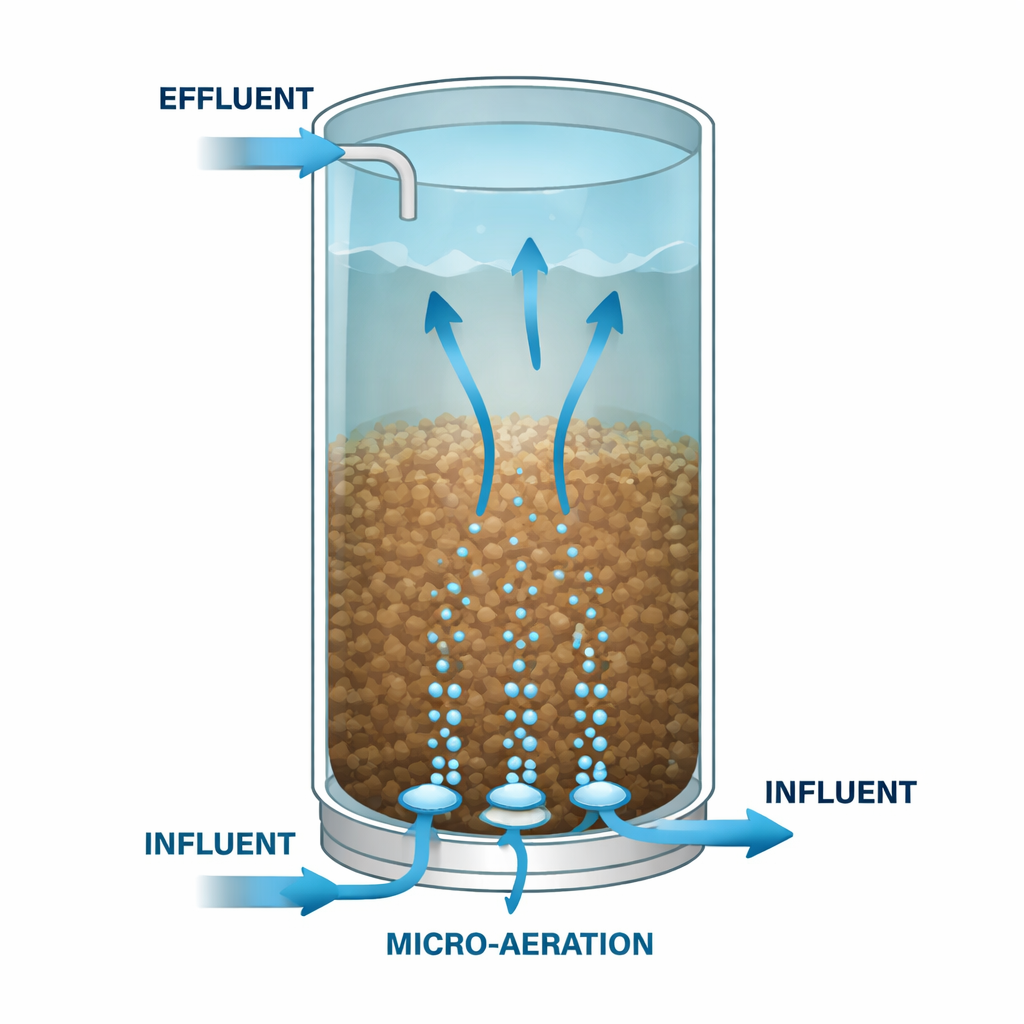
The researchers set up a tall acrylic column reactor filled with reddish-brown anammox granules and real industrial wastewater. They tested three very low aeration rates at the bottom of the tank: almost no stirring (1.5 L/h), moderate micro-aeration (12 L/h), and relatively strong aeration (45 L/h). The goal was twofold: help aerobic microbes near the bottom consume organic matter, and use rising bubbles as a gentle stirring tool to mix wastewater and bacteria without turning the whole reactor into an oxygen-rich environment. Over weeks of steady operation, they tracked COD, different forms of nitrogen, dissolved oxygen, and the activity of the key anammox bacteria.
Finding the sweet spot for air
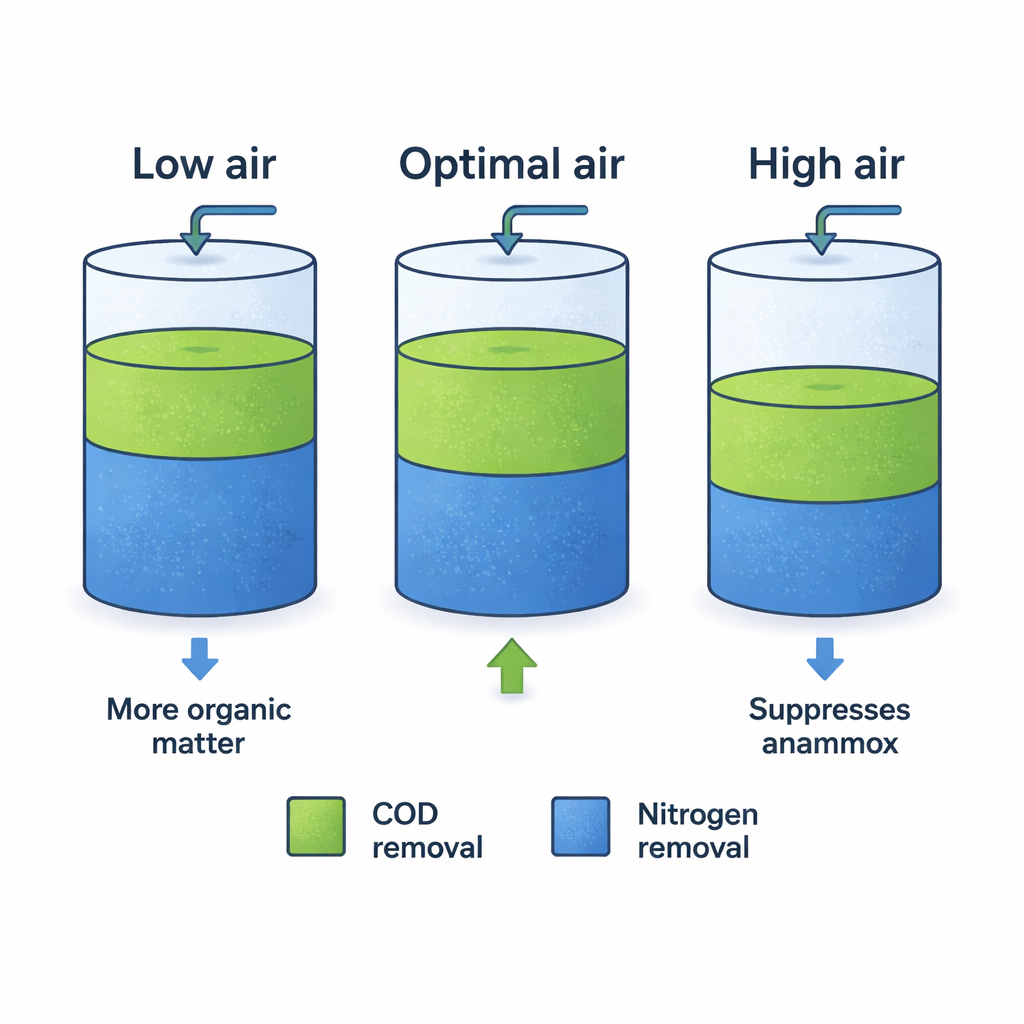
Moderate micro-aeration turned out to be the most effective compromise. At 12 L/h, the reactor removed about 63% of COD and nearly 73% of total nitrogen, with over 92% of that nitrogen removal coming from the anammox pathway itself. The specific activity of anammox bacteria rose to about 0.25 grams of nitrogen removed per gram of biomass each day, meaning the core microbes were working harder and more efficiently. The bubbles both supplied just enough oxygen for other bacteria to break down organic matter and acted as an internal mixer, improving contact between pollutants and the granular sludge. When aeration was too low, organic matter built up and suppressed anammox performance; when aeration was too high, oxygen started to damage the oxygen‑sensitive anammox community.
Watching the microbial cast change
DNA sequencing revealed how the cast of microbes shifted as aeration changed. Under optimal micro-aeration, the group of bacteria that actually perform anammox (within the Planctomycetota phylum, including the genus Candidatus Brocadia) made up a substantial share of the community, matching the strong nitrogen removal seen in the reactor. When the air flow was raised to 45 L/h, these beneficial anaerobic bacteria nearly disappeared, replaced by organisms that prefer oxygen, such as certain Bacillus and Proteobacteria. Although overall COD removal stayed similar, the reactor relied less on anammox and more on conventional, oxygen‑driven pathways, which are less energy‑efficient and reduce the main advantage of the technology.
Implications for real‑world treatment plants
The study shows that carefully controlled micro-aeration—just enough air to stir and polish away organics, but not enough to flood the tank with oxygen—can make anammox reactors more robust for industrial wastewater. For a non-specialist, the message is straightforward: a gentle breath of air at the right level helps these specialized bacteria do their job better, cleaning both carbon and nitrogen from wastewater while using less energy than traditional systems. But too much air tips the balance, harming the key microbes and undermining performance. Finding and maintaining this “sweet spot” of micro-aeration will be crucial for designing future low-energy treatment plants that protect water bodies more sustainably.
Citation: Yan, Z., Xu, Y., Yang, H. et al. Effect of micro-aeration stirring on nitrogen removal in anammox reactor. Sci Rep 16, 6561 (2026). https://doi.org/10.1038/s41598-026-37758-7
Keywords: wastewater treatment, anammox, micro-aeration, nitrogen removal, industrial effluent