Clear Sky Science · en
A deep learning approach to emotionally intelligent AI for improved learning outcomes
Why Feelings Matter for Learning
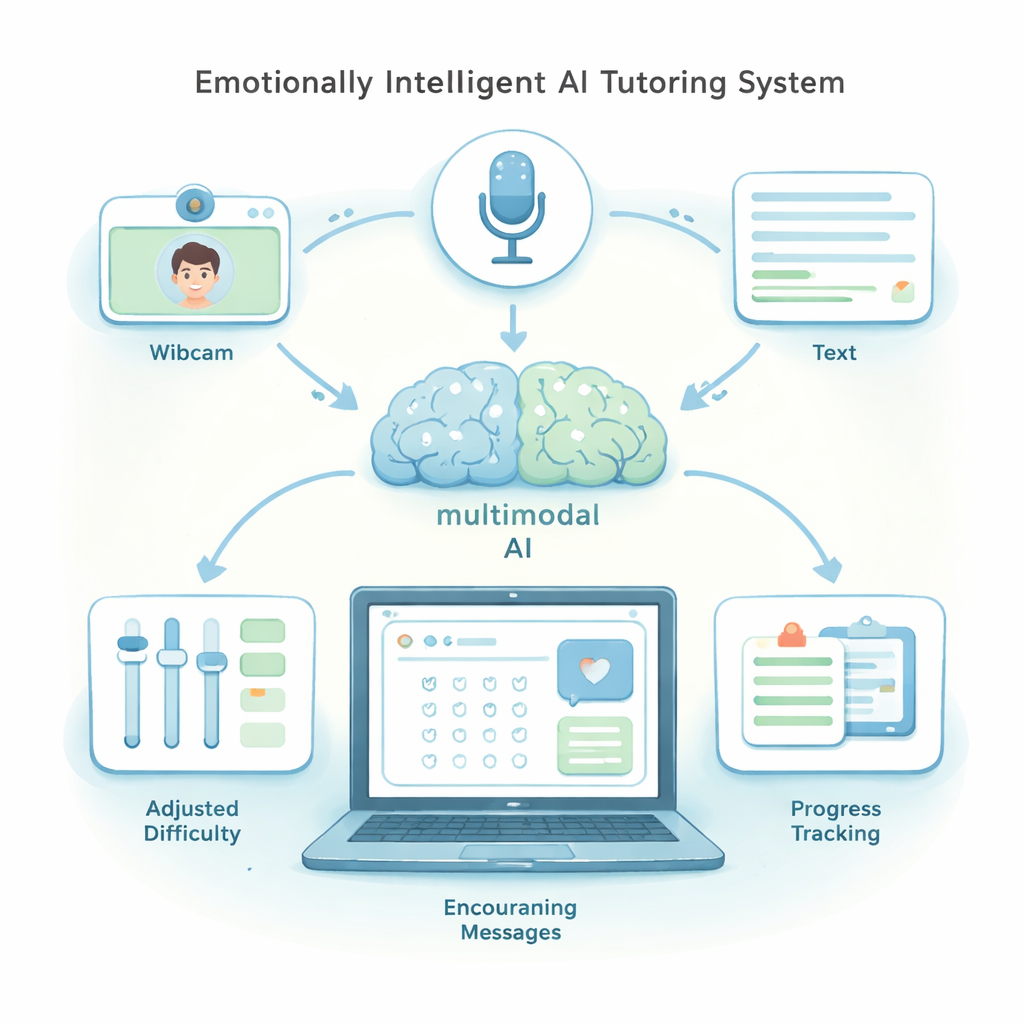
Anyone who has tried to study while stressed or bored knows that emotions can make or break learning. Yet most educational software still treats students like disembodied brains, adjusting only to right or wrong answers. This paper explores a new kind of emotionally intelligent AI tutor—one that can sense how a learner feels from their face, voice, and words, and use that insight to keep them motivated, supported, and on track.
From Test Scores to Real Feelings
Traditional AI education systems focus almost entirely on cognitive data: how many questions a student gets right, how fast they respond, or which topics they miss. Research, however, shows that curiosity, frustration, anxiety, and satisfaction strongly shape attention, memory, and perseverance. Ignoring these feelings can mean that a system ramps up difficulty just as a student is about to give up, or pushes cheerful encouragement when the learner is actually confused. The authors argue that effective tutoring software must read and respond to both what students know and how they feel.
Teaching the Computer to Read Faces, Voices, and Words
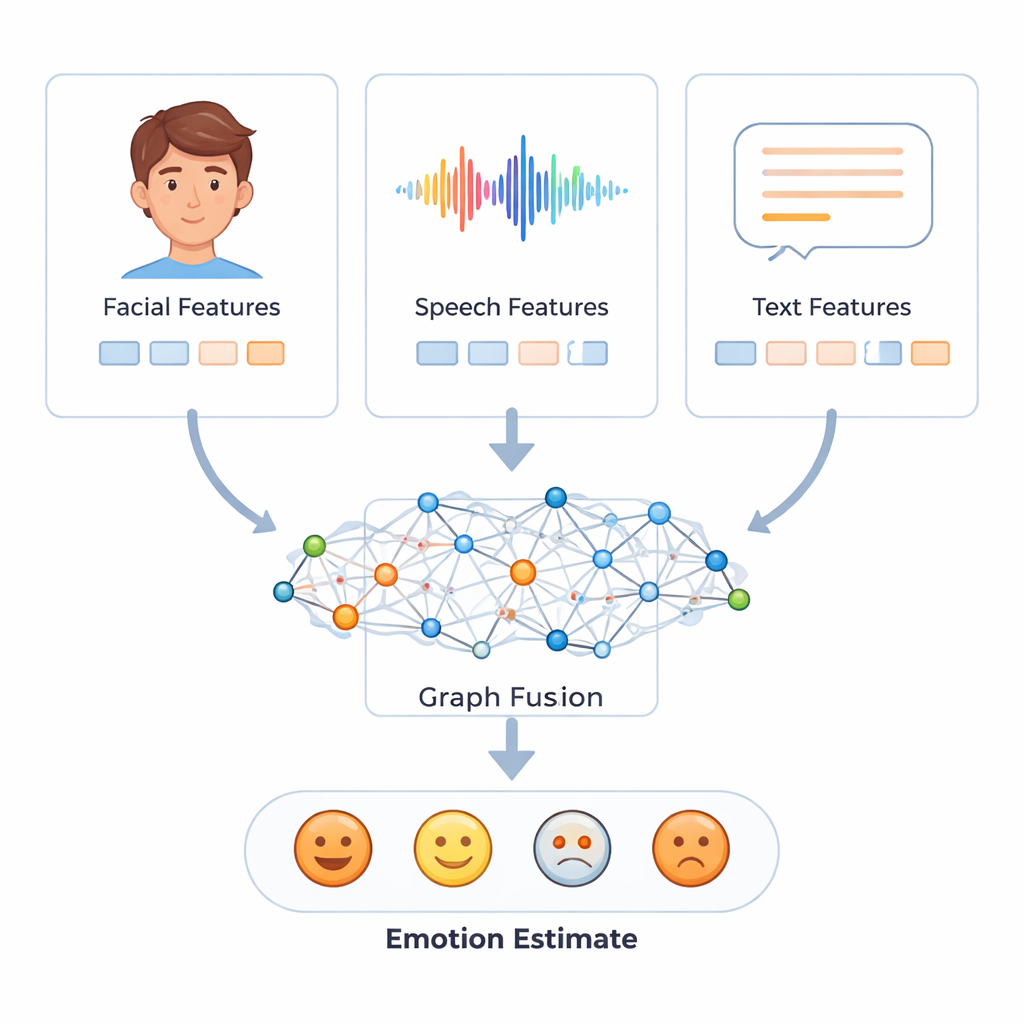
To build an emotionally aware tutor, the researchers combined three streams of information. First, they used a large image collection of people’s faces, labelled with emotions, to train a vision model to spot signals like smiles, frowns, and raised eyebrows. Second, they relied on a speech database of acted conversations tagged with feelings such as anger, happiness, and disappointment, allowing an audio model to pick up clues in tone, pitch, and speaking rate. Third, they trained a language model on text transcripts so it could sense whether written comments or answers sounded confident, frustrated, or neutral. Each of these components transforms raw sights, sounds, or words into a compact “emotional fingerprint.”
How the System Combines Signals into One Mood
Recognizing that no single channel tells the whole story, the team used a graph-based deep learning method to fuse the three fingerprints. In simple terms, the system treats each modality—face, voice, and text—as a connected node in a network. During training, the network learns how these pieces typically relate: for example, whether a tense voice often appears with a serious facial expression, or if upbeat language can offset a tired look. By passing messages along these connections, the model arrives at a joint guess about the student’s emotional state, even when one source of information is noisy or missing. This fused estimate then drives the tutor’s responses, such as slowing the pace, offering hints, or adding encouragement.
Does Emotion-Aware AI Actually Help Students?
The researchers evaluated their system on standard emotion datasets and compared it with more conventional models that used only images, only audio, or simple ways of merging the two. Across emotions like happiness, sadness, anger, and neutrality, the new framework was more accurate and better balanced—particularly for positive and neutral moods that matter for steady studying. In user studies that mimicked learning sessions, students reported that the emotion-aware system felt more supportive and responsive. Measurable outcomes backed this up: learners stayed engaged longer, regulated negative feelings more effectively, and completed more tasks than those using purely cognitive-focused AI tools.
Promise, Pitfalls, and What Comes Next
Because emotional data is sensitive, the authors devote significant attention to ethics. They stress the need for informed consent, strict privacy protections, and safeguards against bias across cultures and age groups. Looking ahead, they envision classroom systems that can sense subtle feelings, work in real time, and plug into tools like intelligent tutors or virtual reality lessons. For non-experts, the key takeaway is straightforward: by paying attention not just to answers but also to expressions, tone, and wording, AI tutors can behave less like grading machines and more like thoughtful human teachers—helping students learn better by understanding how they feel while they learn.
Citation: Wu, X., Lee, T., Lilhore, U.K. et al. A deep learning approach to emotionally intelligent AI for improved learning outcomes. Sci Rep 16, 7431 (2026). https://doi.org/10.1038/s41598-026-37750-1
Keywords: emotion-aware learning, AI tutoring systems, student engagement, multimodal emotion recognition, educational technology