Clear Sky Science · en
Association of central adiposity and metabolic markers with osteopenia and osteoporosis in Chinese adults: a QCT-based cross-sectional study
Why Belly Fat Matters for Your Bones
Most people think of weak bones and broken hips as problems of thin, frail older adults. This study suggests a more surprising culprit: extra fat around the waist and an unhealthy metabolism. By looking closely at the bones and blood tests of more than ten thousand middle-aged and older Chinese adults, the researchers show that where we store fat—and how our bodies handle sugar and fats in the blood—may quietly shape our risk of brittle bones years before a fracture occurs. 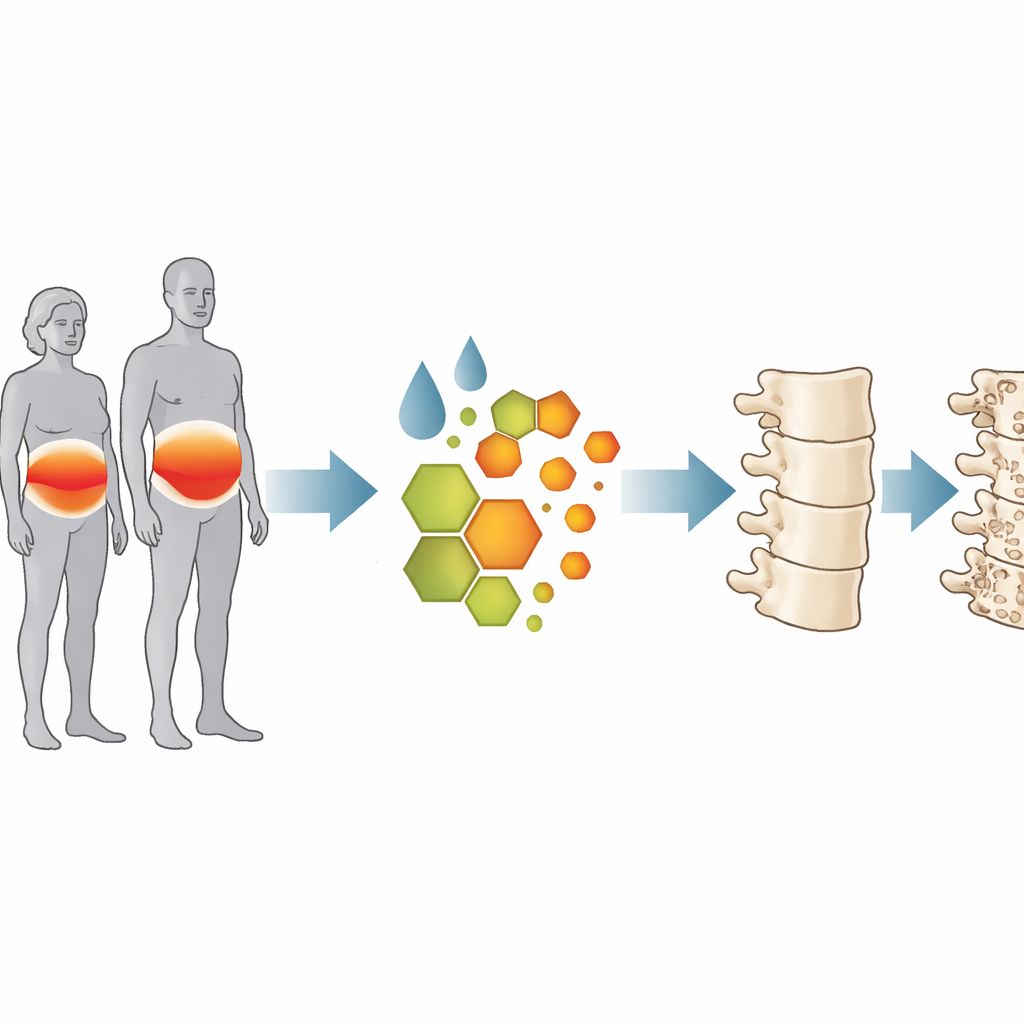
A Closer Look at Bone Health in Everyday Adults
The team studied 10,142 men and women aged 45 and older who visited a hospital health center in Chongqing, China. Instead of using the standard bone scan, they turned to quantitative computed tomography, or QCT, a type of CT scan that can distinguish dense outer bone from the spongy inner network that gives the spine its strength. Based on these scans, people were sorted into three groups: normal bone density, mild bone loss (osteopenia), and more serious bone loss (osteoporosis). Overall, about one in three participants had osteopenia and one in seven had osteoporosis, with the highest rates among older adults and women.
Waist Size, Not Just Weight, Tells a Deeper Story
Traditional measures like body mass index (BMI) simply divide weight by height and often suggest that heavier people have stronger bones. But BMI cannot tell whether extra weight comes from muscle or fat, or whether fat is concentrated around the middle. The researchers therefore used newer body shape measures that focus on the waist. One key measure, the weight-adjusted waist index, compares waist size to body weight and highlights central, or belly, fat. Other measures captured overall fat mass or how the waist compares with height and hips. These waist-focused measures were consistently higher in people with weaker bones, even though their BMI looked similar to those with normal bone density.
Metabolism Links the Waist to the Spine
Beyond body shape, the study explored blood markers that reflect how well the body processes sugar and fats. Two stood out: a combined triglyceride–glucose index, which signals insulin resistance, and long-term blood sugar, measured by glycated hemoglobin. People with higher values on these tests were more likely to have osteopenia or osteoporosis, even after taking age, sex, blood pressure, and lifestyle into account. In contrast, common measures such as BMI and a standard index of visceral fat did not clearly track with bone loss. This pattern suggests that a “tired” metabolism—struggling with high sugar and fat levels—may erode bones over time, especially when paired with extra fat deep in the abdomen.
Who Is Most at Risk and Which Signals Matter Most?
The analysis revealed several clear risk patterns. Osteoporosis was far more common in women than men and rose steeply with age, affecting over 60 percent of those 75 and older. Very lean people, with low overall weight, also faced higher rates of severe bone loss. Yet, among people with similar weights, those with thicker waists, higher relative fat mass, and worse blood sugar and triglyceride levels were most likely to have fragile spines. When the researchers compared how well different measures could single out osteoporosis, the weight-adjusted waist index came out on top, followed by relative fat mass and a body shape measure tied to abdominal fat. 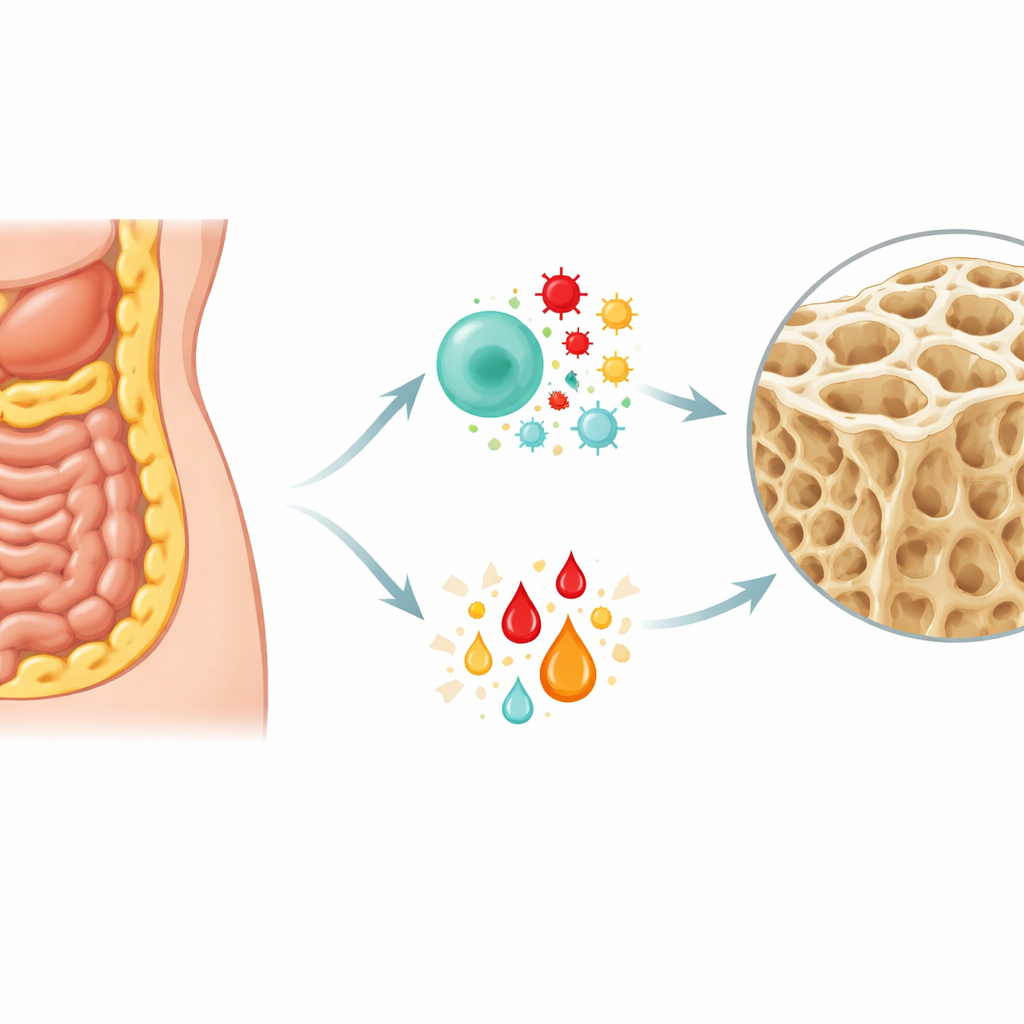
What This Means for Everyday Prevention
For non-specialists, the message is straightforward: bone health is not just about calcium or how much you weigh, but also about where you carry fat and how healthy your metabolism is. A thicker waist relative to body weight and signs of insulin resistance in routine blood tests may serve as early warning flags for hidden bone loss, even in people whose BMI seems normal. While this study cannot prove cause and effect, it suggests that keeping the waistline in check, staying physically active, and controlling blood sugar and blood fats could help protect the spine as well as the heart. Simple measures like waist and weight, when interpreted with these newer indices, may help doctors spot people at higher risk of osteoporosis long before the first fracture.
Citation: Wang, L., Yu, P., Chen, Y. et al. Association of central adiposity and metabolic markers with osteopenia and osteoporosis in Chinese adults: a QCT-based cross-sectional study. Sci Rep 16, 8311 (2026). https://doi.org/10.1038/s41598-026-37749-8
Keywords: osteoporosis, belly fat, bone density, insulin resistance, aging