Clear Sky Science · en
Multi-omics analysis reveals sevoflurane exacerbates cognitive impairment in diabetic mice by disrupting lipid metabolism
Why this matters for people with diabetes
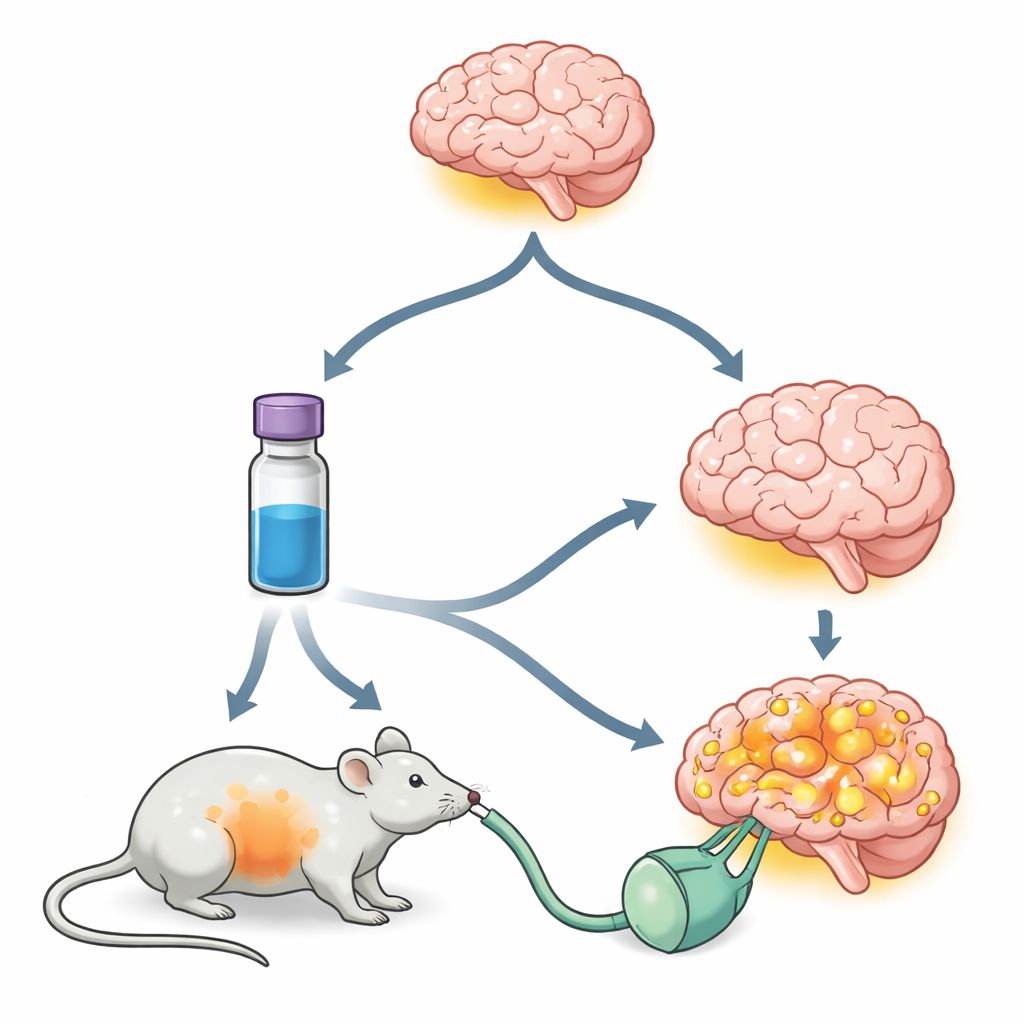
As more people with diabetes live longer and need surgery, doctors must choose anesthetic drugs that keep both the heart and brain safe. This study in mice explores how two common anesthetics, sevoflurane (a gas) and propofol (an injection), affect memory and brain health when diabetes is already harming the brain. The findings suggest that one drug may quietly worsen thinking problems by disturbing how the brain handles fats, even after a short, routine exposure.
Memory tests reveal a risky choice
The researchers used a well-established mouse model of type 1 diabetes, created by a drug that damages insulin-producing cells. These diabetic mice already showed learning and memory problems compared with healthy mice when tested in water and maze tasks that measure spatial memory and mental flexibility. When the diabetic mice were given two hours of sevoflurane anesthesia, their performance in the water maze became noticeably worse: they took longer to find the hidden platform and spent less time searching in the correct area. In contrast, diabetic mice that received propofol did not show extra memory decline beyond what diabetes alone caused, and neither anesthetic impaired learning in non-diabetic animals.
Brain cells are hurt by diabetes, not briefly by the drugs
To see what was happening inside the brain, the team examined the hippocampus, a region crucial for memory. Diabetes alone reduced the number of mature nerve cells, weakened the density of tiny communication points called synapses, and increased deposits of beta-amyloid, a protein also linked to Alzheimer’s disease. Surprisingly, a single short exposure to either sevoflurane or propofol did not produce clear extra structural damage: the loss of nerve cells, the drop in synaptic markers, and the build-up of amyloid were not significantly worse after anesthesia. This suggests that the sevoflurane-related memory problems arise less from visible cell death and more from subtler functional or metabolic changes in surviving neurons.

Gene activity points to changes in fat handling
The scientists next looked at which genes in the hippocampus were switched on or off after anesthesia. Both anesthetics altered sets of genes involved in how new neurons mature and integrate into brain circuits. However, sevoflurane stood out for strongly affecting genes that govern the burning and recycling of fats. It dialed down genes that promote fatty acid breakdown and dialed up genes that block this process. These shifts hint that sevoflurane may push the diabetic brain away from using fats efficiently as fuel, potentially starving neurons of energy and causing harmful by-products to accumulate.
Metabolic fingerprints confirm fat traffic jams
To test whether these gene changes had real chemical consequences, the team performed a broad survey of small molecules in the hippocampus. In diabetic mice exposed to sevoflurane, levels of several free fatty acids and complex phospholipids were higher, while helpful intermediates used to shuttle fats into energy-burning pathways were reduced. Molecules that normally support flexible cell membranes and brain signaling, including certain polyunsaturated fats and their related lysophospholipids, were also depleted. Together, these patterns paint a picture of clogged fat-processing machinery: fats pile up in storage-like forms, their transport into energy pathways slows, and the balance of membrane-building lipids is disturbed.
What this could mean for patients
In plain terms, this study suggests that in the setting of diabetes, sevoflurane may worsen existing memory problems not by dramatically killing more brain cells, but by upsetting how the brain fuels and maintains them—especially through fat metabolism. Propofol did not show the same harmful pattern under the conditions tested. Although these results come from mice and a single short exposure, they highlight that anesthetic choice may matter more for people with diabetes, whose brains already face metabolic stress. Future work, including human studies, could help identify which drugs and supportive therapies best protect thinking and memory in this vulnerable group.
Citation: Liu, X., Wang, F., Liu, C. et al. Multi-omics analysis reveals sevoflurane exacerbates cognitive impairment in diabetic mice by disrupting lipid metabolism. Sci Rep 16, 9543 (2026). https://doi.org/10.1038/s41598-026-37737-y
Keywords: diabetes and memory, anesthesia and cognition, sevoflurane, brain lipid metabolism, propofol