Clear Sky Science · en
Electronically switchable dual-band capsule antenna for wireless endoscopic applications
Swallowing a Tiny Camera for a Full-Color Checkup
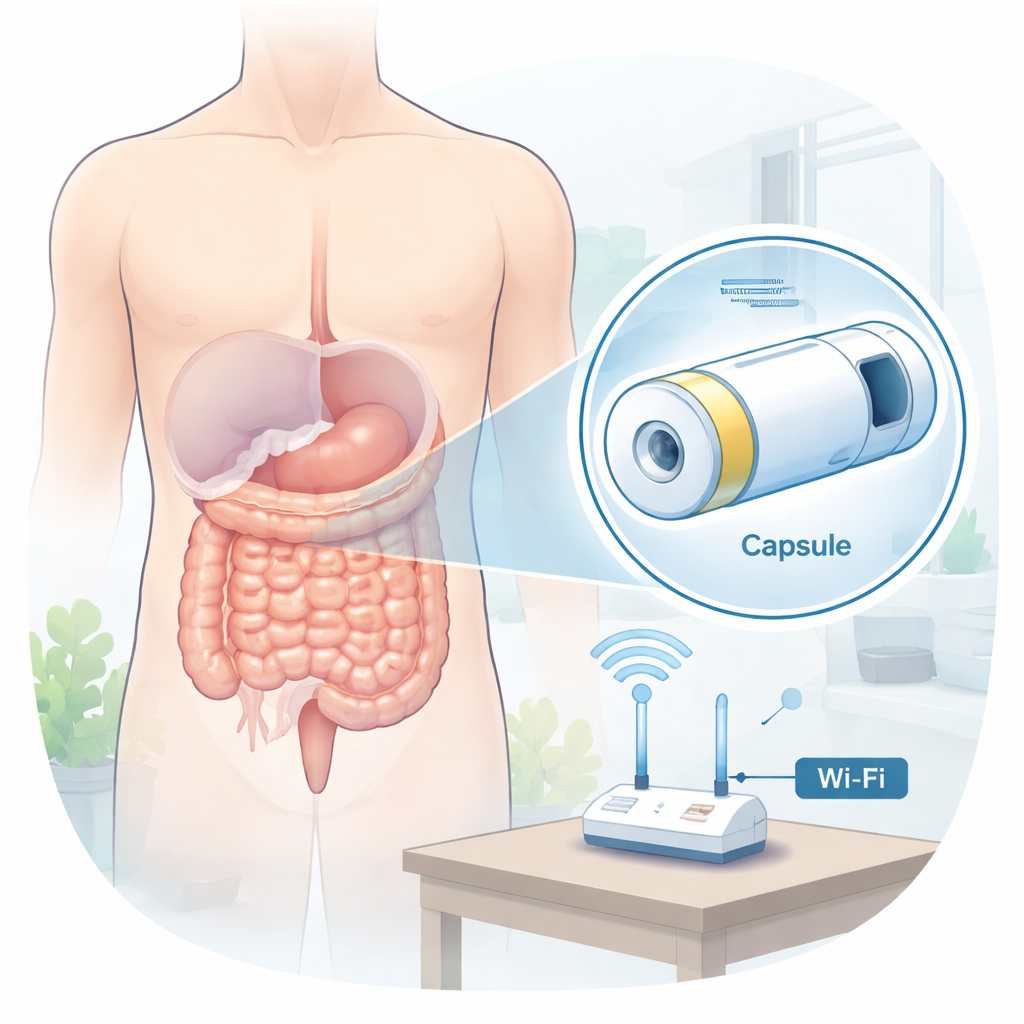
Imagine getting a detailed medical checkup of your small intestine simply by swallowing a pill. No tubes, no sedation—just a smooth capsule that travels naturally through your gut while sending pictures and data to your doctor. This article explores how engineers have created a tiny, power‑saving antenna inside such capsules so they can talk directly to ordinary Wi‑Fi networks, bringing hospital‑grade imaging closer to everyday home use.
Why the Small Intestine Is Hard to See
The small intestine is a long, twisting tube packed tightly in the abdomen. Traditional wired scopes cannot easily reach most of it, so important signs of bleeding, inflammation, or cancer can be missed. Capsule endoscopy—swallowable electronic “pills” with a camera and radio link—was developed to solve this problem. But squeezing a camera, battery, electronics, and a radio antenna into something about the size of a large vitamin is extremely challenging, especially when body tissues soak up radio energy and safety rules strictly limit how much radiation can be used.
Turning a Wi‑Fi Pill into an Internet‑Ready Device
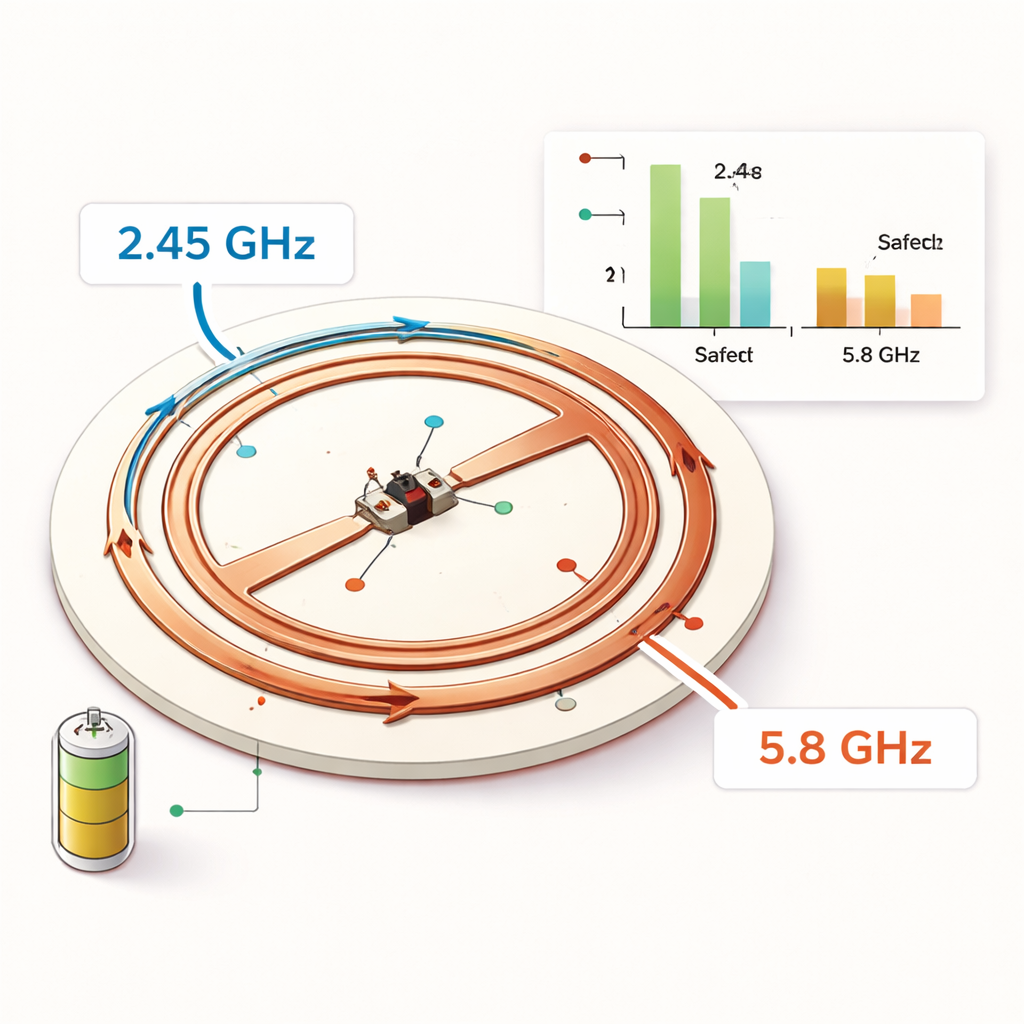
Modern low‑power chips now make it realistic for a capsule to connect directly to standard Wi‑Fi, just like a phone or laptop. The researchers designed a new antenna that works at the two main Wi‑Fi frequency bands, around 2.45 and 5.8 gigahertz. The lower band is better for reliable communication through the body and is ideal for steady, low‑rate tasks like control signals and basic status updates. The higher band can carry much more information, making it suitable for bursts of high‑quality images and video. Crucially, they fit this antenna onto a flat disc only 9.5 millimeters across and just 1.27 millimeters thick, so it occupies less than 2 millimeters of the capsule’s length, leaving ample room for optics, sensors, and a wide camera view.
Smart Ring Design to Fit Inside a Pill
Instead of using a solid metal patch, the team built the antenna as two thin copper rings on a special circuit board. This “dual ring” layout helps squeeze two useful radio behaviors, or bands, into the same tiny footprint. A carefully shaped slot in the metal backing underneath further fine‑tunes how the antenna radiates. Tests in simulation and in the lab showed that the antenna can send and receive signals well at both Wi‑Fi bands, even after being placed inside material that mimics human intestines, such as minced chicken. Although the measured signal strength (or gain) is modest—common for antennas operating deep inside the body—the researchers show that it is still enough to maintain a reliable link to a Wi‑Fi access point several meters away.
Switching the Fast Channel On Only When Needed
Constant high‑speed transmission would quickly drain the capsule’s small battery and raise the body’s exposure to radio energy. To address this, the antenna includes a tiny electronic switch called a PIN diode that can connect or disconnect part of the inner ring. When the switch is off, the capsule uses only the lower‑frequency band for basic communication, consuming less power and reducing long‑term exposure. When doctors need sharper images or video, the capsule can briefly turn the switch on, lighting up the higher‑speed band at 5.8 gigahertz. Calculations based on widely accepted safety standards show that, with this design and careful duty‑cycling, the capsule can transmit safely while still offering enough power for robust communication.
What This Means for Future Checkups
This work demonstrates a very compact, dual‑band, and electronically switchable antenna tailored specifically for swallowable medical capsules. By fitting into a tiny space yet still supporting standard Wi‑Fi links at safe power levels, the design helps pave the way for capsules that can stream images directly to existing home or clinic networks. For patients, this could mean easier, more frequent screening of the small intestine with less discomfort and lower cost, turning a once complex hospital procedure into something closer to a routine, at‑home test.
Citation: Gogosh, N., Khalid, S., Malik, B.T. et al. Electronically switchable dual-band capsule antenna for wireless endoscopic applications. Sci Rep 16, 6385 (2026). https://doi.org/10.1038/s41598-026-37736-z
Keywords: capsule endoscopy, implantable antenna, wireless medical devices, Wi-Fi telemetry, smart pill