Clear Sky Science · en
Ovarian reserve and oxidative stress in sickle cell anaemia: a comparative cross-sectional study
Why this matters for women with sickle cell
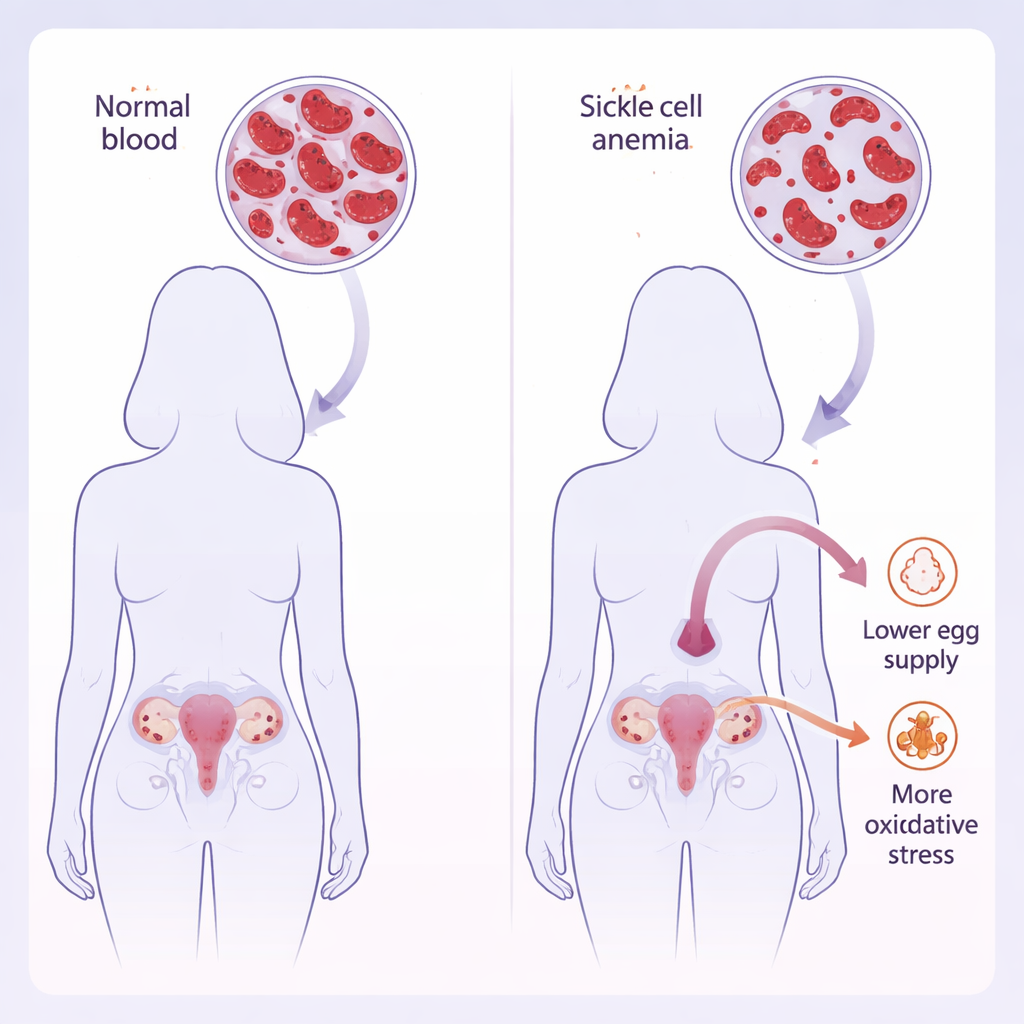
As advances in medical care allow more girls and women with sickle cell anaemia to reach adulthood, many are asking a deeply personal question: how will this disease affect my chances of having children? This study from Lagos, Nigeria, looks closely at the health of the ovaries in women with sickle cell anaemia, comparing them with women who do not have the condition, to find out whether fertility may be quietly reduced long before any problems are obvious.
Looking at the ovary’s “egg savings account”
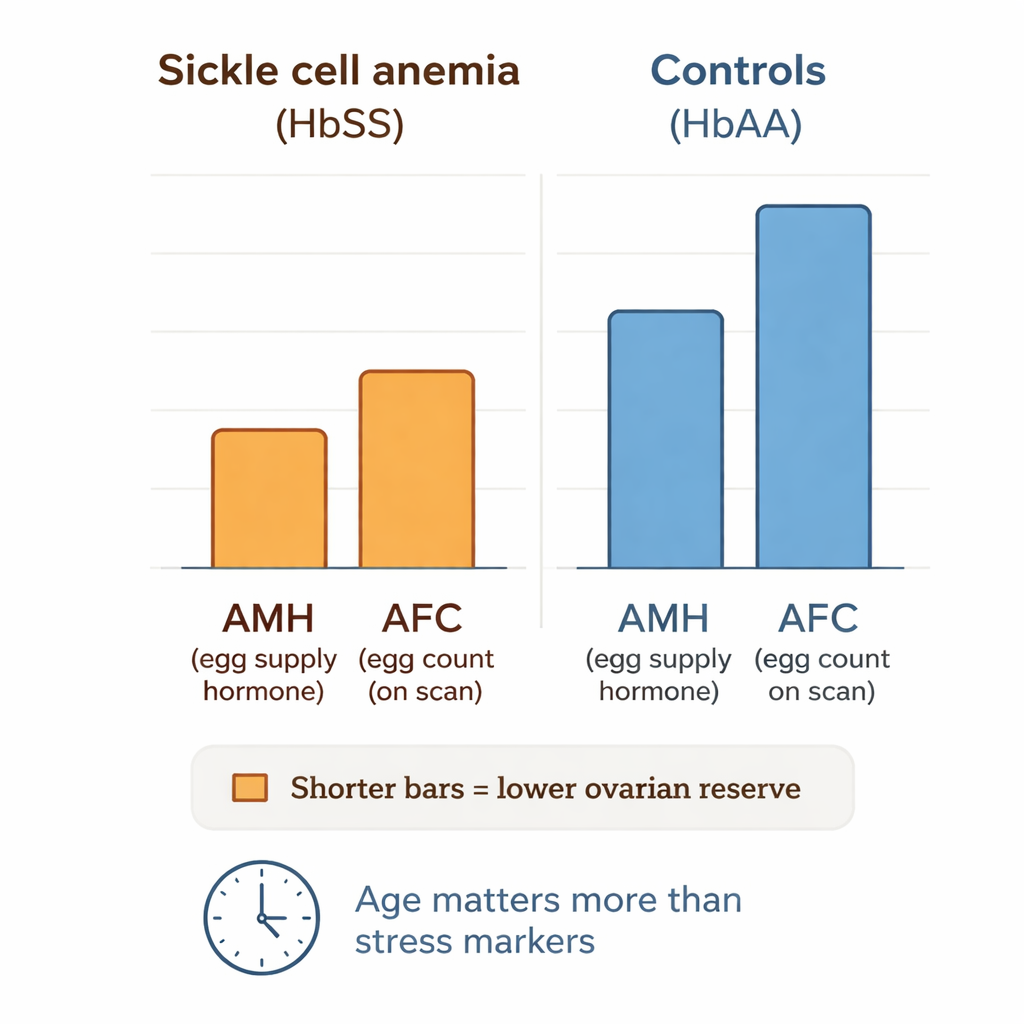
A woman’s fertility depends in part on her ovarian reserve—essentially, how many viable eggs remain and how well the ovaries are functioning. Because we cannot simply count every egg, doctors rely on two practical stand-ins. One is a hormone in the blood called anti-Müllerian hormone (AMH), which reflects how many small growing follicles—the tiny sacs holding immature eggs—are present. The other is the antral follicle count (AFC), measured by ultrasound, which directly tallies these small follicles in the ovaries. Higher AMH and AFC usually signal a healthier “egg savings account” and a better outlook for future fertility.
Who was studied and how
The researchers carried out a comparative cross-sectional study at Lagos State University Teaching Hospital. They enrolled 75 sexually active women aged 18 to 45 with sickle cell anaemia (the HbSS genotype) who were clinically stable, and 75 age-matched women with normal haemoglobin (HbAA) and proven fertility. All participants completed questionnaires about their background and health, had their height and weight measured, provided blood samples, and underwent a transvaginal ultrasound scan. The blood tests measured AMH and several markers related to oxidative stress—chemical imbalances linked to cell damage—while the scans provided the AFC.
What the tests revealed about egg reserve
Despite being similar in age and education, the two groups differed in important ways. Women with sickle cell anaemia were more likely to be underweight and to have had no children yet. More strikingly, their ovarian reserve markers were clearly lower. Median AMH levels in the sickle cell group were less than half those of the control group, and their median AFC was also reduced. Fewer women with sickle cell anaemia had high AMH or high follicle counts, suggesting that, as a group, they start adulthood with a smaller or more fragile egg supply. As expected for all women, ovarian reserve declined with age—but in those with sickle cell anaemia, age showed a strong negative link with both AMH and AFC, underscoring how quickly their reserve may shrink over time.
Oxidative stress: a suspect but not the main culprit
Because sickle cell anaemia is known to cause ongoing oxidative stress—damage from unstable oxygen-related molecules—the team examined several blood markers tied to the body’s defences and damage levels. One key protective enzyme, superoxide dismutase, was significantly lower in women with sickle cell anaemia, consistent with a higher oxidative burden. However, other markers, including glutathione peroxidase and malondialdehyde, did not differ meaningfully between groups. When the researchers looked for direct links between these oxidative stress markers and ovarian reserve, they found none. In more detailed analyses, age emerged as the only clear predictor of both AMH and AFC, while body mass index, blood counts and oxidative stress measures did not independently explain the differences.
What this means for fertility planning
Taken together, the findings suggest that women with sickle cell anaemia, even when clinically stable, may have a reduced ovarian reserve compared with their peers, and that this reserve declines with age. The oxidative stress that accompanies the disease may still contribute to damage over many years, but the specific blood tests used here could not capture a simple, direct relationship. For patients and clinicians, the practical takeaway is that fertility should be part of early and routine discussions in sickle cell care. Assessments such as AMH testing and ultrasound can help individual women understand their reproductive timeline, and options like early family planning or fertility preservation can be considered before the window of opportunity narrows.
Citation: Adewunmi, A.A., Olumodeji, A.M., Ottun, A.T. et al. Ovarian reserve and oxidative stress in sickle cell anaemia: a comparative cross-sectional study. Sci Rep 16, 6661 (2026). https://doi.org/10.1038/s41598-026-37734-1
Keywords: sickle cell anaemia, female fertility, ovarian reserve, oxidative stress, reproductive health