Clear Sky Science · en
Time-dependent comparison of serum BDNF responses following high-intensity interval exercise and moderate- and low-intensity continuous exercise in healthy young men
Why short, hard workouts may sharpen the brain
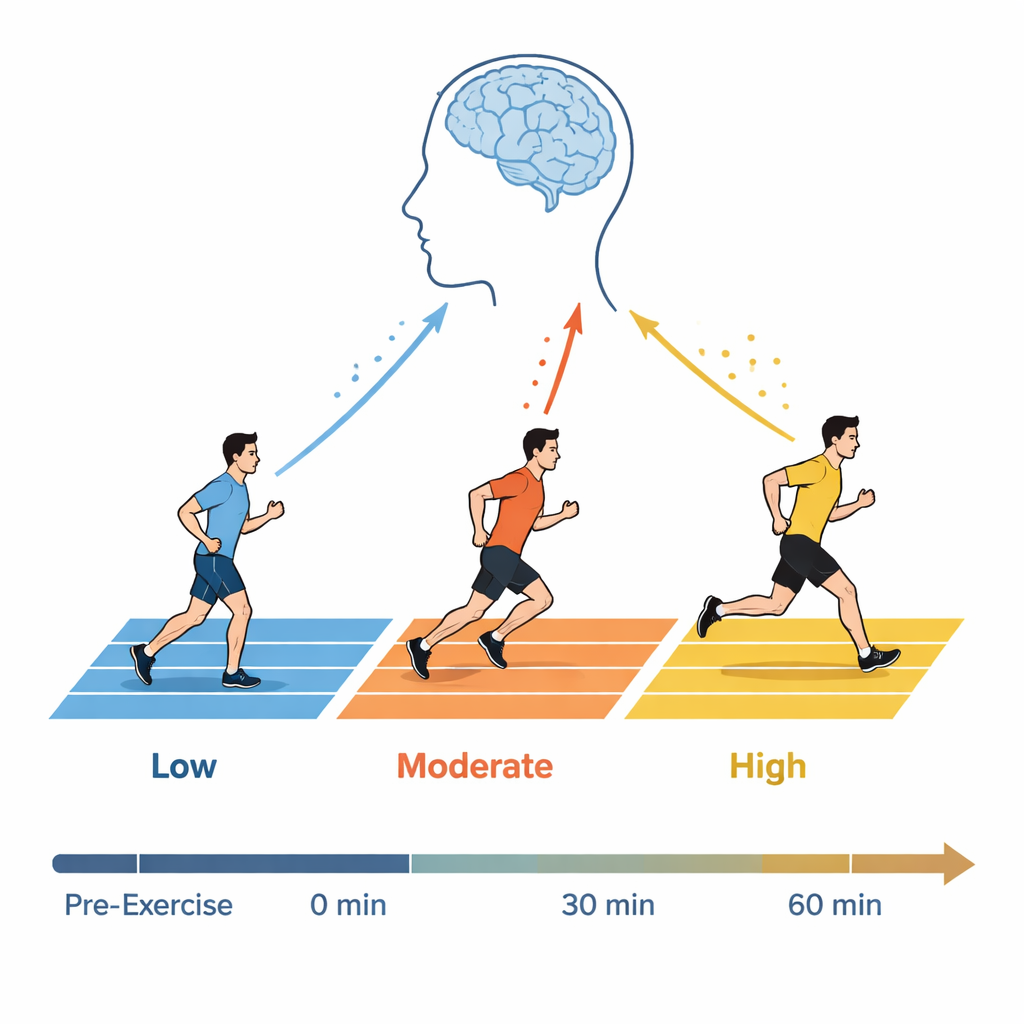
Many people exercise to stay fit, but scientists are also interested in how workouts can tune up the brain. This study looked at a natural protein called brain-derived neurotrophic factor (BDNF), which helps nerve cells grow, connect, and stay healthy. The researchers asked a simple but important question: do different types of running workouts change BDNF levels in the blood in the same way over the hour after exercise, or does intensity matter?
A "fertilizer" for brain cells
BDNF is sometimes described as fertilizer for brain cells. Higher levels are linked to better learning, memory, and mood, and may help protect against diseases such as dementia and Parkinson’s. Exercise is one of the most reliable ways to temporarily boost BDNF, but earlier studies often took only a single blood sample after a workout, making it hard to see when BDNF truly peaks or how long it stays elevated. Results have also varied depending on exercise intensity, how BDNF was measured, and when samples were taken.
Three ways to run, one group of volunteers
To untangle these effects, the researchers recruited 12 healthy young men who completed three running sessions in random order, each separated by a week. One was low-intensity continuous exercise: a 30-minute steady run at half of each man’s maximum aerobic speed. The second was moderate-intensity continuous exercise at 70% of that speed. The third was high-intensity interval exercise: repeated 15-second all-out runs at slightly above their maximum aerobic speed, each followed by 15 seconds of rest, organized into four sets over 30 minutes. Before and after every session, the team drew blood seven times over an hour and measured both BDNF and lactate, a substance that rises sharply during hard exercise and can act as a signal to the brain.
What happened to brain-related signals after exercise
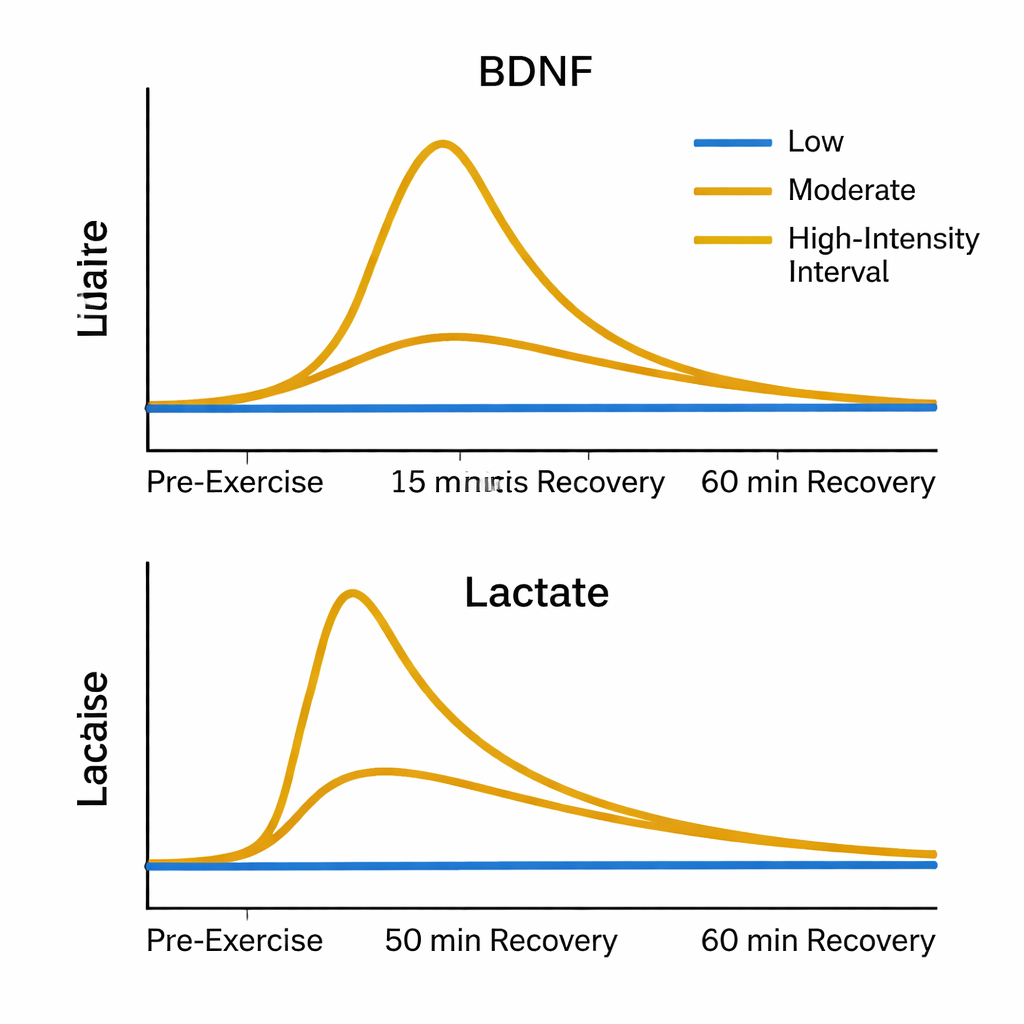
The three workouts produced clearly different patterns. During and after the hardest interval session, heart rate and lactate levels were much higher than during the easier continuous runs. BDNF followed suit: only the high-intensity intervals caused a large jump in blood BDNF. Levels rose immediately after the workout, peaked about 15 minutes into recovery, and then slowly declined back toward the starting value by 60 minutes. In contrast, during low- and moderate-intensity continuous running, BDNF barely moved from baseline at any time point. This means that looking only at a single "post-exercise" sample could easily miss the true peak, and that intensity and interval structure strongly shape the brain-related response.
Why intensity and lactate might matter
The authors suggest that the very demanding interval workout created a stronger biological "shock" to the body, including much higher lactate levels, which may help trigger BDNF release. Animal and human studies indicate that lactate can travel from muscle to brain, where it is used as fuel and may switch on genes that increase BDNF production. Interestingly, the moderate continuous run did raise lactate to a degree, but not enough to move BDNF, hinting that there may be a threshold of stress needed before the brain’s growth-support system responds strongly. At the same time, the study found large differences between individuals, and several design limits—such as testing only young men, measuring BDNF only in serum, and not tightly controlling diet—mean that the findings cannot yet be generalized to everyone.
What this means for everyday exercise
For the average person, these results suggest that brief but very intense interval-style workouts may give the brain a stronger short-term boost in growth-supporting signals than longer, easier runs of the same duration. The spike is temporary, lasting less than an hour, but repeated often enough, such peaks may contribute over time to better brain health and function. However, high-intensity intervals are not suitable for everyone, especially those with health problems or who are new to exercise. The study does not prove that these short-term changes directly translate into better thinking or mood, but it adds to growing evidence that how hard you work out—not just how long—can matter for the brain.
Citation: Birinci, Y.Z., Pancar, S., Şimşek, H. et al. Time-dependent comparison of serum BDNF responses following high-intensity interval exercise and moderate- and low-intensity continuous exercise in healthy young men. Sci Rep 16, 6821 (2026). https://doi.org/10.1038/s41598-026-37728-z
Keywords: high-intensity interval training, brain-derived neurotrophic factor, lactate, exercise and brain health, running intensity