Clear Sky Science · en
Sustainable sizing, dispatch, and resilience planning of hybrid microgrids using Arctic Puffin Optimization
Power for Places Beyond the Grid
Hundreds of millions of people live far from national power lines, in villages where running a cable would be ruinously expensive. For these communities, small “islanded” power systems that mix solar panels, wind turbines, batteries and a diesel backup offer a realistic path to lights at night, cold storage for medicine and reliable phone charging. This paper explores how to design those hybrid systems so they stay affordable, dependable and climate‑friendly, using a new nature‑inspired search method called Arctic Puffin Optimization.
Why Mixing Energy Sources Matters
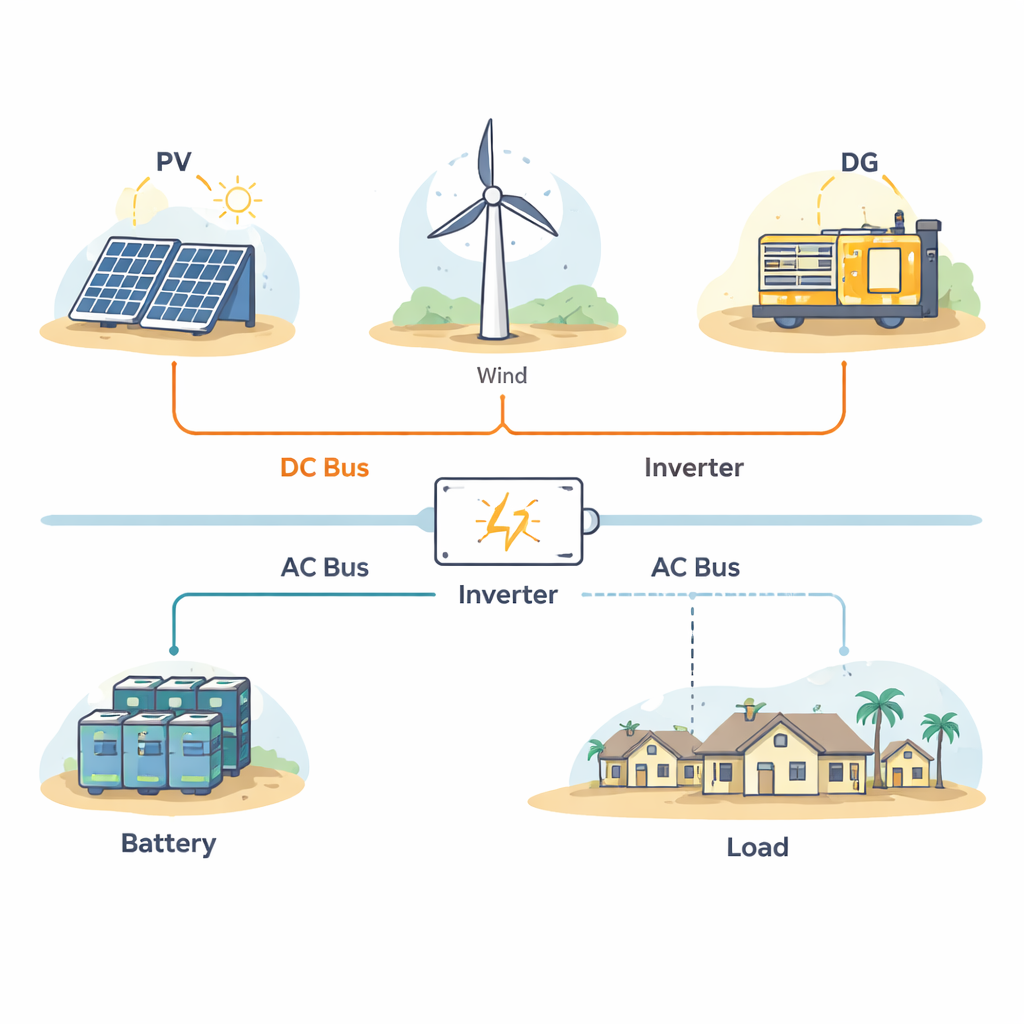
A standalone microgrid is like a tiny power plant and grid rolled into one, usually serving a village or facility that has no connection to the national network. Relying on a single energy source rarely works well: solar panels go dark at night, the wind can fall calm for days and diesel fuel is costly and polluting. The study focuses on a combination of four building blocks—solar photovoltaics (PV), wind turbines, a diesel generator and a battery bank—and on how best to choose their sizes and daily operating rules so that lights stay on every hour of the year in Ras Ghareb, a windy, sunny region on Egypt’s Red Sea coast.
Turning Engineering Choices into a Search Puzzle
Designing such a system involves many trade‑offs. Oversizing solar and wind cuts fuel use but raises upfront cost; undersizing them shifts the burden to the diesel generator, driving up fuel bills and emissions. Batteries can soak up surplus power and bridge gaps, but they wear out faster if worked too hard. The authors turn all these concerns into a single score that reflects the annual cost of the system, its carbon dioxide output and whether it ever fails to meet demand. They require the risk of power cuts to be essentially zero, limit wasted surplus energy and factor in realistic costs for fuel, maintenance, battery wear and pollution. Using hourly data for sun, wind and electricity use over an entire year, they evaluate how any proposed mix of equipment would perform in practice.
Learning from the Arctic Puffin
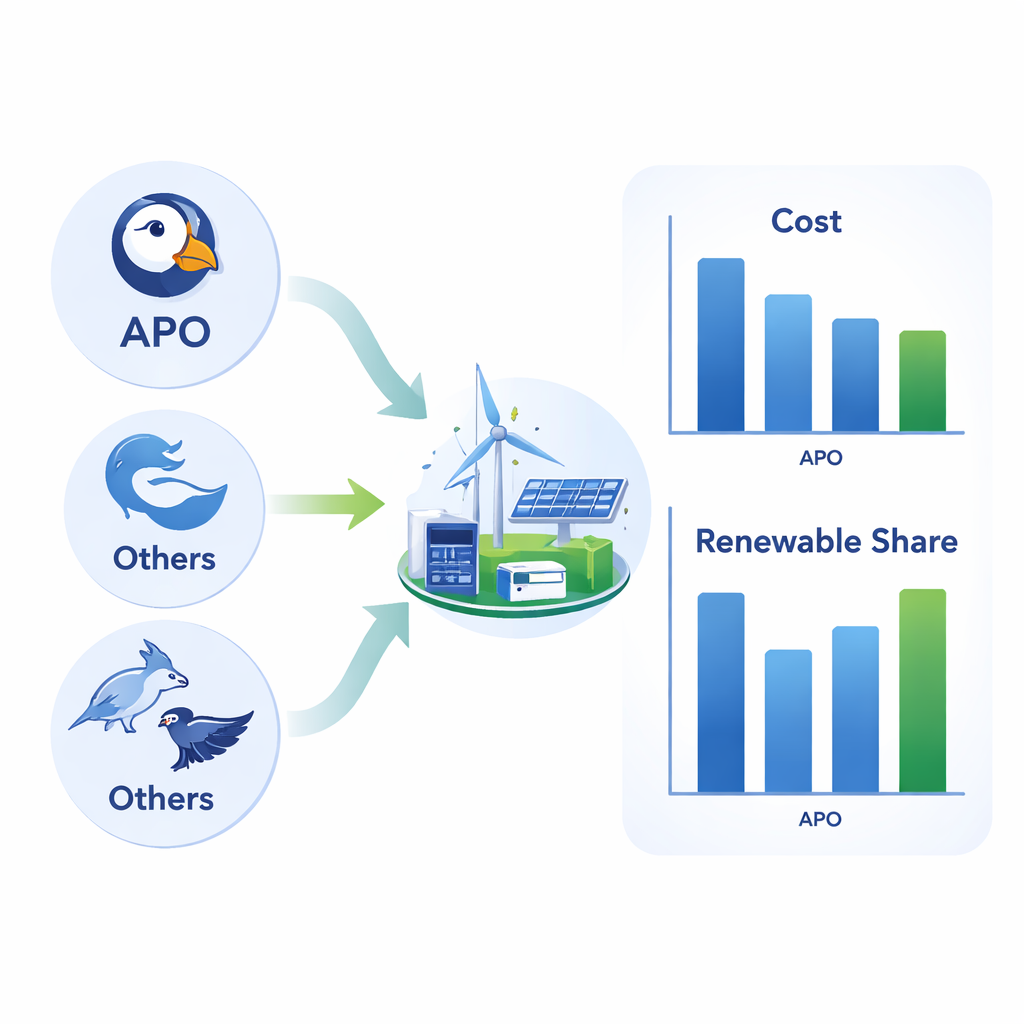
To search this vast design space, the researchers use Arctic Puffin Optimization, an algorithm modeled on how puffins alternate between wide aerial scouting and focused underwater hunting. In computer terms, the “flock” of candidate designs first explores the full range of possible microgrids, then gradually zooms in on the most promising ones, refining them through cooperative moves and small random tweaks. The team compares this method against three other popular nature‑inspired optimizers—Grey Wolf, Ant Lion and Starfish algorithms—using identical settings so the race is fair. Each method repeatedly proposes new designs, simulates a full year of operation and is steered away from any design that either spills a lot of unused energy or fails to cover the load.
What the Simulations Reveal
The authors test two main setups. The first uses only wind turbines, batteries and diesel; the second adds solar panels. In both, the puffin‑based optimizer consistently finds solutions that cost less to run and lean more on renewables than those found by the rival algorithms—cutting annual system cost by up to about 8 percent and boosting the share of wind and solar in the energy mix by roughly 15 to 17 percent. All of the best designs keep the lights on around the clock, with no unmet demand, and avoid building more capacity than needed, so almost no energy is thrown away. Seasonal snapshots show wind carrying most of the load in cooler months, solar taking over in summer, and the diesel generator and batteries stepping in only when the weather does not cooperate.
How Robust and Practical Is It?
Real‑world conditions are never exactly like last year’s weather, so the team also checks how their best design holds up if demand rises or the sun and wind are stronger or weaker than expected. By varying these factors by up to a quarter in either direction, they show that the optimized microgrid remains reliable and reasonably cheap, though heavy drops in sunlight quickly force more diesel use. Importantly, the suggested mix of hardware—commercial solar panels, small wind turbines, standard diesel units and lithium‑ion batteries—is already available off the shelf, and the optimization happens offline on a normal computer. That means planners can run the puffin‑based tool in advance and then build a system that operates with simple, existing control electronics.
What This Means for Off‑Grid Communities
For non‑specialists, the takeaway is that how we size and schedule small power systems matters as much as which technologies we buy. By using an algorithm that smartly searches through millions of possible combinations, this study shows it is possible to design village‑scale microgrids that keep power flowing every hour, slash diesel use and stay within tight budgets. While there is room to grow—such as handling extreme weather, changing fuel prices and more exotic storage options—the Arctic Puffin approach offers a promising new tool for bringing cleaner, more reliable electricity to remote communities that need it most.
Citation: Yakout, A.H., Mashaal, A.S., Alfons, A.M. et al. Sustainable sizing, dispatch, and resilience planning of hybrid microgrids using Arctic Puffin Optimization. Sci Rep 16, 7494 (2026). https://doi.org/10.1038/s41598-026-37727-0
Keywords: off-grid microgrids, renewable energy storage, optimization algorithms, rural electrification, energy resilience