Clear Sky Science · en
Predictive and prognostic performance of urinary albumin-to-creatinine ratio for acute kidney injury: a systematic review and meta-analysis
Why a simple urine test might help protect your kidneys
Acute kidney injury is a sudden drop in kidney function that can strike during serious illness or major surgery. It is common in hospitals, expensive to treat, and can leave people with lasting health problems. Yet doctors still struggle to spot it early. This study asks a surprisingly practical question: can a routine, low‑cost urine test that many clinics already use—the urine albumin‑to‑creatinine ratio, or UACR—help predict who is about to run into kidney trouble and who is likely to get worse once injury has started?
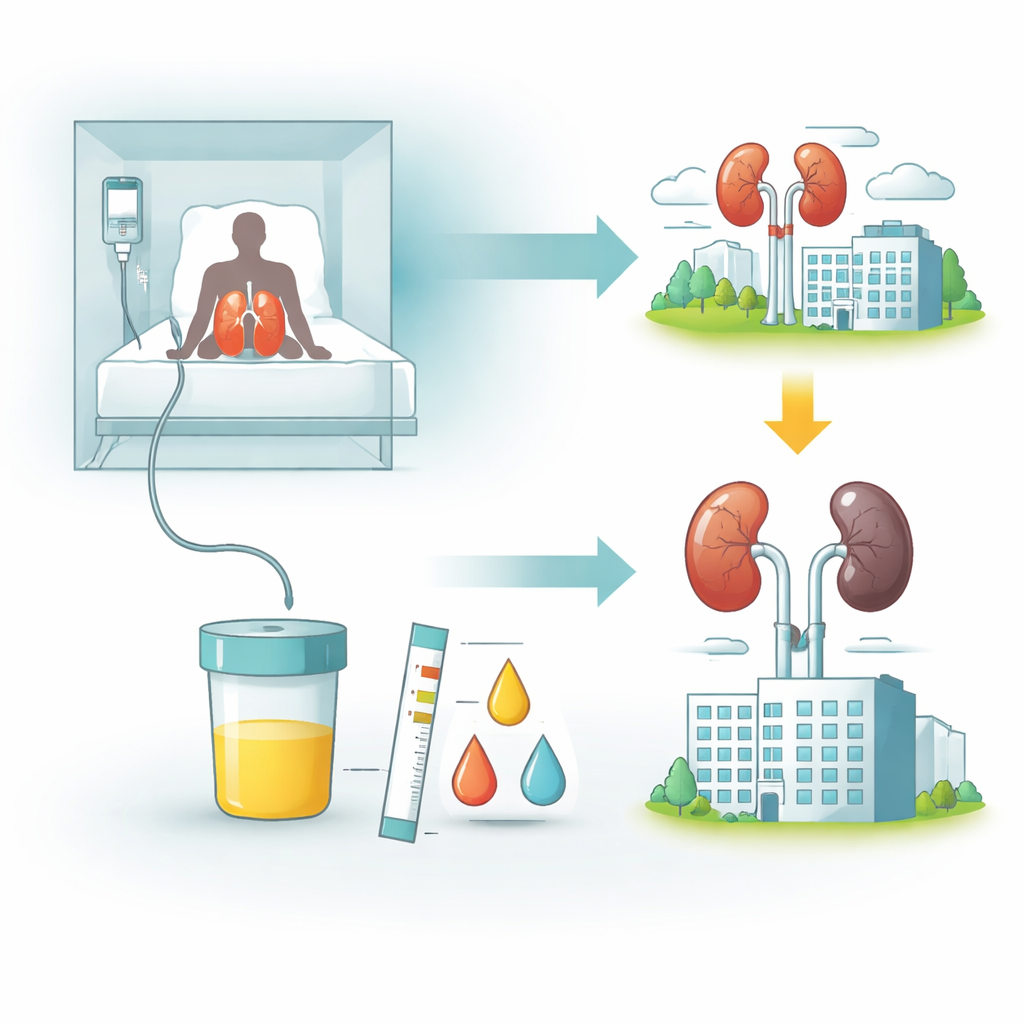
A closer look at sudden kidney problems
When the kidneys falter over hours to days, wastes and fluid build up in the body, raising the risk of infection, heart strain, and death. The standard warning light, a rise in blood creatinine, often blinks late because it takes time to accumulate. Research labs have proposed new blood and urine markers to close this gap, but many are costly or hard to obtain quickly. By contrast, UACR is already used worldwide to monitor long‑term kidney damage in diabetes and high blood pressure. It simply compares how much of the blood protein albumin appears in urine relative to creatinine, a waste product filtered by the kidneys. If this familiar test could also flag impending short‑term injury, hospitals could improve care without buying new technology.
How the researchers gathered the evidence
The authors performed a systematic review and meta‑analysis, a type of study that pools data from many previous reports to see the bigger picture. They searched major medical databases and sifted through nearly 2,900 records, ultimately including 16 studies with more than 10,000 hospitalized adults. Most patients were seriously ill: many had undergone heart surgery, were being treated for heart failure or heart attacks, had widespread infections such as sepsis or COVID‑19, or were recovering from major burns or brain surgery. In each study, doctors had measured UACR at a defined time—before or shortly after admission, or after surgery—and tracked whether patients developed acute kidney injury or, if they already had it, whether it progressed to more severe stages.
What the combined results show
Across 13 studies, people with higher UACR values were more likely to go on to develop acute kidney injury. Statistically, elevated UACR increased the odds of later kidney injury by almost 40 percent. When the authors looked at how well a single UACR threshold could sort patients into “likely” and “unlikely” to be injured, the test correctly picked up about seven out of ten who would develop injury and correctly reassured about two‑thirds of those who would not. This level of accuracy is considered moderate—better than a guess, but not perfect. In patients who already had kidney injury, three additional studies showed that higher UACR was linked with roughly four‑fold higher odds of that injury worsening. Notably, in people undergoing heart surgery, the results were more consistent from study to study, suggesting UACR performs especially well in that setting.
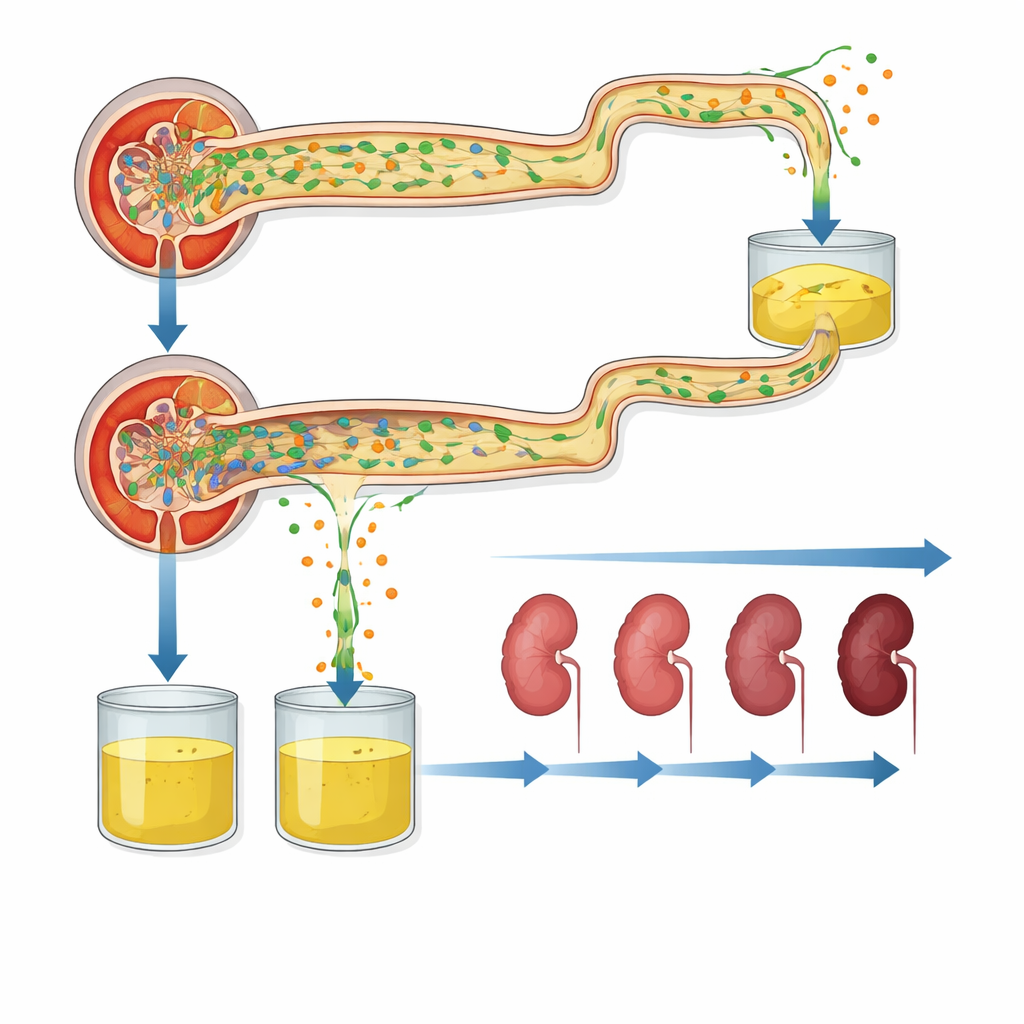
The strengths, limits, and how UACR compares
Because UACR is cheap, noninvasive, and already standardized worldwide, its promise lies in being easy to add to routine care. The review showed that a higher value often tracked with longer hospital stays, higher chances of needing dialysis, and greater risk of death. At the same time, the studies varied widely in who they enrolled, when they measured UACR, and what cutoff number they used; some set the “high” line just above normal, others many times higher. This made the pooled results uneven and hard to generalize. In several head‑to‑head comparisons, newer markers such as NGAL and cystatin C outperformed UACR, especially for predicting whether existing kidney injury would get worse. And not all forms of kidney stress leak albumin into the urine, meaning UACR can miss certain patterns of illness.
What this means for patients and doctors
Overall, the study suggests that a simple spot urine test—one that many hospitals already run for other reasons—can offer meaningful clues about short‑term kidney risk. A raised UACR does not guarantee that someone will develop acute kidney injury, nor should it be the only factor guiding decisions. But in high‑risk situations, particularly around heart surgery, it could help doctors decide who needs closer monitoring, gentler use of potentially harmful drugs, or earlier involvement of kidney specialists. Before UACR can be woven confidently into guidelines, researchers still need to agree on clear cutoff values, test how repeated measurements behave over time, and compare it more rigorously with other markers. For now, it stands out as a practical, widely available tool that may bring earlier warning of a silent but serious threat.
Citation: Kitisin, N., Ismail, J., Raykateeraroj, N. et al. Predictive and prognostic performance of urinary albumin-to-creatinine ratio for acute kidney injury: a systematic review and meta-analysis. Sci Rep 16, 8549 (2026). https://doi.org/10.1038/s41598-026-37717-2
Keywords: acute kidney injury, urine albumin, hospital biomarkers, cardiac surgery risk, kidney protection