Clear Sky Science · en
Student elective course selection patterns and satisfaction determinants identified through educational data mining
Why Course Choice Matters to Students
Choosing elective classes can shape not only what students learn, but also how they feel about university as a whole. As campuses digitize their systems and talk more about “personalized learning,” many students are left wondering whether they really have meaningful choices or just a confusing list of options. This study from a Ukrainian university takes a deep look at how more than a thousand students pick their electives, what makes them satisfied or frustrated, and how smarter use of data could turn course selection into a more helpful and fair experience for everyone.

How the Study Was Carried Out
The research took place at Kryvyi Rih State Pedagogical University, where at least a quarter of every degree must now come from student‑chosen courses. The team surveyed 1,089 students from all faculties who had already gone through at least one round of elective selection. The questionnaire asked about their study program, how well they understood the selection rules, what influenced their choices, how satisfied they were with different aspects of the system, and what they would change. Alongside standard statistics, the researchers used computer‑based pattern finding—such as clustering students into groups and building models that link different factors to overall satisfaction. They also analyzed hundreds of open comments written in Ukrainian to capture students’ own words.
What Students Care About Most
When students explained why they chose certain electives, a clear picture emerged. The top reasons were how well a course fit their future career (named by 64% of students), whether the topic sounded interesting (58%), and the reputation of the instructor (49%). Practical issues like timetable fit and expected difficulty also mattered, but advice from friends or academic advisers played a smaller role than might be expected. Students were generally more pleased with what happened inside the classroom—content and teaching quality—than with the administrative side of things, such as how easy the online registration system was to use or when the selection window was scheduled.
Four Types of Course Choosers
By looking at patterns across seven different satisfaction measures, the researchers found that students fall into four broad groups. “Career‑focused pragmatists” (about one‑third of the sample) mostly seek courses that promise practical skills and job relevance. “Content enthusiasts” are drawn by curiosity and a love of particular subjects, and report especially high satisfaction with how courses are taught. “Process‑sensitive selectors” are less concerned with the topic itself and more affected by how clear, fair, and user‑friendly the selection process feels; they tend to be earlier‑year students and are the least satisfied overall. Finally, “balanced optimizers” weigh many factors at once—career, interest, and logistics—and report the highest satisfaction and strongest grades. These groups appear in different proportions across fields; for example, career‑focused students are especially common in the natural sciences.
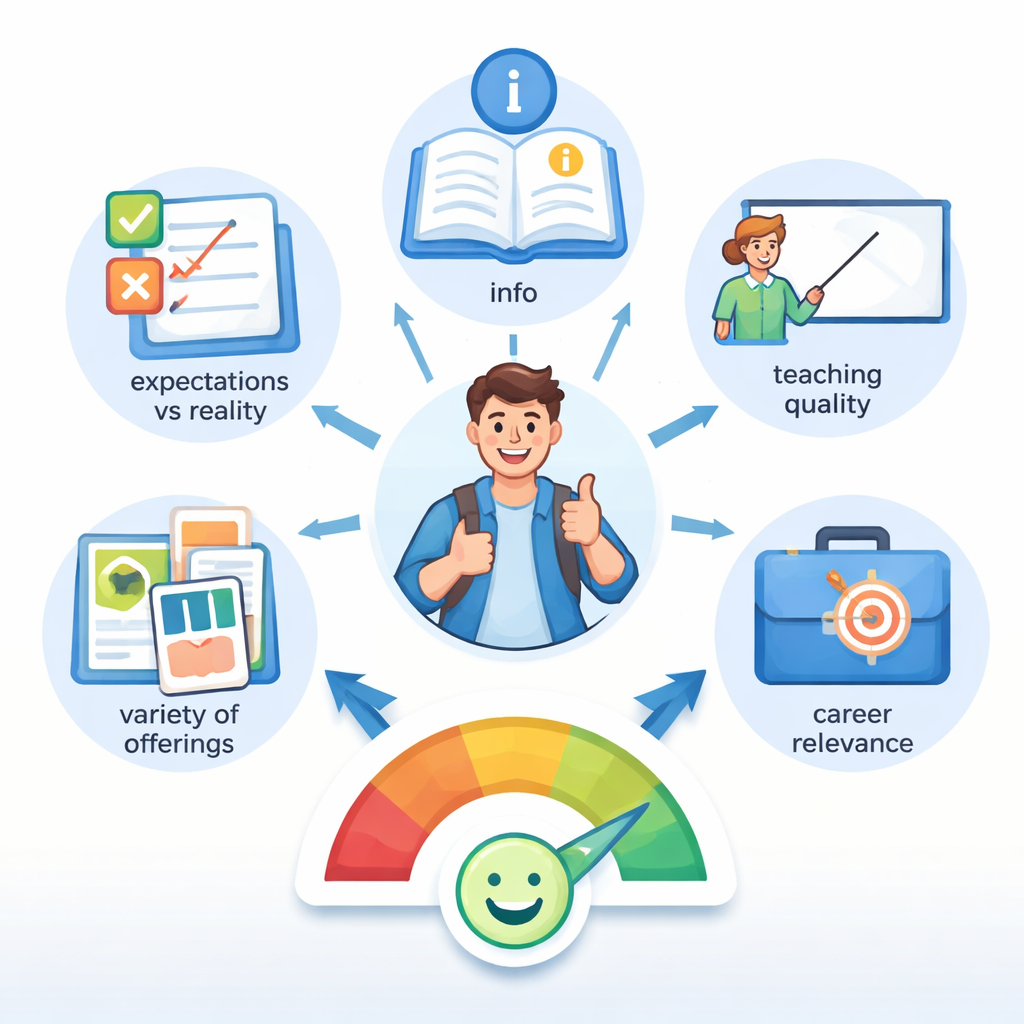
What Drives Satisfaction With Electives
Across all students, five ingredients stood out as especially important for feeling good about the elective system. First was how closely the actual course matched what students expected going in. Second was the quality and clarity of information available before they chose—for instance, whether syllabi and descriptions made it clear what would be taught and how. Teaching quality, links to future careers, and having enough variety of options also made strong contributions. Technical details such as the timing of the selection period or the exact design of the registration system did matter to some students, but they were not the strongest predictors of overall satisfaction when everything was considered together. However, for the process‑sensitive group, these practical hurdles could make or break their experience.
A Data‑Informed Path to Better Choices
To make course selection more helpful and fair, the authors propose a layered framework that uses student data responsibly to improve the system over time. At the base, universities collect information on course choices, satisfaction, grades, and simple behavioral patterns, while carefully protecting privacy. Analytical tools then group students into the four main types and highlight what tends to matter most to each group. On top of this, a personalization layer adapts what information students see: career‑oriented students might see job pathways and skill outcomes more prominently, while content lovers might get richer previews of topics and teaching approaches. User‑friendly dashboards surface this information in clear graphics, and ongoing feedback from students is fed back into the system to refine recommendations. In everyday terms, the study concludes that when students are given clear, honest information and course options that fit both their interests and career goals, they are far more likely to feel satisfied and in control of their education.
Citation: Semerikov, S.O., Bondarenko, O.V., Nechypurenko, P.P. et al. Student elective course selection patterns and satisfaction determinants identified through educational data mining. Sci Rep 16, 6965 (2026). https://doi.org/10.1038/s41598-026-37712-7
Keywords: elective courses, student satisfaction, personalized learning, learning analytics, course recommendation