Clear Sky Science · en
AT-101 inhibits the proliferation and invasion of tongue squamous carcinoma cells by targeting the miR-21-5p/FDX1 axis
Why this tongue cancer study matters
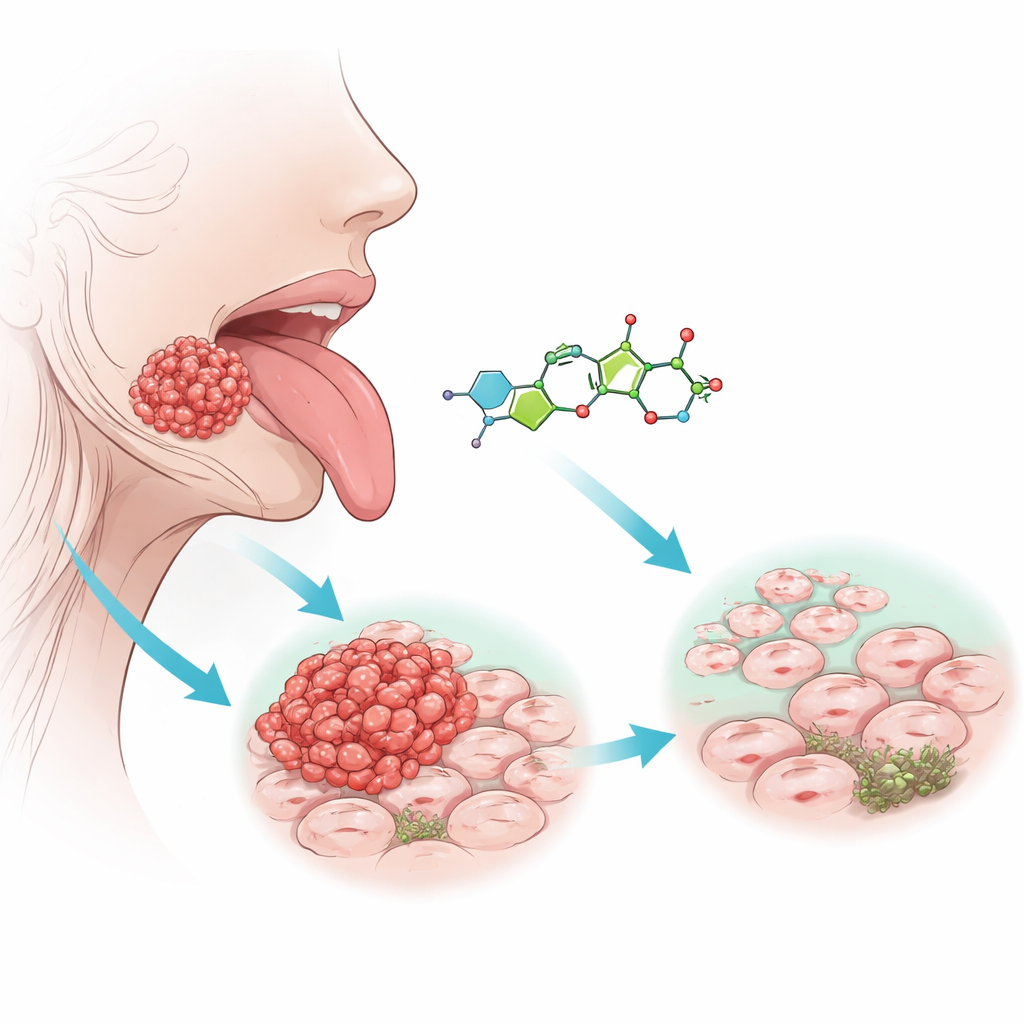
Tongue cancer can drastically affect everyday activities such as speaking, eating, and swallowing, and current treatments often damage these functions while still failing to fully control the disease. This study explores a plant-derived compound, AT-101, and uncovers how it can slow the growth and spread of tongue squamous cell carcinoma in laboratory models. By decoding a tiny genetic control switch inside tumor cells, the researchers point to a new, more targeted way to treat this challenging cancer.
The problem with current tongue cancer care
Tongue squamous cell carcinoma is one of the most common and aggressive forms of oral cancer. Because the tongue is essential for speech and chewing, surgeons must balance removing enough tumor tissue with preserving function, and even then many patients face local recurrence and spread to lymph nodes. Standard chemotherapy can be toxic and lose effectiveness as tumors develop resistance. These limitations have driven a search for medicines that act more precisely on the molecular machinery that allows tongue cancer cells to grow, move, and invade surrounding tissue.
A tiny RNA switch and a protective protein
The team focused on small regulatory molecules called microRNAs, which act like dimmer switches for gene activity. One of them, miR-21-5p, is known to behave like an accelerator pedal in many cancers, pushing cells to grow and resist cell death. Using multiple public genetic databases and experiments in tongue cancer cell lines and patient samples, the researchers found that miR-21-5p levels are strongly increased in tongue tumors, while a protein called FDX1 is markedly decreased. FDX1 helps maintain healthy cell metabolism inside mitochondria, the cell’s energy centers, and appears to act as a brake on cancerous behavior. The more miR-21-5p the cells made, the less FDX1 they had, revealing a tightly linked control axis.
Proving the on–off relationship in cells and tumors
In cultured tongue cancer cells, turning miR-21-5p up caused the cells to multiply faster and become more mobile and invasive, while turning it down had the opposite effect. The researchers showed that miR-21-5p can bind directly to the genetic message that codes for FDX1 and thereby shut down its production. When FDX1 itself was reduced, cancer cells mimicked the aggressive behavior seen with high miR-21-5p; when FDX1 was restored, the cells slowed their growth, moved less, and invaded less through artificial membranes. In mice implanted with human tongue cancer cells, boosting FDX1 led to smaller tumors with more dying cells, whereas silencing FDX1 produced larger, more active tumors, underscoring its protective role.
A cotton-derived compound rewires the axis
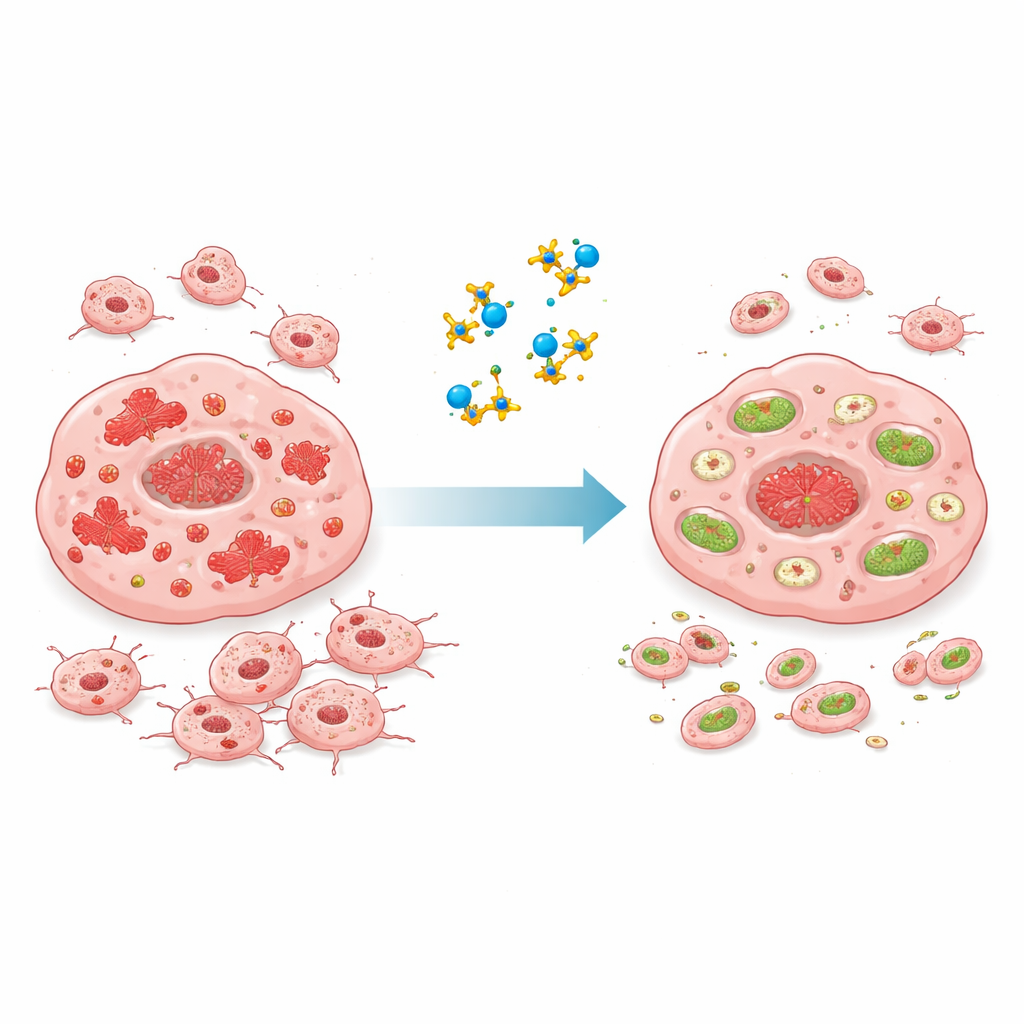
AT-101 is a purified form of gossypol, a natural substance from cotton plants previously studied for its ability to nudge cancer cells toward self-destruction. The authors discovered that AT-101 lowers miR-21-5p levels in tongue cancer cells while restoring FDX1. At carefully chosen doses, AT-101 strongly reduced cancer cell growth, migration, and invasion, but had much milder effects on normal oral cells. When miR-21-5p was artificially boosted, it could partially rescue cancer cells from AT-101’s growth-blocking effects, whereas blocking miR-21-5p enhanced the drug’s impact. Conversely, removing FDX1 blunted AT-101’s benefits, suggesting the compound works largely by freeing FDX1 from miR-21-5p’s suppression.
What this could mean for future treatments
To a non-specialist, the core message is that the researchers have traced a chain of cause and effect: an overactive microRNA (miR-21-5p) silences a protective protein (FDX1), allowing tongue cancer cells to grow and spread, while the natural compound AT-101 cuts this chain and lets FDX1 do its protective work. Although these findings are still at the laboratory and animal-study stage, they suggest that drugs modeled on AT-101, or combinations that target this same tiny RNA–protein circuit, could offer more precise therapies for tongue cancer with fewer side effects. The work provides a clear molecular roadmap for designing future treatments that disarm the cancer’s internal switches rather than relying solely on surgery and broad-spectrum chemotherapy.
Citation: Fu, S., Cui, Qy., Tuo, Xy. et al. AT-101 inhibits the proliferation and invasion of tongue squamous carcinoma cells by targeting the miR-21-5p/FDX1 axis. Sci Rep 16, 10361 (2026). https://doi.org/10.1038/s41598-026-37710-9
Keywords: tongue cancer, microRNA, targeted therapy, natural compounds, cell metabolism