Clear Sky Science · en
Strategic prioritization for Tehran’s electronic waste management via integrated SWOT and QSPM analysis
Why our old gadgets are a big city problem
From smartphones to laptops, our electronic devices don’t simply vanish when we toss them out. In a megacity like Tehran, discarded electronics pile up by the ton every day, leaking toxic substances while wasting valuable metals such as gold and copper. This study asks a practical question with global relevance: if a huge, complex city wants to tackle electronic waste in a realistic, step‑by‑step way, which actions should come first?
The rising tide of broken electronics
Around the world, electronic waste is growing faster than most other trash streams. Devices are replaced quickly, and their mix of plastics, glass, hazardous metals and precious metals makes them both dangerous and valuable. When e‑waste is handled badly, pollutants can seep into soil, air and food, harming the nervous and respiratory systems and weakening the immune system. In many developing countries, including Iran, informal recyclers burn or dismantle devices without proper safeguards, putting both workers and nearby communities at risk while letting recoverable metals literally go up in smoke.
Why Tehran’s system is struggling
Tehran, Iran’s capital and largest industrial center, generates hundreds of tons of e‑waste each day, yet its waste system is still mainly geared toward ordinary household garbage. The authors brought together 30 experts—half from the city’s waste management authority and half from private recycling facilities—to map out the city’s strengths and weaknesses. They found a few positives, such as existing training programs and some knowledge of metal recovery. But these were overshadowed by serious gaps: too few proper recycling plants, weak oversight of private operators, little research and planning, poor handling of data security, and unclear rules for contractors. Outside the system, low public awareness, competition from illegal recyclers and public distrust of city services further undermine progress.
Turning a long list of issues into a clear plan
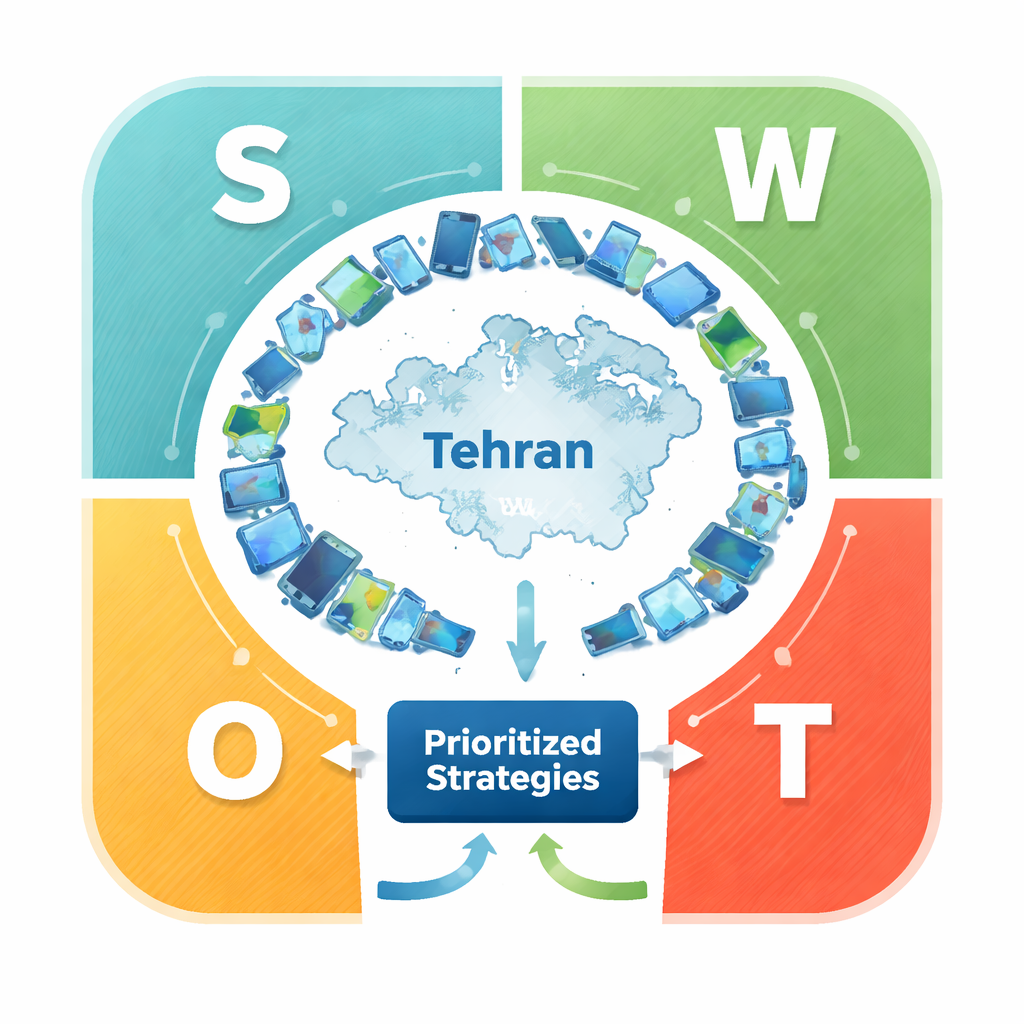
To avoid another vague “to‑do” list, the researchers used a two‑step strategic toolset often employed in business planning. First, they applied SWOT analysis to sort 31 key factors into strengths, weaknesses, opportunities and threats. Then they used the Quantitative Strategic Planning Matrix, or QSPM, to numerically score how well different strategies would deal with those factors. This method let experts compare options side by side and calculate a Total Attractiveness Score for each. The numbers showed that Tehran is in a defensive position: weaknesses and threats clearly outweigh strengths and opportunities, meaning the city must first protect itself from risks before it can fully exploit its advantages.
What should happen first on the ground
The scoring exercise produced a ranked list of six main strategies. At the top, by a clear margin, was the creation of strong health, safety and environmental (HSE) rules for e‑waste recycling, along with real enforcement. Next came improving how e‑waste is collected across the city—so used devices reach proper channels—and building specialized sorting centers where equipment can be safely dismantled and materials separated. Other recommended steps included modernizing monitoring systems in facilities, improving sorting in existing plants, and strengthening cooperation among public agencies and private recyclers. Sensitivity tests, in which the researchers tweaked the importance of key factors such as illegal competition, showed that this priority order stayed almost unchanged, suggesting the results are robust rather than fragile guesses.

What this means for everyday life
For non‑specialists, the message is straightforward. Tehran cannot fix its e‑waste problem just by adding a few recycling bins or running public campaigns. The study shows that the first and most powerful lever is a solid rulebook for safe, fair recycling—one that protects workers and neighborhoods while reining in illegal operators. Once those ground rules are in place and enforced, investments in better collection routes, dedicated sorting centers and modern tracking tools become worthwhile and effective. If followed, this roadmap could help turn heaps of broken gadgets from a hidden health threat into a managed resource stream, offering a model that other large cities with similar challenges can adapt.
Citation: Aliannejadi, Z., Malmasi, S. & Rafati, M. Strategic prioritization for Tehran’s electronic waste management via integrated SWOT and QSPM analysis. Sci Rep 16, 7711 (2026). https://doi.org/10.1038/s41598-026-37703-8
Keywords: electronic waste, Tehran, urban recycling, environmental policy, strategic planning