Clear Sky Science · en
Oscillating diachronic mobility patterns in prehistoric Eastern Sudan revealed by 87Sr/86Sr isotope analysis
Tracing Ancient Journeys Through Teeth
Long before written maps or passports, people moved across northeastern Africa following rivers, pastures, and shifting climates. This study shows how tiny chemical clues locked inside ancient teeth can reveal when communities in Eastern Sudan stayed put and when they roamed. For anyone curious about how science can reconstruct human stories over thousands of years, it offers a vivid glimpse of how climate, food, and long-distance contacts shaped everyday life in a key crossroads between the Nile Valley and the African highlands.
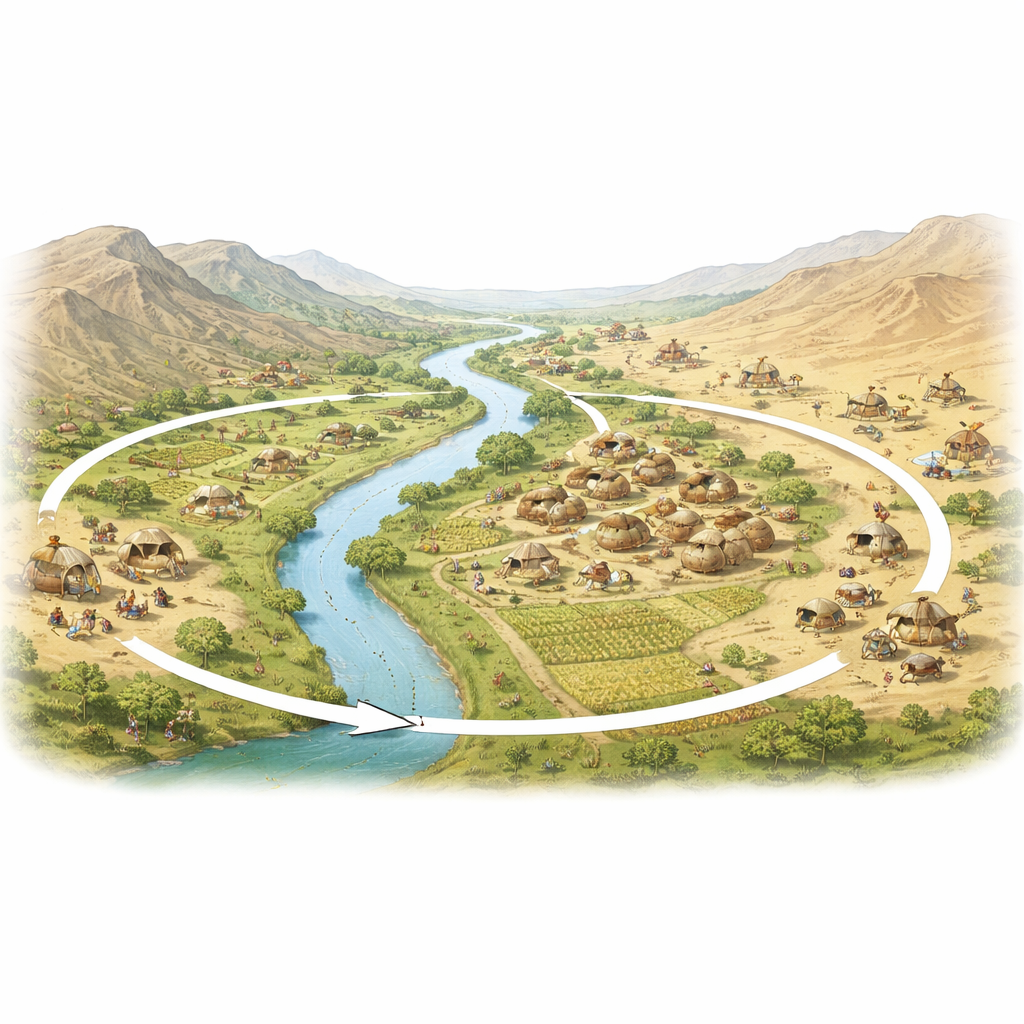
A River Corridor at the Heart of Africa
The research focuses on the fertile lands between the Gash and Atbara rivers in Eastern Sudan, an area that linked the Nile Valley with the Ethio–Eritrean highlands and the Red Sea coast. Over roughly 6,000 years, different communities camped, farmed, herded animals, traded, and buried their dead here. Archaeologists have uncovered a long sequence of cultures, from mobile hunter-gatherers to village-based farmers and later nomadic herders. Until now, however, scientists lacked direct evidence of how much people actually moved in and out of this region across the ages.
Reading Landscapes in Tooth Chemistry
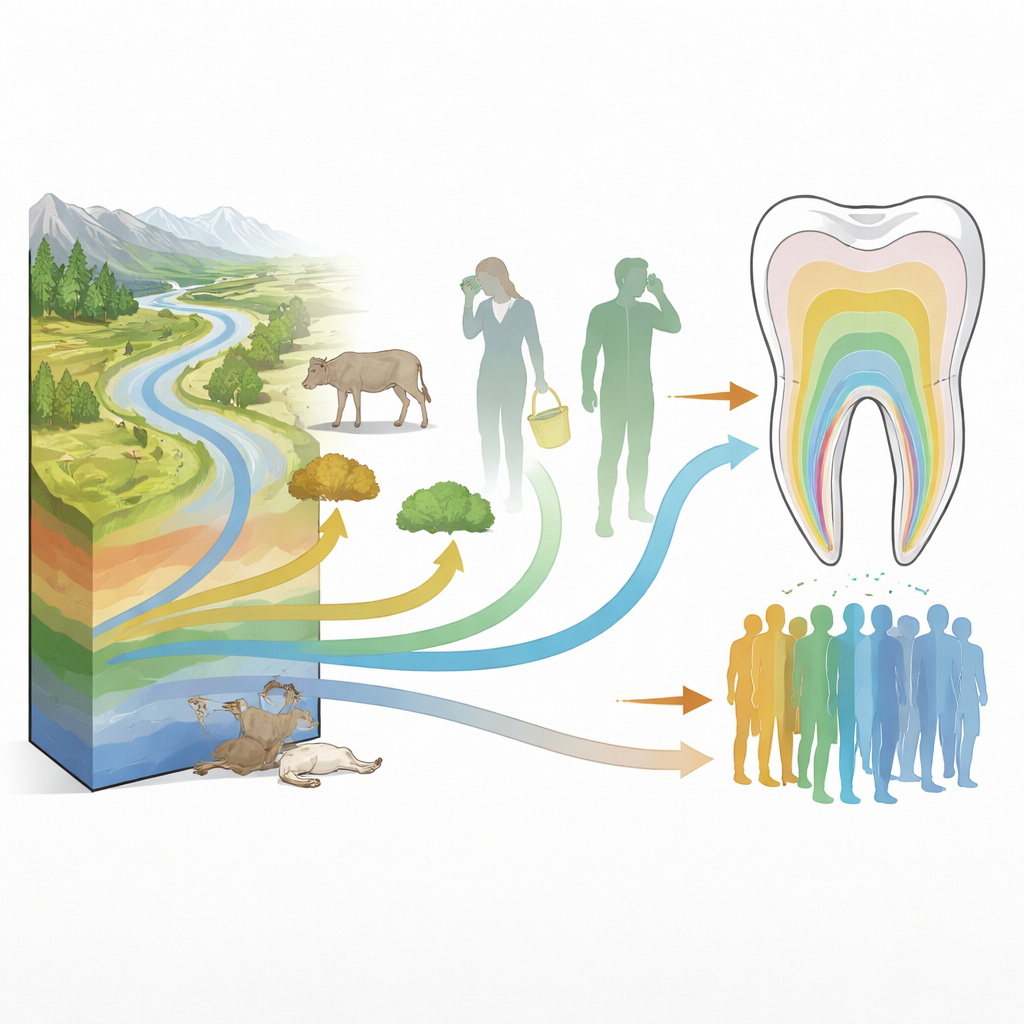
To answer this, the team turned to strontium, a naturally occurring element in rocks that passes into soil, water, plants, animals, and ultimately human bodies. Different landscapes have slightly different “flavors” of strontium, and tooth enamel formed in early childhood locks in the local signature for life. By measuring strontium ratios in teeth from 76 individuals buried at three sites, along with 13 animal bones, the researchers built a first chemical “map” for Eastern Sudan. They then compared each person’s tooth value to the local range at their burial site to see who likely grew up nearby and who probably came from elsewhere.
From Roaming Camps to Busy Hubs
The results reveal a striking rise and fall in mobility over time. In the late Mesolithic period (around the 5th millennium BCE), most adults appear non-local, matching a picture of small, highly mobile hunter-gatherer groups using seasonal camps across a humid plain. In the following Neolithic phases, when cultivation and herding took root and villages expanded, the chemical signals become much more uniform. Most people look local, suggesting communities were more settled even as they maintained long-distance contacts, as shown by imported shells and exotic stone objects. During the height of the Gash Group culture, the site of Mahal Teglinos (K1) grew into a major regional center, with rich graves and evidence of large-scale feasting, yet most of those buried in the western cemetery seem to have grown up in the surrounding region.
When Climate Turns Harsh Again
From the 2nd millennium BCE onward, the climate in northeastern Africa became drier and more extreme, with alternating droughts and sudden floods. Settlements shrank, shifted toward grazing lands, and herding cattle and small stock became the main way of life. The chemical data mirror this change: in the Jebel Mokram period and later, a high share of adults again show non-local signatures, pointing to renewed mobility and nomadic or semi-nomadic lifeways. Eastern Sudan’s relatively favorable conditions, buffered by the nearby highlands, may have turned it into a refuge that drew in groups from the more stressed Eastern Desert and Nile Valley, creating a mosaic of origins within the same burial grounds.
People, Kin, and Identities on the Move
Beyond broad trends, the study also hints at intimate social stories. Some non-local individuals at K1 were buried in unusual body positions or in close pairs, such as a man and woman laid facing each other, suggesting marriage ties or special identities. In later phases, all sampled adult women show non-local chemical signals, echoing ideas that women frequently moved between communities, bringing pottery styles and other traditions with them. Together, these patterns suggest that mobility involved both men and women and was intertwined with alliance-building, exchange, and shifting notions of belonging.
What This Means for Understanding the Past
Put simply, this work shows that Eastern Sudan was not a static backwater but a long-lived meeting place where ways of life repeatedly shifted with the climate. Periods of plentiful water supported roaming foragers, later giving way to more rooted farming villages and then to mobile herders reacting to growing aridity. By building the first strontium baseline for the region, the study turns ancient teeth into reliable witnesses of movement, helping researchers link climate swings, cultural change, and personal life histories. For non-specialists, it illustrates how modern science can recover the rhythms of travel, home, and identity in a landscape that helped connect much of northeastern Africa.
Citation: Capasso, G., Sperduti, A., Idriss Ahmed, H. et al. Oscillating diachronic mobility patterns in prehistoric Eastern Sudan revealed by 87Sr/86Sr isotope analysis. Sci Rep 16, 8800 (2026). https://doi.org/10.1038/s41598-026-37691-9
Keywords: ancient mobility, Eastern Sudan prehistory, strontium isotopes, nomadic pastoralism, climate and archaeology