Clear Sky Science · en
Association of ANXA3 methylation with clinical outcomes of glucocorticoid therapy in patients with hepatitis B virus-related acute-on-chronic liver failure
Why this research matters
For people living with chronic hepatitis B, a sudden worsening of liver function—called acute-on-chronic liver failure—can be life-threatening. Doctors sometimes use powerful anti-inflammatory drugs known as glucocorticoids (steroids) to try to calm the overactive immune response, but these drugs do not help every patient and can have serious side effects. This study asks a practical question with real-world impact: can a blood test help predict which patients are most likely to benefit from steroid treatment, so that therapy can be better tailored to each individual?
A serious liver crisis in chronic hepatitis B
Hepatitis B virus-related acute-on-chronic liver failure (HBV-ACLF) occurs when a person with long-standing hepatitis B suddenly develops severe liver damage. Patients can quickly develop jaundice, bleeding problems, fluid buildup in the abdomen, and confusion due to toxins the failing liver can no longer clear. Liver transplantation can be lifesaving but is limited by cost, donor shortages, and medical risks. As a result, doctors rely on antiviral drugs, supportive care, and in some centers, glucocorticoids. Early on, it is crucial to decide whether steroids are helping or harming, yet clinicians currently lack a reliable way to predict treatment success in advance.
A promising blood marker called ANXA3
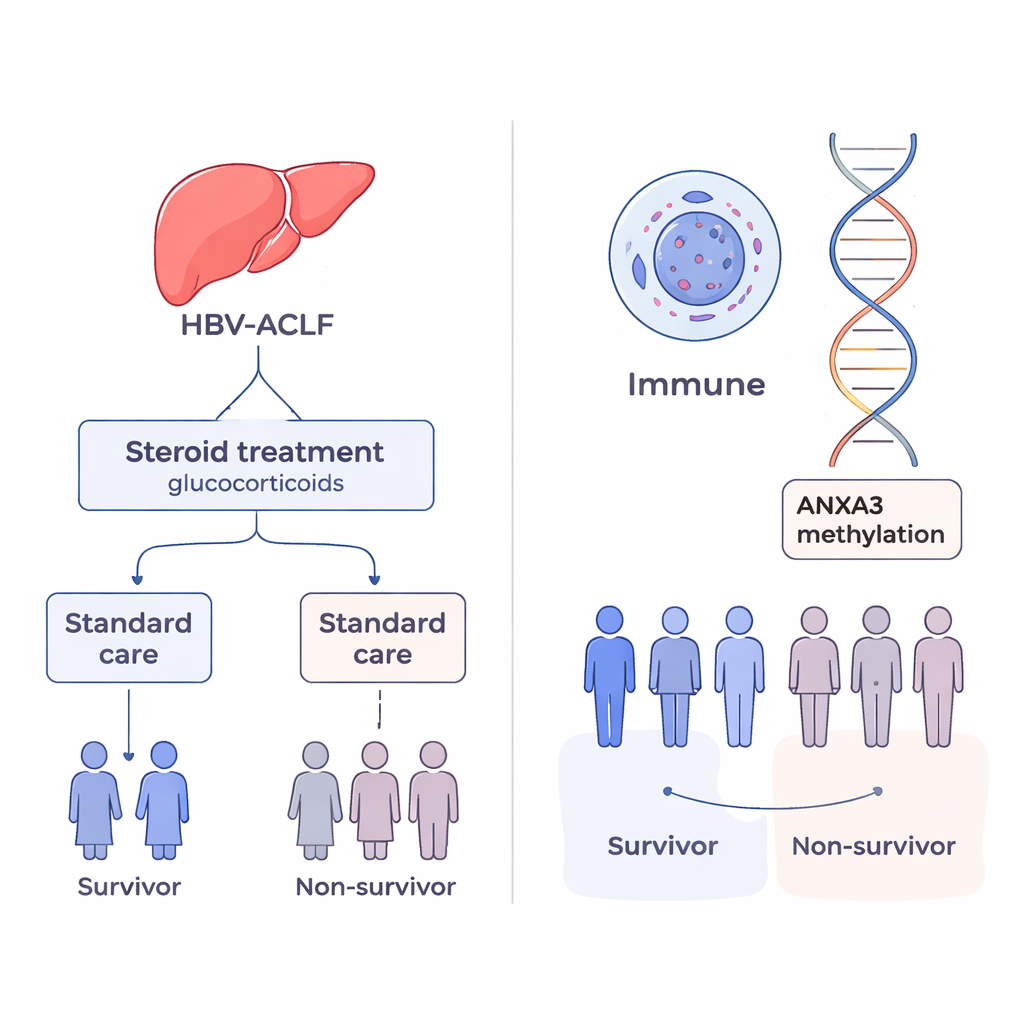
The researchers focused on a protein called Annexin A3 (ANXA3), which is active in certain white blood cells and has been linked to both inflammation and cancer. Using public gene-expression data and their own patient samples, they found that people with HBV-ACLF had much higher levels of ANXA3 activity in blood immune cells than healthy volunteers, along with lower levels of a protective regulator called PPAR-gamma. High ANXA3 activity in patients was associated with stronger signals of inflammation and oxidative stress—two forces known to drive liver injury. At the same time, the chemical tags on the ANXA3 gene’s DNA, known as methylation marks, were reduced, a pattern often linked to genes being more active.
Following patients through steroid treatment
The team enrolled 156 patients with HBV-ACLF, of whom 108 received a structured, four-week course of prednisolone along with standard care, while 48 received standard care alone. They closely tracked liver function, complications, and survival over 90 days, and repeatedly measured ANXA3 gene activity and its DNA methylation in blood cells. Among patients treated with steroids, those who survived showed a clear pattern over the month: ANXA3 activity in blood cells fell, while methylation of the ANXA3 gene rose. In contrast, patients who died showed persistently high ANXA3 activity and low methylation, even after treatment. Importantly, steroid therapy improved many measures of liver function in survivors without boosting hepatitis B virus levels, suggesting that the benefits were mainly due to immune modulation, not changes in the virus itself.
Turning methylation into a predictive tool
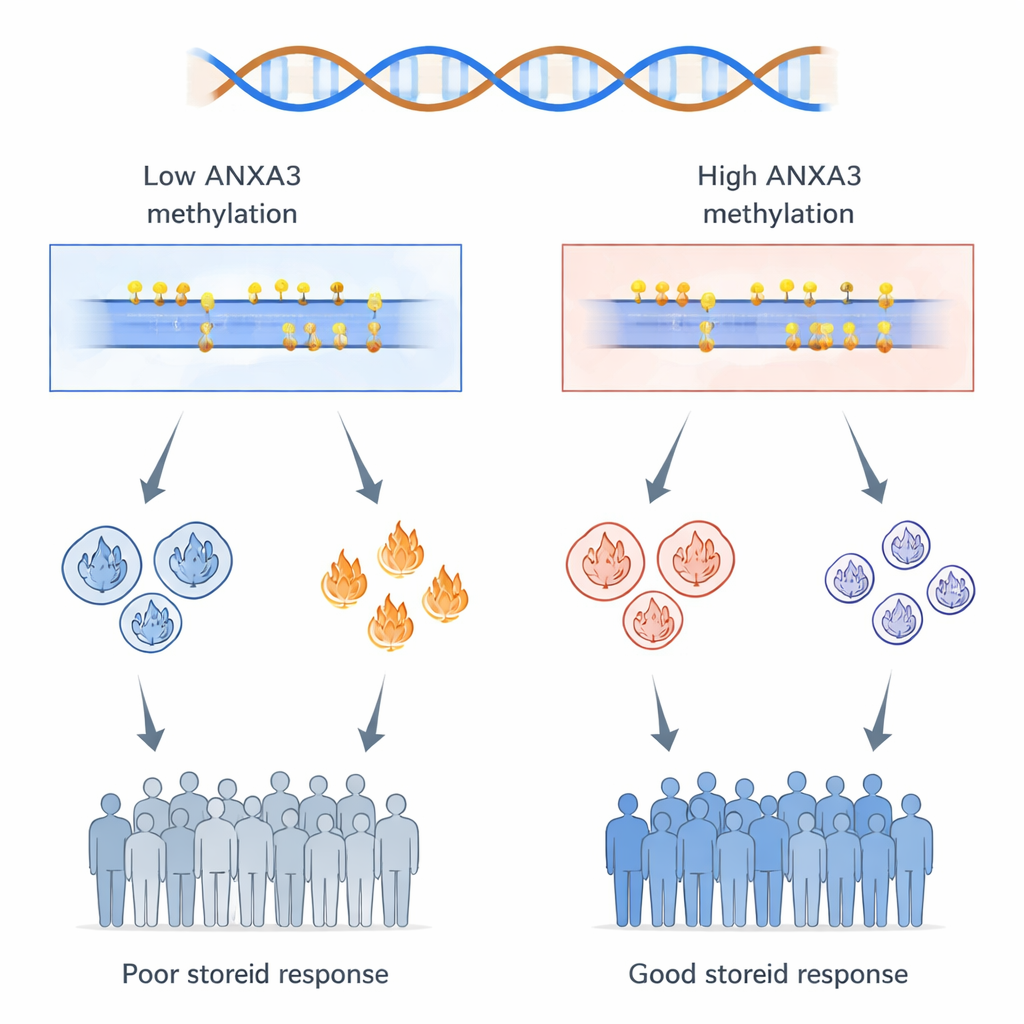
The researchers then asked whether ANXA3 methylation levels at the start of treatment could forecast how well patients would do. Using statistical models, they found that higher methylation of the ANXA3 gene in blood cells was strongly linked to better 90-day survival and better responses across several clinical measures: larger drops in bilirubin (a marker of jaundice), better blood clotting, lower severity scores for liver disease, and improvement in brain function and fluid buildup. ANXA3 methylation outperformed both ANXA3 gene activity and a widely used clinical severity score (the MELD score) in predicting outcomes. When combined with MELD, the methylation measure gave the most accurate forecasts. Even after adjusting for age, disease severity, and complications like brain dysfunction, ANXA3 methylation remained an independent predictor of who would benefit from steroids.
What it could mean for patients
In everyday terms, this study suggests that a simple blood-based DNA test might one day help doctors decide whether a patient with severe hepatitis B-related liver failure is a good candidate for steroid therapy. Patients whose ANXA3 gene carries more methylation marks—indicating the gene is more tightly controlled—appear more likely to survive and show liver improvement on steroids, while those with low methylation may gain less benefit and face more risk. Although the findings still need to be confirmed in larger, multi-center trials and in patients with other causes of liver failure, ANXA3 methylation stands out as a promising guidepost on the path to more personalized, safer treatment for this dangerous condition.
Citation: Wang, Z., Zhang, F., Zhu, H. et al. Association of ANXA3 methylation with clinical outcomes of glucocorticoid therapy in patients with hepatitis B virus-related acute-on-chronic liver failure. Sci Rep 16, 7235 (2026). https://doi.org/10.1038/s41598-026-37687-5
Keywords: hepatitis B, liver failure, glucocorticoids, biomarkers, DNA methylation