Clear Sky Science · en
Analysis of river water quality in Rourkela Odisha using multiple indices to inform sustainable water management
Why This River Matters to People
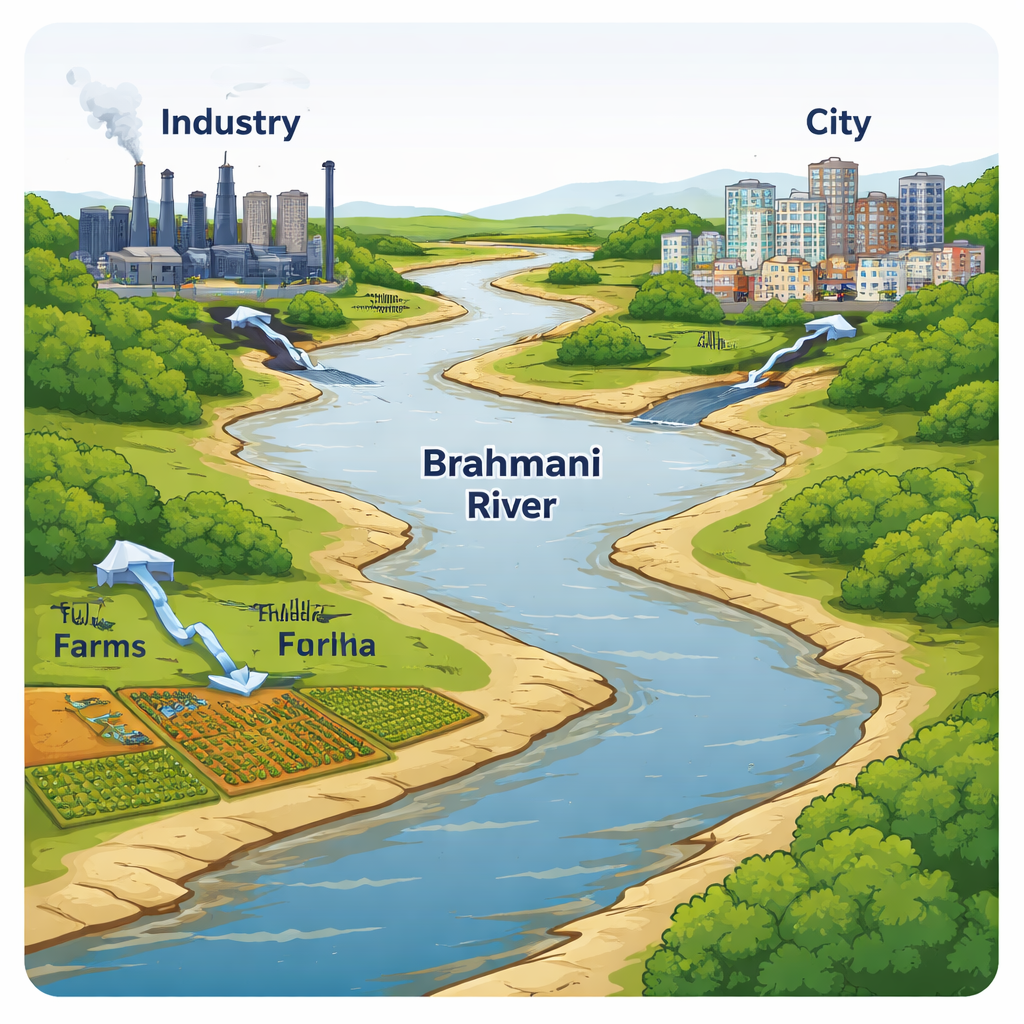
The Brahmani River in Odisha is a lifeline for hundreds of thousands of people who rely on it for drinking water, farming, industry, and city parks. Yet as Rourkela has grown into a major steel and industrial hub, worries have mounted that the river is being pushed beyond its limits. This study takes a hard, data-driven look at how healthy the Brahmani really is, what is polluting it, and what that means for everyday uses of its water.
Looking Closely at a Working River
Over three years, researchers collected 12 samples of surface water from sites in and around Rourkela during the pre-monsoon months, when the river runs lowest and pollution is most concentrated. They measured straightforward properties such as acidity (pH), dissolved salts, hardness, and alkalinity, along with metals like lead, copper, zinc, and iron, and nutrients such as phosphate. These are the same types of measures that determine whether water can be safely used for drinking, irrigation, or supporting fish and other wildlife.
Turning Many Measurements into a Simple Score
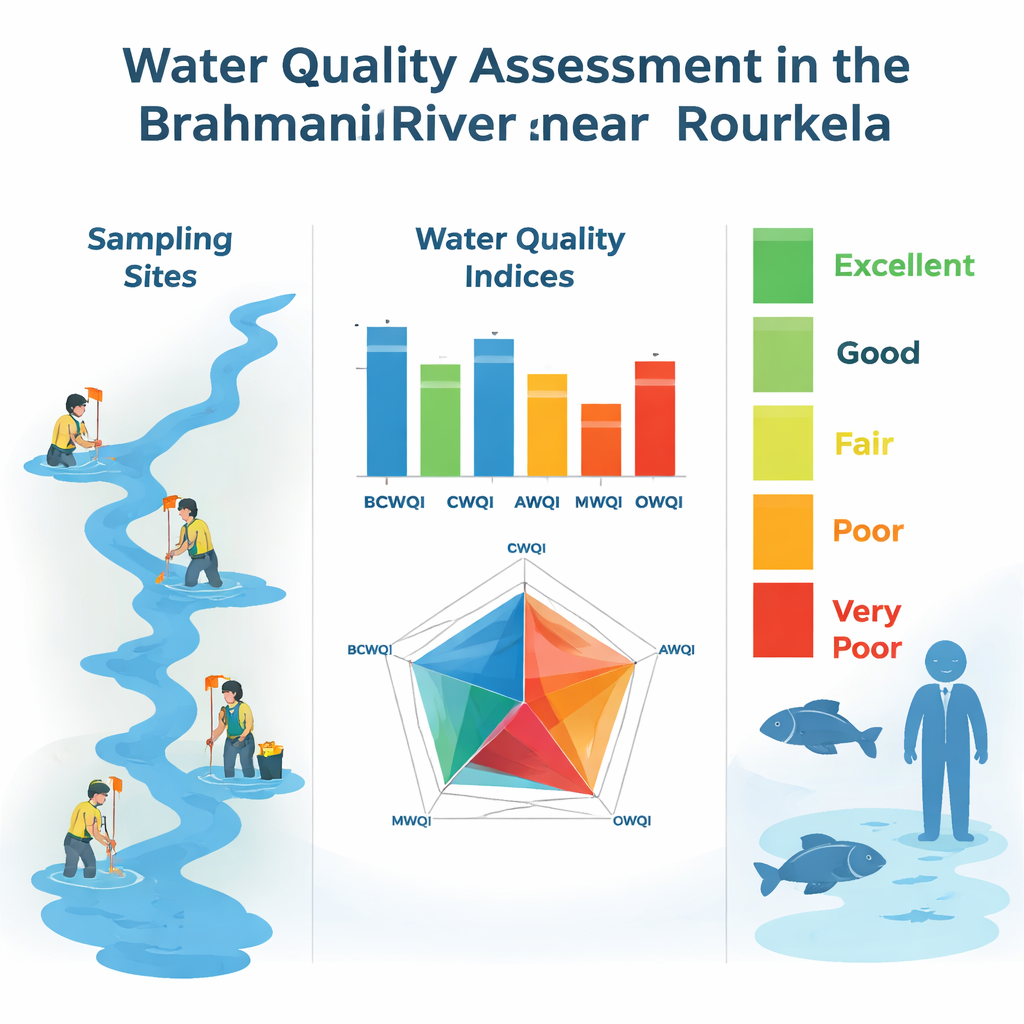
Because water quality is defined by many overlapping factors, the team used five different water quality index systems commonly applied around the world: British Columbia (BCWQI), Canadian (CWQI), Assigned (AWQI), Malaysian (MWQI), and Oregon (OWQI). Each index distills dozens of readings into a single score that ranges from excellent to very poor. This makes it easier to compare locations, track changes over time, and explain river conditions to the public and policymakers. By applying several indices side by side, the study could also test how sensitive each method is to the kinds of pollution seen in a rapidly industrializing Indian city.
What the Numbers Say About the River
The raw measurements reveal a worrying pattern. While pH stays within a range that can support aquatic life, most other key indicators regularly exceed national and World Health Organization guidelines. Electrical conductivity, total dissolved solids, hardness, and alkalinity are often far above recommended limits, showing that the river carries a heavy load of dissolved chemicals. Especially troubling are the metal levels: lead, copper, and zinc frequently surpass safe concentrations, pointing to a mix of industrial effluent, urban runoff, and natural rock weathering intensified by human activity. Phosphate levels, tied to sewage and fertilizer, are also high at several sites, hinting at the risk of algal blooms and oxygen loss.
Five Indices, One Consistent Warning
Although each index uses its own formula and rating scale, they paint a broadly consistent picture. The British Columbia index scores range from almost pristine to very poor, with an average that classifies much of the river near Rourkela as only borderline for drinking. The Canadian index shows that roughly 40 percent of samples fall into fair to poor categories. The Assigned index, which is tuned to specific uses such as household water, labels about 40 percent of samples as outright unsuitable. The Malaysian and Oregon indices, which emphasize ecological health, both find that many stretches of the river fall into poor or very poor status, even as a few locations still qualify as good to excellent. Together, these tools confirm that pollution is not an isolated problem but a widespread condition that worsens during the dry pre-monsoon season.
A Local Problem with Global Echoes
To put the Brahmani’s condition in context, the study compares its findings with similar assessments from rivers in India and neighboring countries. Across these systems, the same culprits appear: industrial waste, untreated sewage, agricultural runoff, and dense urban development near riverbanks. Many of these rivers now rate as poor or very polluted by multiple indices, good for little more than irrigation. The Brahmani fits this global pattern of stress on working rivers that are expected to support cities, farms, and ecosystems all at once, while receiving far more waste than they can safely dilute.
What It Means for People and the Future
For non-specialists, the bottom line is that much of the Brahmani River around Rourkela is no longer reliably safe for drinking or household use without treatment, and its ability to support fish and other wildlife is under strain. The study links this decline directly to human actions: factory discharges, poorly managed sewage, changing land use, and more pavement that speeds dirty runoff into the water. The author argues that cleaning up the river will require stricter pollution controls, better wastewater treatment, greener farming methods, and ongoing monitoring using modern tools such as mapping and machine learning. Because the Brahmani is tied to several United Nations Sustainable Development Goals, its recovery is about more than a single river: it is a test of whether fast-growing cities can protect the waters that keep them alive.
Citation: Das, A. Analysis of river water quality in Rourkela Odisha using multiple indices to inform sustainable water management. Sci Rep 16, 5142 (2026). https://doi.org/10.1038/s41598-026-37683-9
Keywords: river water quality, industrial pollution, water quality index, Brahmani River, sustainable water management