Clear Sky Science · en
Endophyte profiling of tomato leaf curl virus (ToLCV) resistant and susceptible tomato genotypes: Insights into microbial diversity and growth promotion
Why tiny helpers inside tomato plants matter
Tomatoes around the world are under siege from tomato leaf curl virus, a fast-spreading infection that curls leaves, stunts growth, and can wipe out entire harvests. Farmers usually fight back by planting virus-resistant varieties and battling the whiteflies that carry the virus. This study looks at a quieter line of defense: the hidden community of microbes living inside tomato plants. By comparing resistant and susceptible tomato types, the researchers ask a simple but powerful question—could the plant’s own microscopic partners be part of the reason some tomatoes cope better with disease and grow more strongly?
Tomato varieties under the microscope
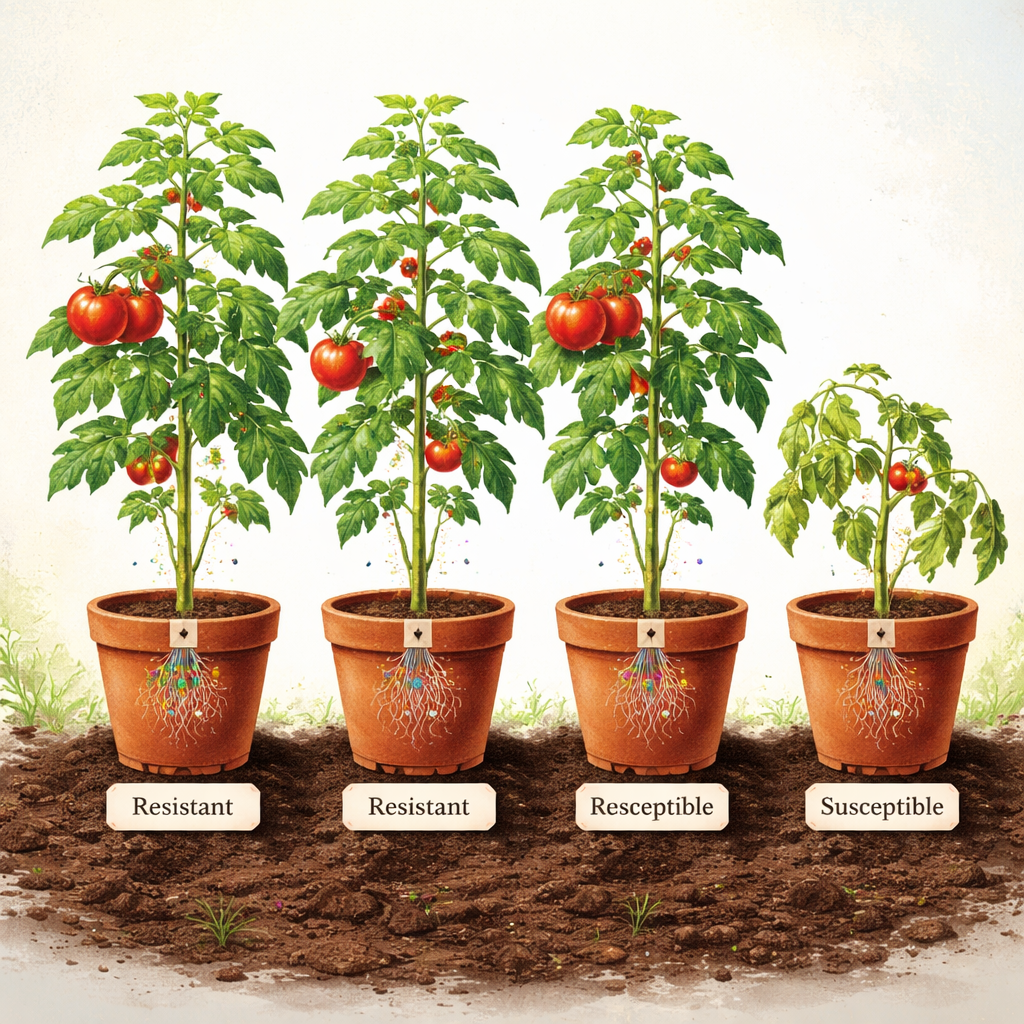
The team worked with four tomato cultivars: three that stand up well to tomato leaf curl virus (Nandi, Sankranthi, and Vybhav) and one that is easily damaged by it (Arka Vikas). All plants were grown in carefully controlled greenhouse conditions from surface-sterilized seeds to keep outside contaminants to a minimum. After about 40 days, the scientists collected healthy roots, stems, and leaves and used classic microbiology techniques to coax the internal microbes, known as endophytes, out onto culture plates. In total, they isolated 59 different endophytes—31 fungi and 28 bacteria—from the four cultivars.
A richer inner life in tougher plants
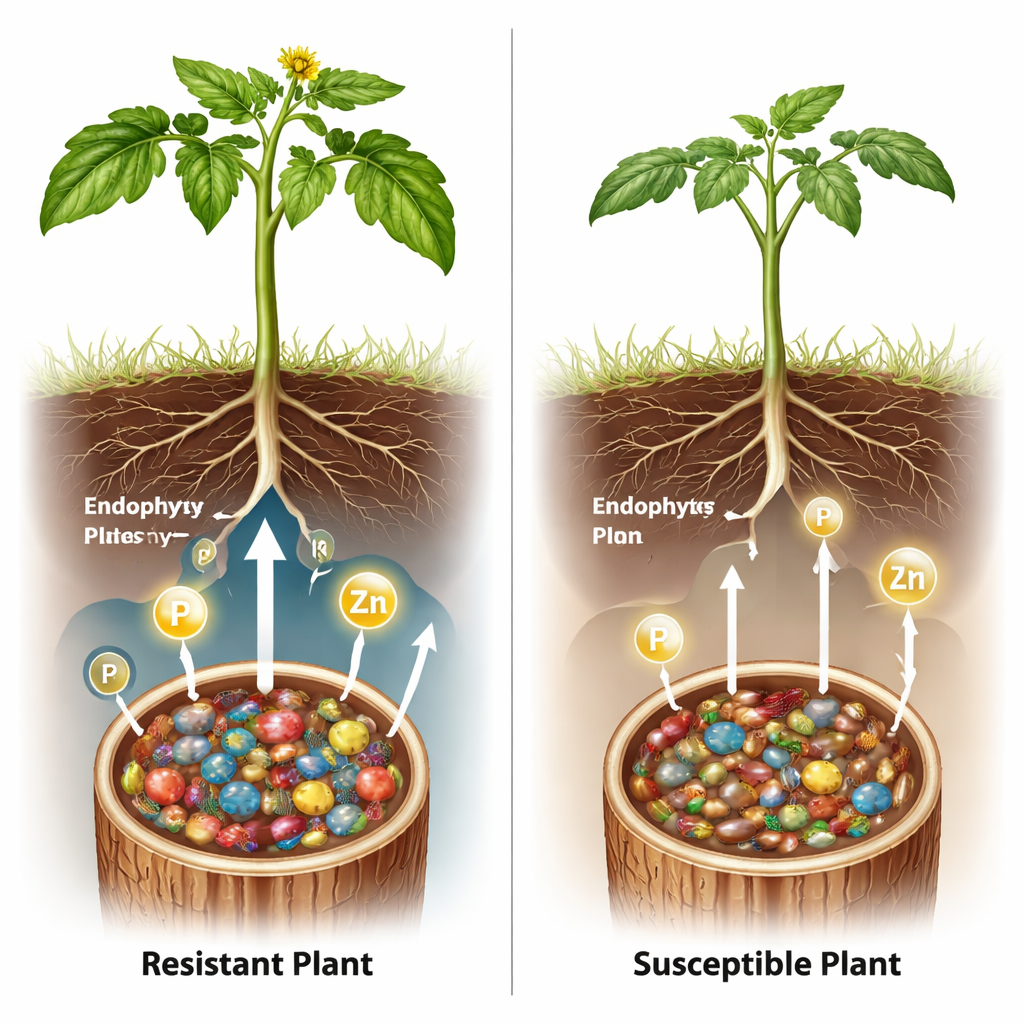
When the researchers tallied up the species and ran diversity analyses, a clear pattern emerged: the resistant tomatoes hosted more varied and better-balanced endophyte communities than the susceptible Arka Vikas. Leaves tended to harbor more fungal partners, while stems and roots were richer in bacteria, hinting that different tissues offer different niches for these microbes. Resistant plants contained more unique species, and statistical tools that compare community overlap showed that each cultivar assembled its own distinctive “microbial fingerprint.” In contrast, the susceptible variety had fewer species overall and shared little of its microbiome with the resistant lines.
Meet the plant’s microscopic allies
DNA sequencing revealed that the fungal endophytes included groups such as Chaetomium, Xylaria, Fusarium, Epicoccum, and others, while the bacterial residents came from well-known plant-associated genera such as Bacillus, Paenibacillus, Pseudomonas, and Klebsiella. Many of these microbes are already known from other studies to help plants by releasing protective compounds, competing with pathogens, or improving access to nutrients. Here, the team specifically tested whether each isolate could free up three key elements—phosphorus, potassium, and zinc—from insoluble sources in the lab. A select group of fungi and bacteria formed strong “halos” on test plates, showing they could make all three nutrients more available, a trait linked to stronger root systems and faster early growth.
Boosting weak tomatoes with strong partners
To see whether these promising endophytes actually help plants, the researchers coated seeds of the susceptible cultivar Arka Vikas with spores or bacterial cells from 11 top-performing isolates and grew them again in greenhouse soil. After 30 days, seedlings treated with the fungus Epicoccum nigrum or the bacterium Bacillus subtilis were noticeably larger than untreated plants, with taller shoots, heavier roots, and more leaves. Other treatments also improved growth, but these two stood out. By 60 days, differences in height and root weight had mostly evened out, although some treatments still produced heavier shoots and more branching. This suggests that the biggest impact of these friendly microbes may be during the critical early stages of plant establishment.
What it means for future tomato crops
The study shows that virus-resistant tomato cultivars tend to carry richer and more functionally capable communities of internal microbes than a susceptible cultivar, and that some of these hidden partners can directly boost growth when added to weaker plants. For now, the link to virus resistance is based on association rather than proof: the work did not yet test whether any endophyte can actually block or slow tomato leaf curl virus itself. Still, the findings point toward a future in which breeders and microbiologists work together, not only selecting for robust plant genes but also for helpful microbial companions—and even designing probiotic seed coatings—to build tomato crops that are healthier, more resilient, and less reliant on chemicals.
Citation: Chethan, D., Kavya, B.S., Arati et al. Endophyte profiling of tomato leaf curl virus (ToLCV) resistant and susceptible tomato genotypes: Insights into microbial diversity and growth promotion. Sci Rep 16, 5348 (2026). https://doi.org/10.1038/s41598-026-37677-7
Keywords: tomato leaf curl virus, endophytes, plant microbiome, biological control, tomato disease resistance