Clear Sky Science · en
Association between multimorbidity and childhood socioeconomic status with depressive symptoms among middle-aged and older adults in rural western China
Why early hardships still matter in later life
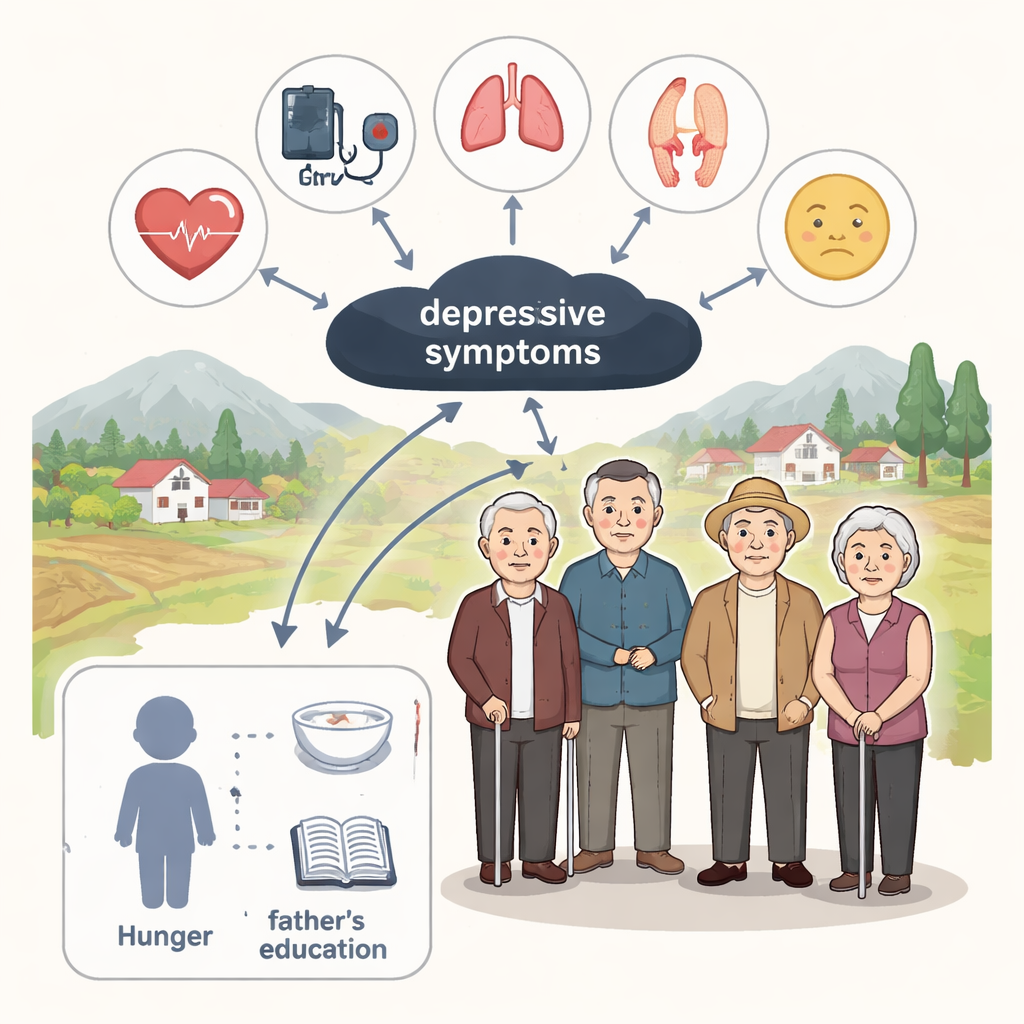
Many people assume that childhood struggles are left behind once we reach adulthood. Yet for millions of middle-aged and older adults, especially in poor rural areas, the health burdens they carry and the sadness they feel may be closely tied to both their current illnesses and the hardships they faced as children. This study looks at rural communities in Ningxia, a less-developed region of western China, to ask a simple but powerful question: how do multiple long-term diseases and early-life poverty combine to shape the risk of depression in later life?
Growing old with many health problems
As China’s population ages, many rural residents are living longer but with more chronic illnesses. Conditions like high blood pressure, heart disease, diabetes, stomach problems, arthritis, and lung disease often pile up in the same person, a situation known as having "multiple illnesses" at once. These illnesses can be painful, expensive to treat, and make everyday tasks harder. International research has shown that people with several chronic diseases are more likely to have low mood and loss of interest in life, but much of that evidence comes from richer countries or from big Chinese cities, not from poorer rural regions.
Listening to rural families in western China
The researchers drew on a large household health survey carried out in 2022 among more than 5,500 adults aged 45 and over in four counties of rural Ningxia. Trained interviewers visited randomly selected households and asked residents detailed questions about their health, lifestyle, family situation, and feelings. Depressive symptoms were measured with a standard nine-question checklist used worldwide in clinics and research. Respondents also reported whether they had been diagnosed with any of eight common long-term diseases. Those with two or more of these conditions were counted as having multiple illnesses. In addition, participants recalled aspects of their childhood, such as whether they often went hungry, how healthy they felt, and whether their parents had any schooling.
Untangling illness from other life circumstances
Because people with several diseases may differ from healthier people in many ways—such as age, income, or exercise—the team used a statistical method called "propensity score matching" to make fairer comparisons. In effect, they paired people with multiple illnesses to similar people without them, balancing factors like sex, age group, marital status, education, occupation, smoking, drinking, exercise, household income, and self-rated health. They then used regression models suitable for ordered outcomes to estimate how strongly multiple illnesses were linked with more severe depressive symptoms after accounting for these other influences.
Who is hurt the most and how childhood plays a role
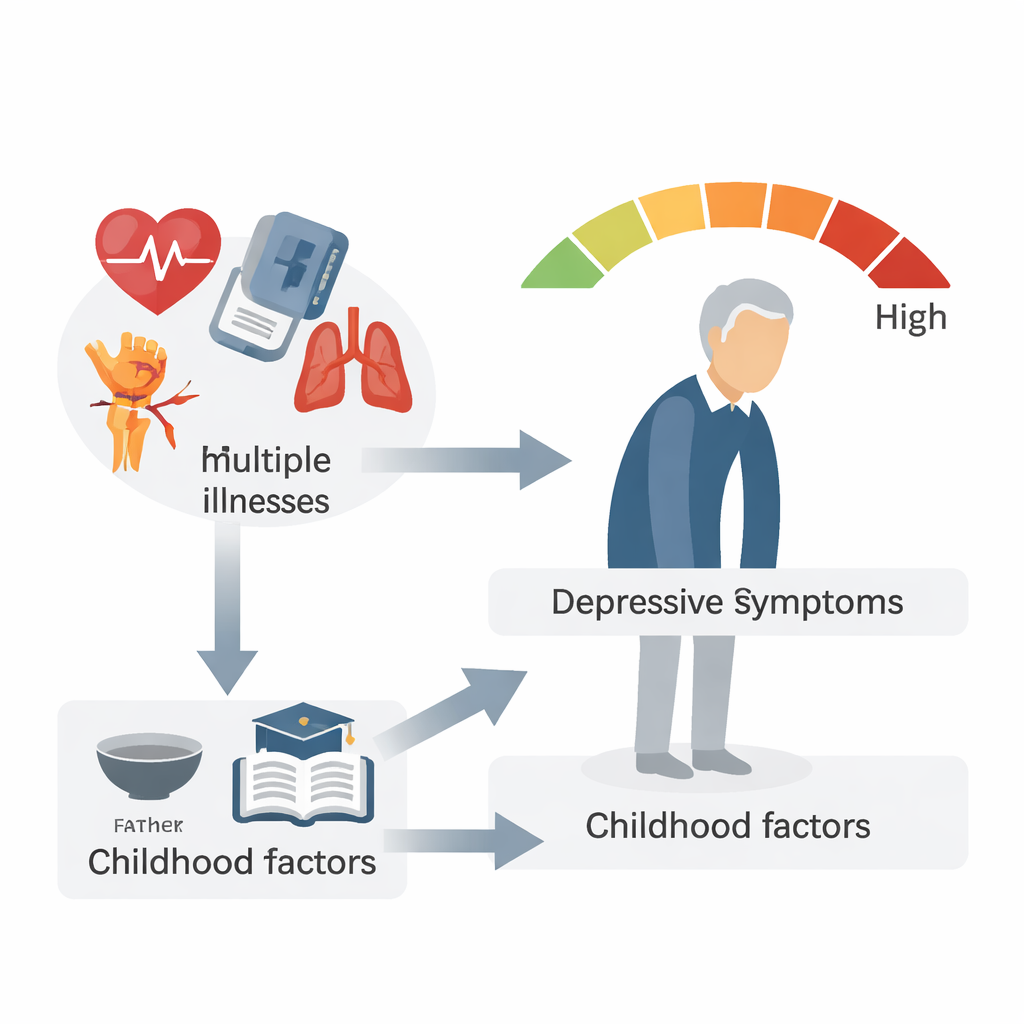
After adjustment, having multiple illnesses remained clearly associated with worse depressive symptoms. This pattern was especially strong for men, for adults aged 75 and older, and for those who had never attended school, suggesting that health, gender roles, age-related losses, and limited health knowledge may interact to deepen emotional distress. The study also probed how childhood circumstances changed this relationship. Two early-life factors stood out. First, people who had gone hungry as children were more likely to be depressed overall, but the added impact of multiple illnesses on depression was slightly smaller in this already vulnerable group, an unexpected pattern that future work needs to explain. Second, having a father with some schooling was linked to a stronger tie between multiple illnesses and depression in later life, perhaps because higher expectations and shifting family roles make the emotional impact of illness more severe.
What this means for families and policymakers
For lay readers, the message is straightforward: in rural western China, older adults who live with several chronic diseases are much more likely to experience depressive symptoms, and this risk is shaped in part by the poverty or support they knew as children. Improving mental health among rural elders will require more than treating single diseases; it calls for integrated care that recognizes emotional strain, offers financial and social support, and pays special attention to very old adults, men under heavy family pressure, and those with little schooling. At the same time, policies that reduce childhood hunger and improve access to education may quietly protect mental health many decades later, reminding us that investments in children’s wellbeing echo across a lifetime.
Citation: Xu, N., Ma, X., Hu, Q. et al. Association between multimorbidity and childhood socioeconomic status with depressive symptoms among middle-aged and older adults in rural western China. Sci Rep 16, 6600 (2026). https://doi.org/10.1038/s41598-026-37666-w
Keywords: multimorbidity, late-life depression, rural China, childhood poverty, aging health