Clear Sky Science · en
A retrospective assessment of antimicrobial resistance patterns in WHO-access, watch, and reserve-classified antibiotics across two large hospitals in a resource-limited setting
Why this matters to everyday health
Antibiotics are the backbone of modern medicine, from treating simple urinary infections to protecting patients during surgery and cancer treatment. But in many parts of the world, these drugs are losing their power because bacteria are becoming harder to kill. This study, carried out in two of Nigeria’s largest public hospitals, takes a hard look at how well different categories of antibiotics are still working and where resistance is already dangerously high. Its findings offer an early warning of what could happen more broadly if antibiotic use is not brought under control.
Sorting antibiotics into three everyday groups
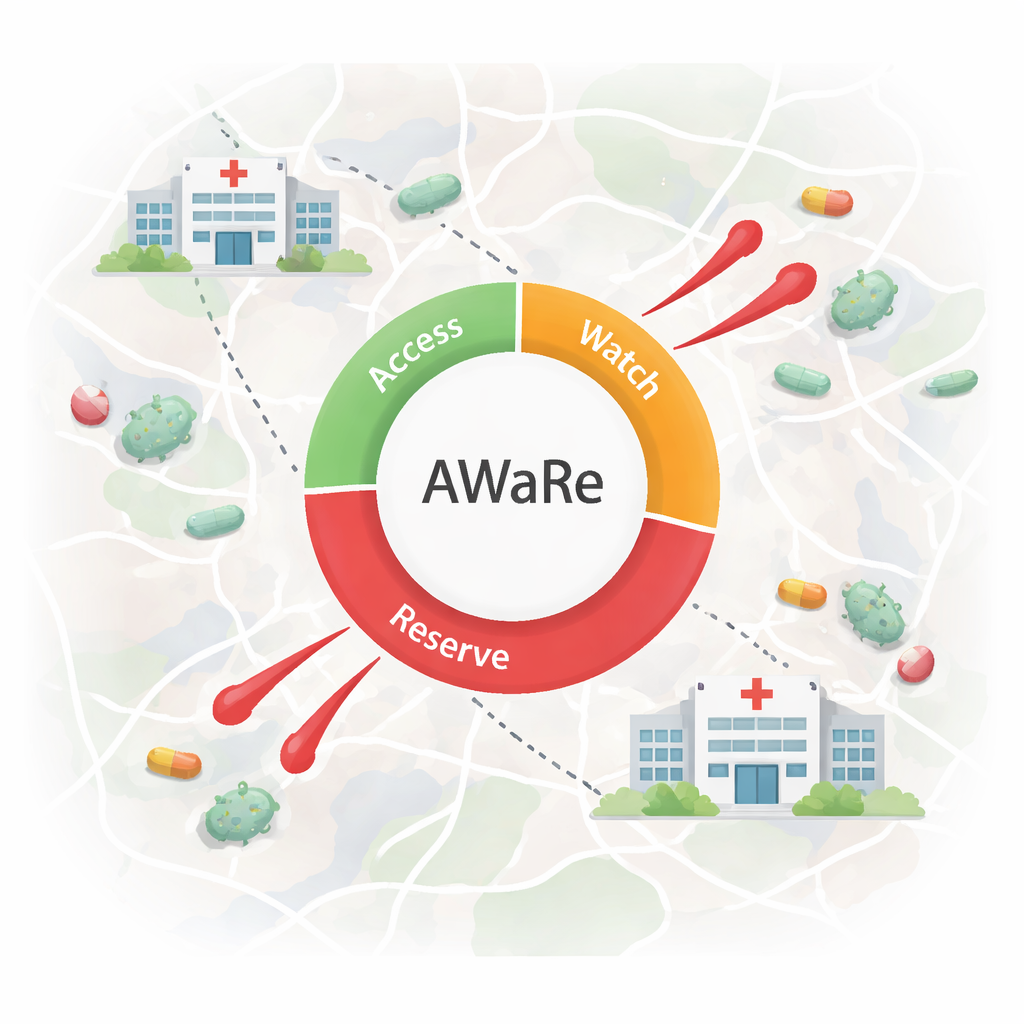
To make sense of the problem, the researchers used the World Health Organization’s AWaRe system, which groups antibiotics into three simple buckets. “Access” drugs are the workhorses that should handle most common infections and make up at least 60 percent of total use. “Watch” drugs are powerful options that should be used sparingly because bacteria can quickly learn to resist them. “Reserve” drugs are last-resort treatments, held back for the most serious infections when little else works. By mapping hospital test results onto these three groups, the team could see where resistance is rising fastest and how that lines up with global guidance.
What the hospital tests revealed
The study reviewed 14,423 lab tests done in 2023 on samples such as urine, blood, and wound swabs. About one in four tests (3,987) grew bacteria that could be checked against antibiotics. Urine and swab samples produced most of the positive results. Two familiar culprits—Escherichia coli, a common cause of urinary and gut infections, and Staphylococcus aureus, often linked to skin and bloodstream infections—together accounted for nearly half of all bacteria found. Women and children were especially affected, with more positive samples and higher rates of key bacteria in these groups.
Resistance across the three antibiotic groups
Across all the antibiotics tested, roughly 42 percent of results showed resistance, meaning the drug no longer worked against the bacteria in the lab. For the Access group, resistance averaged about 44 percent, with some drugs like doxycycline failing almost completely, while others like amikacin still worked in most cases. The Watch group, which is supposed to be protected and used cautiously, had the highest average resistance at about 47 percent; one widely used drug, cefuroxime, was ineffective against more than four out of five bacteria tested. Even among Reserve drugs, which are meant to be the final line of defense, resistance averaged about 35 percent, and some drugs that are not even widely available in Nigeria already showed resistance above 60 percent.
Dangerous patterns in multi-drug resistance
Beyond single drugs failing, the study uncovered worrying levels of bacteria that could shrug off many different antibiotics at once. More than 70 percent multi-drug resistance was seen with frequently used drugs such as cefuroxime, ceftazidime, and meropenem. High resistance was also found to some advanced agents that should, in theory, still be highly effective. Key problem bacteria included Staphylococcus aureus, Klebsiella species, Streptococcus species, and Escherichia coli—microbes that commonly cause hospital- and community-acquired infections. The Watch group emerged as a particular trouble spot: heavy reliance on these medicines appears to be driving the fastest rise in resistance, pushing doctors toward the Reserve drugs more often than intended.
What this means for patients and health systems
The findings carry sobering implications. If front-line Access drugs fail nearly half the time, routine infections become harder and more expensive to treat, hospital stays lengthen, and the risk of complications and death rises. As Watch drugs lose effectiveness, doctors must fall back on scarce, costly Reserve drugs, which in turn may also begin to fail. In a resource-limited setting, where lab testing, drug availability, and infection control are already under strain, this creates a vicious cycle: more severe disease, more broad-spectrum antibiotic use, and even more resistance.
How to pull back from the brink
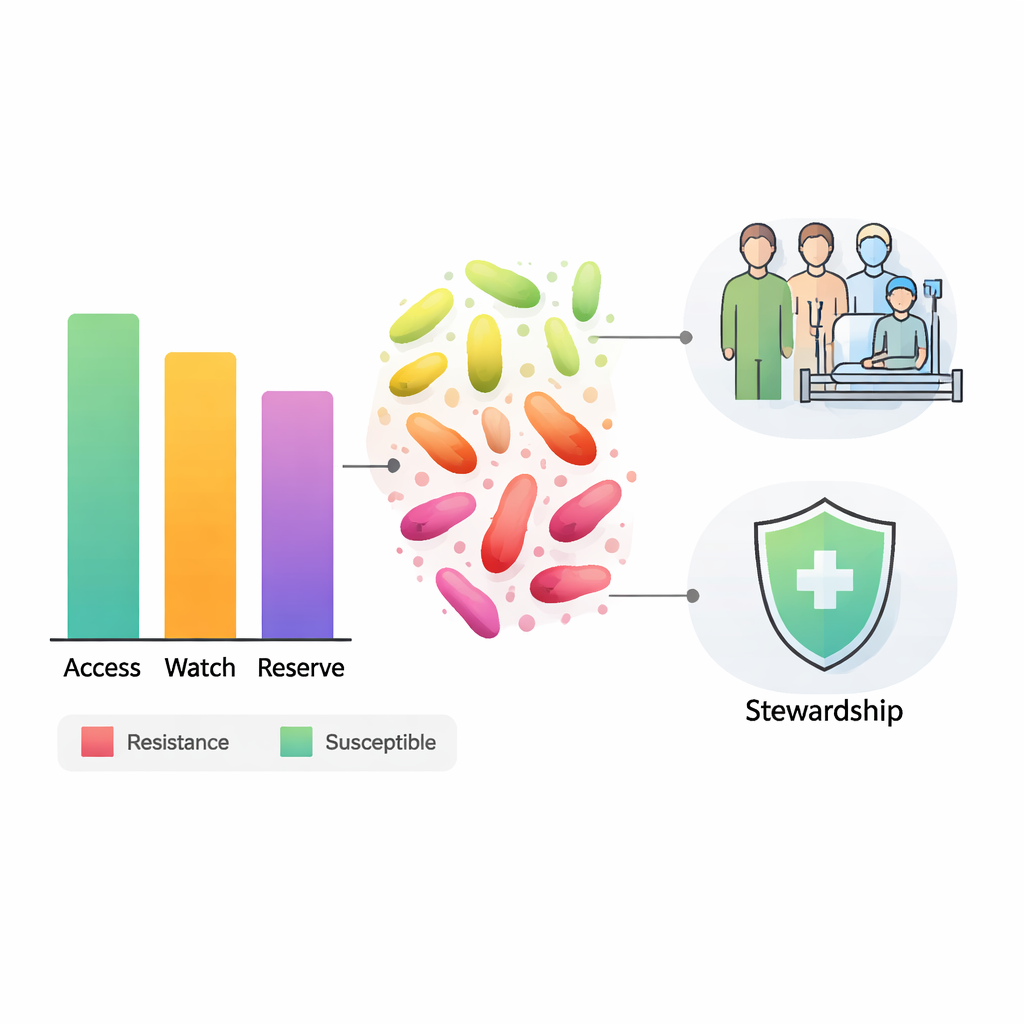
To break this cycle, the authors call for much stronger antibiotic stewardship built around the AWaRe framework. That includes using antibiotics only when necessary, choosing Access drugs first when they are likely to work, and protecting Watch and Reserve agents as precious resources. Hospitals need better diagnostic labs to guide treatment decisions, stronger supply chains so doctors are not forced into poor substitutes when the right drug is out of stock, and national systems to track resistance patterns over time. For patients and the wider public, the message is straightforward but urgent: antibiotics are a shared resource, and careless use today can mean fewer lifesaving options tomorrow.
Citation: Eya, E.B., Enyanwu, O.B. & Chukwu, O.A. A retrospective assessment of antimicrobial resistance patterns in WHO-access, watch, and reserve-classified antibiotics across two large hospitals in a resource-limited setting. Sci Rep 16, 6519 (2026). https://doi.org/10.1038/s41598-026-37665-x
Keywords: antimicrobial resistance, antibiotics, Nigeria hospitals, WHO AWaRe, stewardship