Clear Sky Science · en
Positive ascites cytology in interval debulking surgery predicts poor outcomes of advanced epithelial ovarian cancer achieving complete tumor resection
Why fluid around the ovaries matters
For many women with advanced ovarian cancer, doctors can now remove all visible tumors, yet the disease often comes back. This study asks a simple but crucial question: when fluid in the abdomen (called ascites) still contains cancer cells after modern treatment, does it signal a higher chance that the cancer will return or shorten a woman’s life—even if surgeons have completely cleared all detectable tumors?
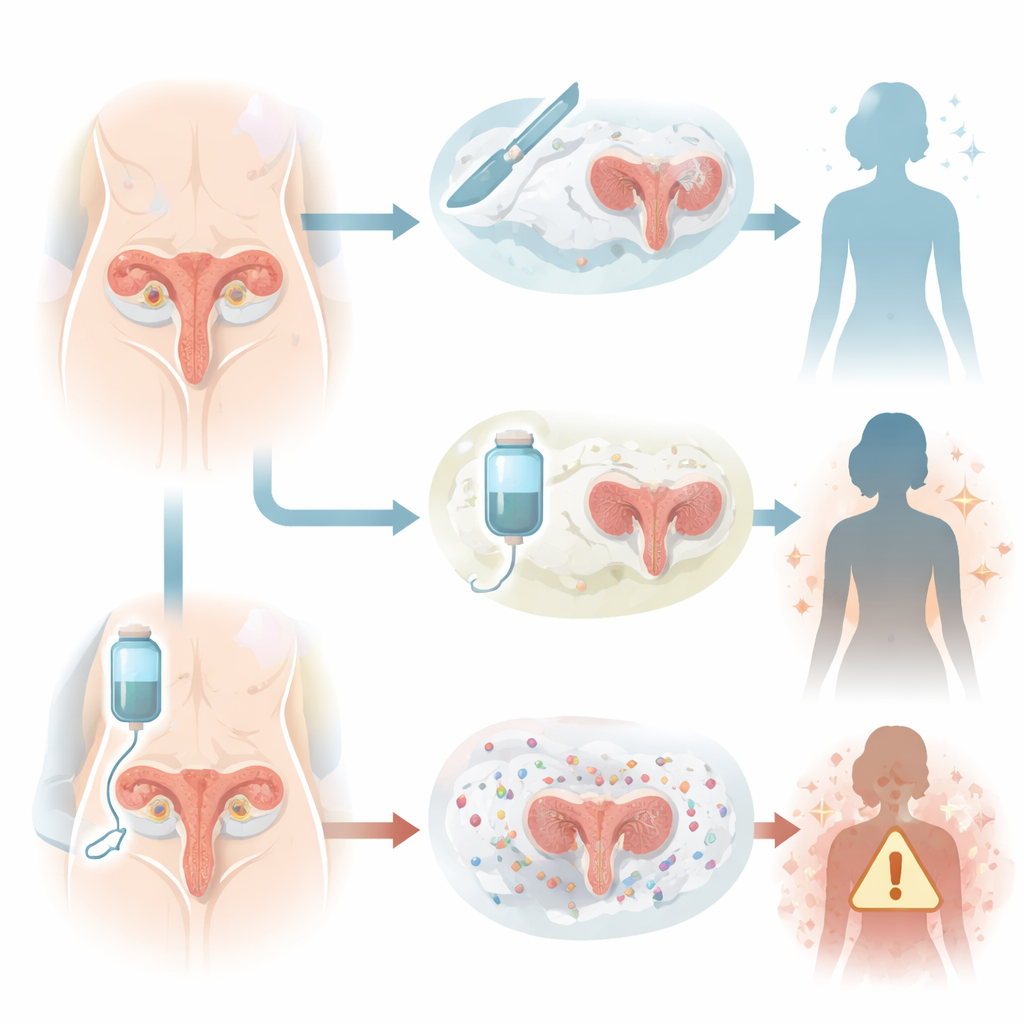
Two different paths to tumor removal
Women with advanced stage III ovarian cancer usually follow one of two main treatment paths. Some first undergo a major operation to remove as much tumor as possible, followed by chemotherapy; this is called primary debulking surgery. Others receive chemotherapy first to shrink the cancer, and then have what is known as interval debulking surgery. In both strategies, the ideal result is "R0 resection"—no visible tumor left behind. The researchers focused only on 250 women from a multi-hospital database in Japan who reached this best-case surgical outcome, allowing them to ask what factors still separated those who did well from those whose cancer later returned.
Looking closely at cancer cells in abdominal fluid
Most women with advanced ovarian cancer have extra fluid in the abdomen. During surgery, doctors often take a sample of this fluid and examine it under the microscope. If they see cancer cells, the test is called "positive ascites cytology." Earlier work showed that finding such cells at diagnosis is a bad sign, but it was unclear whether this remained true after chemotherapy and complete tumor removal. In this study, more than half of the women in both treatment paths had cancer cells in their abdominal fluid. The team then tracked how long patients stayed free of disease and how long they lived after treatment, comparing those with and without these floating cells.
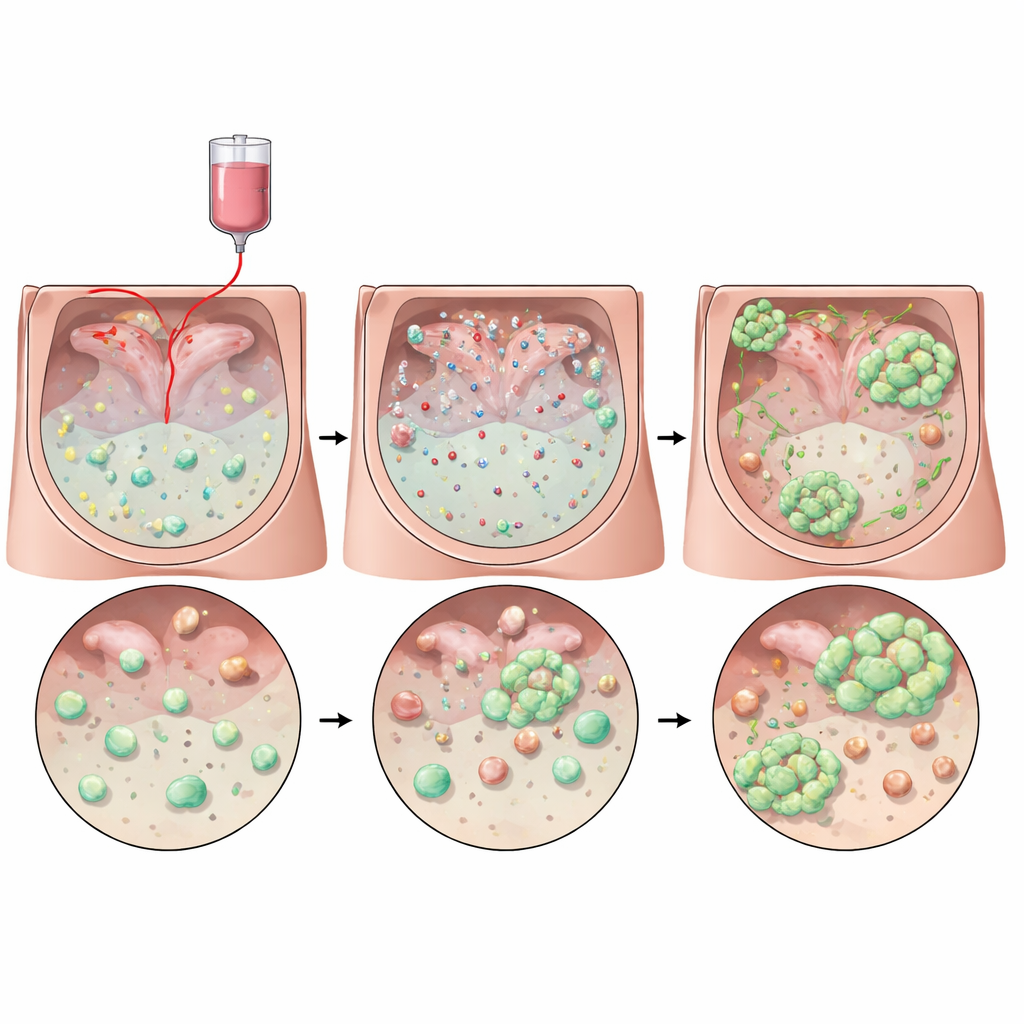
Who was at greater risk of relapse and death
Even among women whose surgeons had removed all visible tumors, two features stood out as warning signs: the choice of treatment path and the presence of cancer cells in the abdominal fluid. Overall, women who had chemotherapy before surgery tended to have more severe disease at the outset and did worse than those who had surgery first. Across the whole group, having cancer cells in the fluid was linked to more recurrences and more deaths within five years. When the researchers looked at each treatment path separately, the difference became sharper. In women who had chemotherapy first and then surgery, positive fluid tests were associated with about double the risk of the cancer returning and more than triple the risk of dying, compared with women whose fluid was clear. In those who had surgery first, positive fluid still signaled higher risk, but the impact was more modest.
What lingering cells in fluid may be telling us
The team also studied women whose cancer came back, examining how long they lived after relapse. Again, women who had chemotherapy before surgery and still had cancer cells in their abdominal fluid tended to fare worse once the disease returned. The authors suggest that when cells survive in this fluid after strong chemotherapy, they may represent a tougher, more aggressive subset of the cancer. These cells float freely in the abdominal cavity, can form small clusters with support cells, and may seed new tumor deposits on the lining of the abdomen. That behavior could help explain why, even after a seemingly perfect operation, the disease can reappear and progress more quickly in this subgroup.
What this means for future care
For patients and clinicians, the message is that a clean-looking scan and successful surgery do not tell the whole story. This study shows that finding cancer cells in abdominal fluid after chemotherapy and complete tumor removal is a strong warning sign, especially for women treated with chemotherapy before surgery. These patients may benefit from more intensive follow-up and additional therapies aimed specifically at the free-floating cells in the abdominal cavity. As cancer care moves toward more personalized approaches, the simple step of examining this fluid carefully could help identify women at highest risk and guide the development of new treatments that target the hidden seeds of relapse.
Citation: Yoshikawa, M., Yoshihara, M., Emoto, R. et al. Positive ascites cytology in interval debulking surgery predicts poor outcomes of advanced epithelial ovarian cancer achieving complete tumor resection. Sci Rep 16, 8043 (2026). https://doi.org/10.1038/s41598-026-37664-y
Keywords: ovarian cancer, ascites, chemotherapy, cancer recurrence, surgical treatment