Clear Sky Science · en
Assessment of vitamin E status among patients with newly diagnosed primary knee osteoarthritis in Cameroon
Why vitamins and aching knees matter
Knee pain from osteoarthritis is a growing problem worldwide, especially as people live longer and stay active later in life. Many patients look beyond painkillers and surgery, asking whether everyday nutrients, such as vitamin E, might help protect their joints. This study from Cameroon explores one simple question with big implications: are people with newly diagnosed knee osteoarthritis more likely to lack vitamin E than their peers?
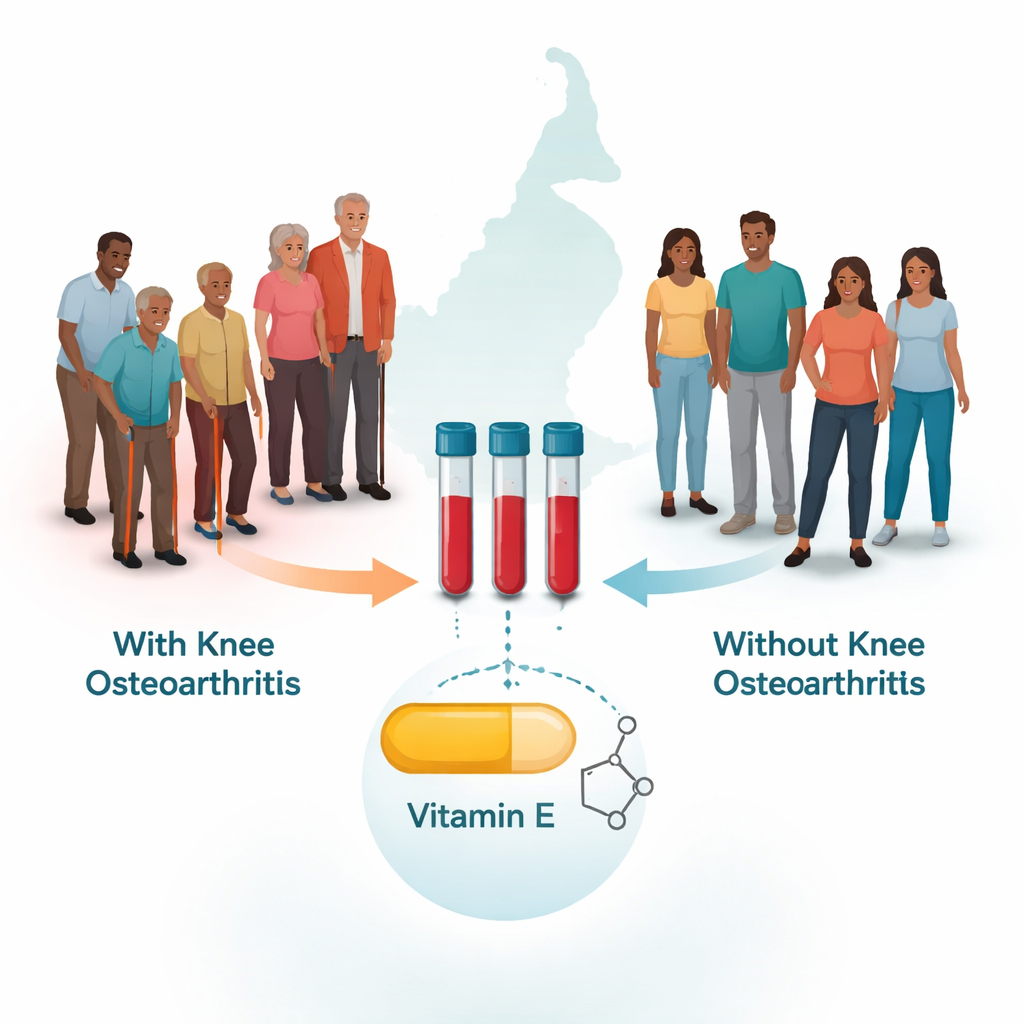
Looking at knees and nutrition in Cameroon
Researchers in Yaoundé, Cameroon, invited adults aged 40 and over from the community to take part in a hospital-based study. Everyone had a knee check-up and X‑rays. Those who met standard medical criteria for primary knee osteoarthritis formed one group, while those with normal knees formed a comparison group. None were already being treated for osteoarthritis or had illnesses known to disturb vitamin E levels. All participants gave a blood sample after fasting so that the team could measure their vitamin E status.
Checking vitamin E levels in the blood
Vitamin E, also known as alpha‑tocopherol, is a fat‑soluble vitamin that helps protect cells from damage caused by "oxidative stress"—the wear and tear from chemical reactions involving oxygen. Using a laboratory technique called ELISA, the team classified vitamin E levels as acceptable, low, deficient or high, based on previous work in Cameroonian populations. They also recorded how often people ate vitamin E‑rich foods such as vegetable oils, nuts, seeds, fatty fish, avocados and certain dairy products, turning this into a simple score for good or poor intake.
What the study found in patients and peers
The study included 159 people, with an average age of about 54 years and two‑thirds women; just over half had knee osteoarthritis. Apart from being older, the osteoarthritis group was similar to the comparison group in terms of weight, blood pressure and lifestyle habits. Yet their vitamin E profiles were strikingly different. Almost all patients with knee osteoarthritis (about 98%) had vitamin E deficiency, compared with only about one in five people without the condition. On average, blood vitamin E levels were much lower in those with osteoarthritis than in those without. Older age (55 and above) increased the odds of deficiency, while frequently eating vitamin E‑rich foods sharply reduced that risk.
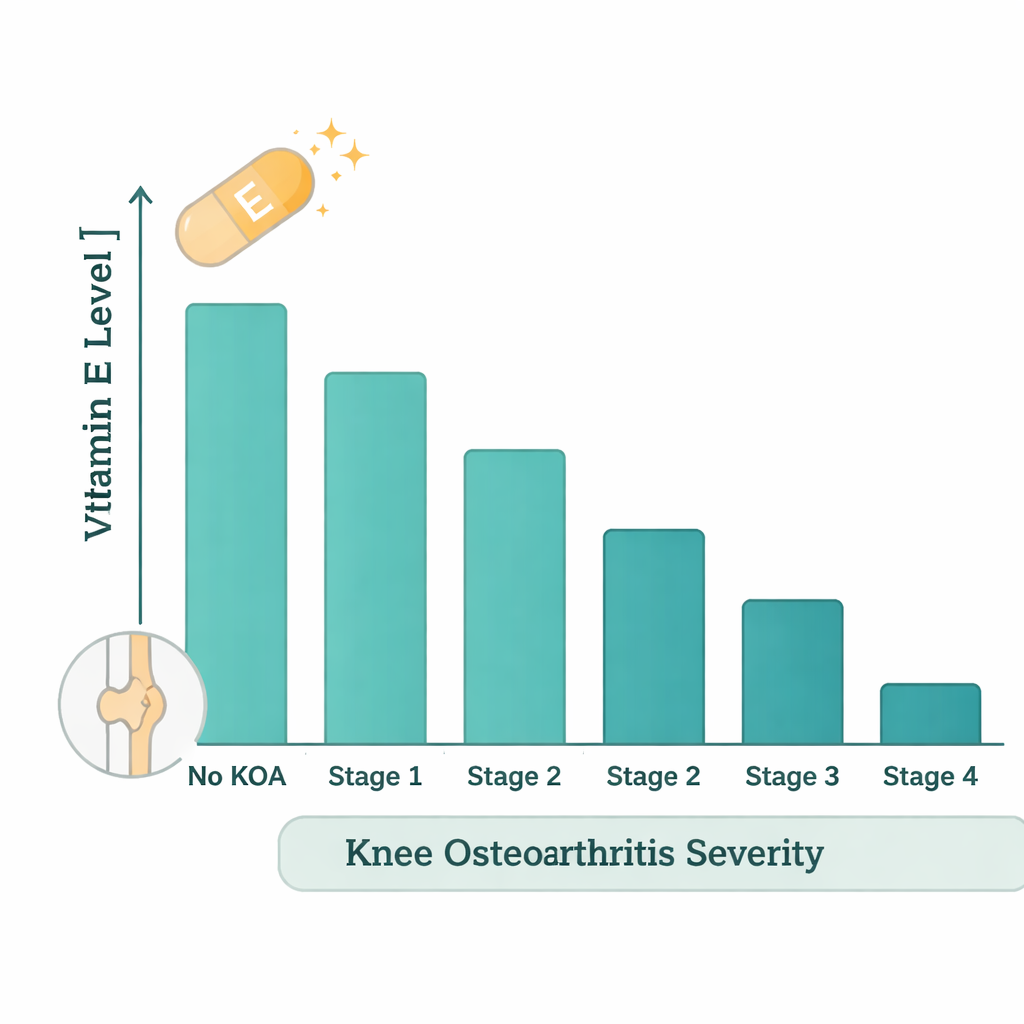
Worse X‑rays, lower vitamin E
The researchers also looked at how vitamin E levels related to the visible damage on knee X‑rays. They used a standard scale that grades osteoarthritis from early, mild changes to severe joint narrowing and bone damage. People in the earliest stage had the highest vitamin E levels. From stage 2 onward, vitamin E dropped sharply, and it stayed very low in the more advanced stages. Those with the most severe X‑ray changes were several times more likely to have very low vitamin E than those with milder disease. Interestingly, vitamin E levels did not clearly track with how disabled people felt in daily life, suggesting that joint damage and symptoms do not always move in lockstep.
What this means for patients and doctors
This pilot study shows that, in this Cameroonian community, adults with newly diagnosed knee osteoarthritis are far more likely to be short of vitamin E than their peers, and that lower vitamin E tends to go hand in hand with more advanced joint damage on X‑rays. The findings do not prove that low vitamin E causes osteoarthritis or that supplements will slow the disease—a number of clinical trials elsewhere have reported mixed results. Still, the work highlights vitamin E deficiency as a common and potentially important feature of knee osteoarthritis in this setting. It suggests that checking diet and vitamin status, and testing vitamin E more thoroughly in future long‑term studies, could help clarify whether improving vitamin E intake might one day become part of a broader strategy to protect aging knees.
Citation: Nkeck, J.R., Seme Engoumou, A., Saira, D.F. et al. Assessment of vitamin E status among patients with newly diagnosed primary knee osteoarthritis in Cameroon. Sci Rep 16, 6547 (2026). https://doi.org/10.1038/s41598-026-37660-2
Keywords: knee osteoarthritis, vitamin E, oxidative stress, nutrition, Cameroon