Clear Sky Science · en
An innovative data mining-driven optimisation modelling approach based on TAM for the design of elderly-centric ICT products
Why smarter gadgets for seniors matter
As the global population ages, more people over 65 are being encouraged to use smartwatches, apps and other digital tools to stay healthy, independent and connected. Yet many older adults find today’s devices confusing, tiring to use or simply unappealing. This study looks at a new way to design information and communication technology (ICT) products that start from what older people actually say they want, turning their real-life comments into concrete design rules manufacturers can follow.
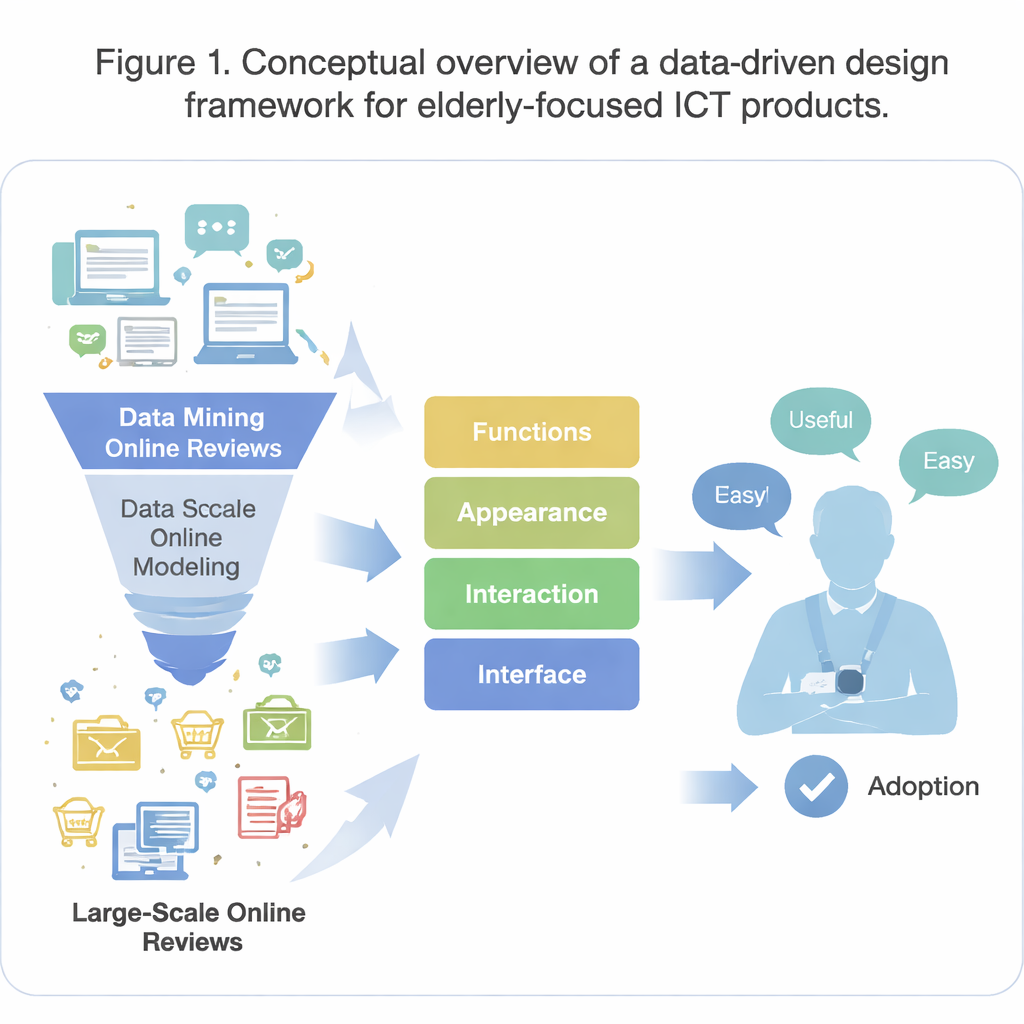
Listening to older users at scale
Instead of asking a small group of volunteers what they think about technology, the researchers tapped into a huge, existing source of feedback: online shopping reviews. Focusing on elderly-oriented smartwatches sold on a major Chinese e-commerce site, they scraped nearly 180,000 comments. Because many reviews are written by younger buyers or people whose age is unknown, they added a crucial “data purification” step—keeping only comments that clearly referred to older people, such as reviews mentioning “grandma,” “dad,” or “elderly.” This filtering left 8,840 reviews that more reliably reflected the experience and needs of senior users.
Finding hidden themes in thousands of reviews
To make sense of so many comments, the team used text mining, a kind of automated reading that spots patterns in large amounts of text. After cleaning the data and breaking sentences into meaningful words, they applied a topic modeling method called Latent Dirichlet Allocation. This technique groups words that frequently appear together into themes. From ten such themes, and with input from product design experts, the authors distilled four key aspects of smartwatch design that matter most to older adults: what the watch can do (functional architecture), how it looks and feels (morphological aesthetics), how people operate it (interaction mode), and how information is shown on the screen (human–computer interface).
From design choices to user reactions
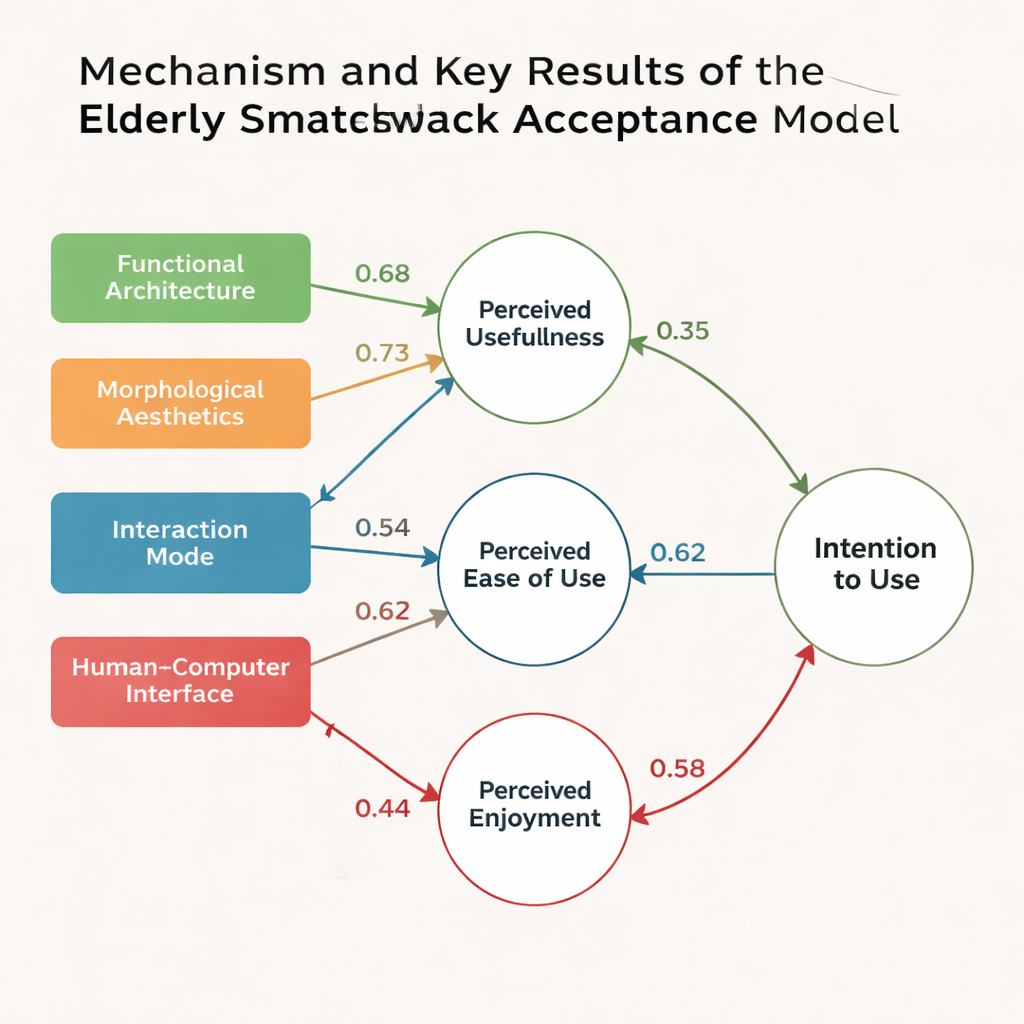
To see how these four elements shape older adults’ reactions, the researchers built what they call a user-needs integrated technology acceptance model, or UN-TAM. This model links concrete design choices to three inner reactions: whether the product feels useful, easy to use and enjoyable. These, in turn, influence a person’s intention to use the device. The team then surveyed 174 people aged 60 and above, both online and face-to-face, asking them to rate sample smartwatches and their own willingness to use them. Using a statistical method called structural equation modeling, they checked how well the model fit the data and how strong each link was.
What matters most for seniors
The results reveal a clear message for designers. All four design elements strongly affect whether older users feel a smartwatch is easy to use. Functional architecture—especially health monitoring, accurate measurements, calls and emergency alerts—also has the biggest impact on whether the watch feels truly useful. The way the watch looks does matter, but mainly when it supports clarity and straightforward operation rather than fashion for its own sake. Interaction mode and the human–computer interface play a double role: when buttons, touch screens, fonts and layouts are simple and forgiving, seniors are more confident, find the watch easier, and even enjoy using it more. Among all internal reactions, feeling that a product is easy to use has the strongest effect on the intention to keep using it; usefulness and enjoyment also help, with enjoyment acting as an emotional bridge between the practical and the personal.
Turning insights into better products
For a layperson, the study’s conclusion is straightforward: if companies want older adults to embrace smartwatches and similar devices, they must design around seniors’ real-life words and worries, not just engineers’ assumptions. By mining online reviews, cleaning them to focus on genuine elderly experiences, and tying what people say to how they behave, this research offers a roadmap for more age-friendly technology. Clear health functions, simple interaction, readable screens and reassuring, trustworthy looks are not just nice extras—they are the levers that make digital products truly usable, helpful and even enjoyable for older people.
Citation: Cao, Y., Yang, X., Luo, S. et al. An innovative data mining-driven optimisation modelling approach based on TAM for the design of elderly-centric ICT products. Sci Rep 16, 6131 (2026). https://doi.org/10.1038/s41598-026-37657-x
Keywords: elderly technology, smartwatch design, user-centered design, technology acceptance, data mining