Clear Sky Science · en
Development of a non-invasive diagnostic method for pathogenic RNA viruses using sebum wiped from the cat’s body surface
Cats, Viruses, and a Gentler Way to Test
For many cat owners, the idea of their pet needing a blood test is stressful—for both human and feline. Needles can frighten animals, and handling blood from sick cats can expose veterinarians to dangerous viruses that also infect people. This study explores a surprisingly simple alternative: checking for viral infections in cats by wiping the natural oils from their skin with an oil-blotting sheet, offering a gentler and safer way to protect animal and human health.
Why Cat Infections Matter to People
Cats can carry several serious viruses, some of which can jump from animals to humans. One highlighted threat is severe fever with thrombocytopenia syndrome (SFTS), a tick-borne disease that can be deadly and has already been passed from cats to veterinarians in Japan. Another is feline immunodeficiency virus (FIV), an infection that weakens the immune system of cats worldwide and is especially common among outdoor and shelter cats. Quickly identifying infected cats helps protect other animals, the people who care for them, and potential adopters—yet current testing relies mainly on blood draws.
Using Skin Oils Instead of Needles
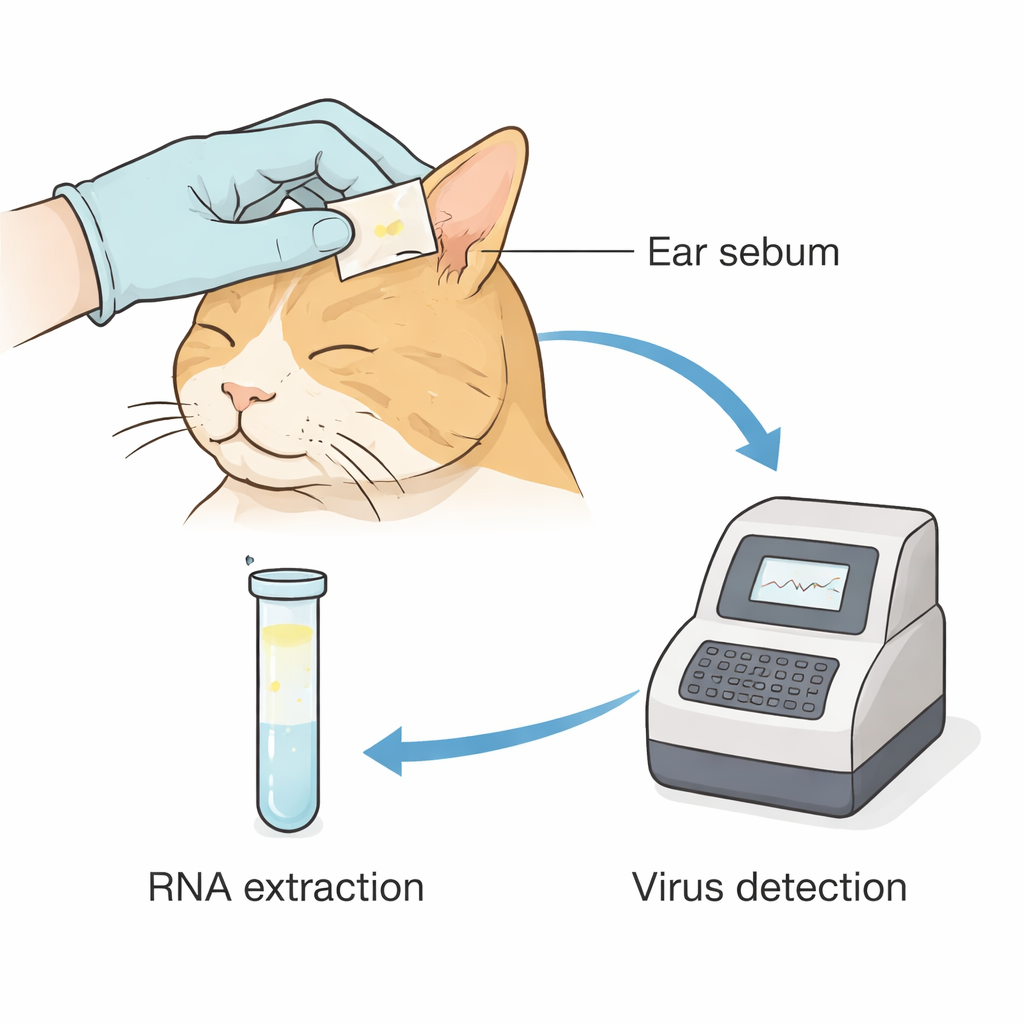
The researchers built on earlier human work showing that the skin’s oily layer, or sebum, contains both human genetic material and viral RNA. They asked whether a similar approach could work in cats. Using commercially available oil-blotting films like those sold in drugstores, they gently wiped different areas of cats’ bodies and then examined the collected material. First, they designed and tested highly selective genetic “primers” that could recognize cat RNA while ignoring human or background DNA. They found that a housekeeping gene called B2M could be reliably detected from sebum, confirming that the wipes were picking up enough feline material to serve as a stable signal for testing.
Finding the Best Sampling Spot and Workflow
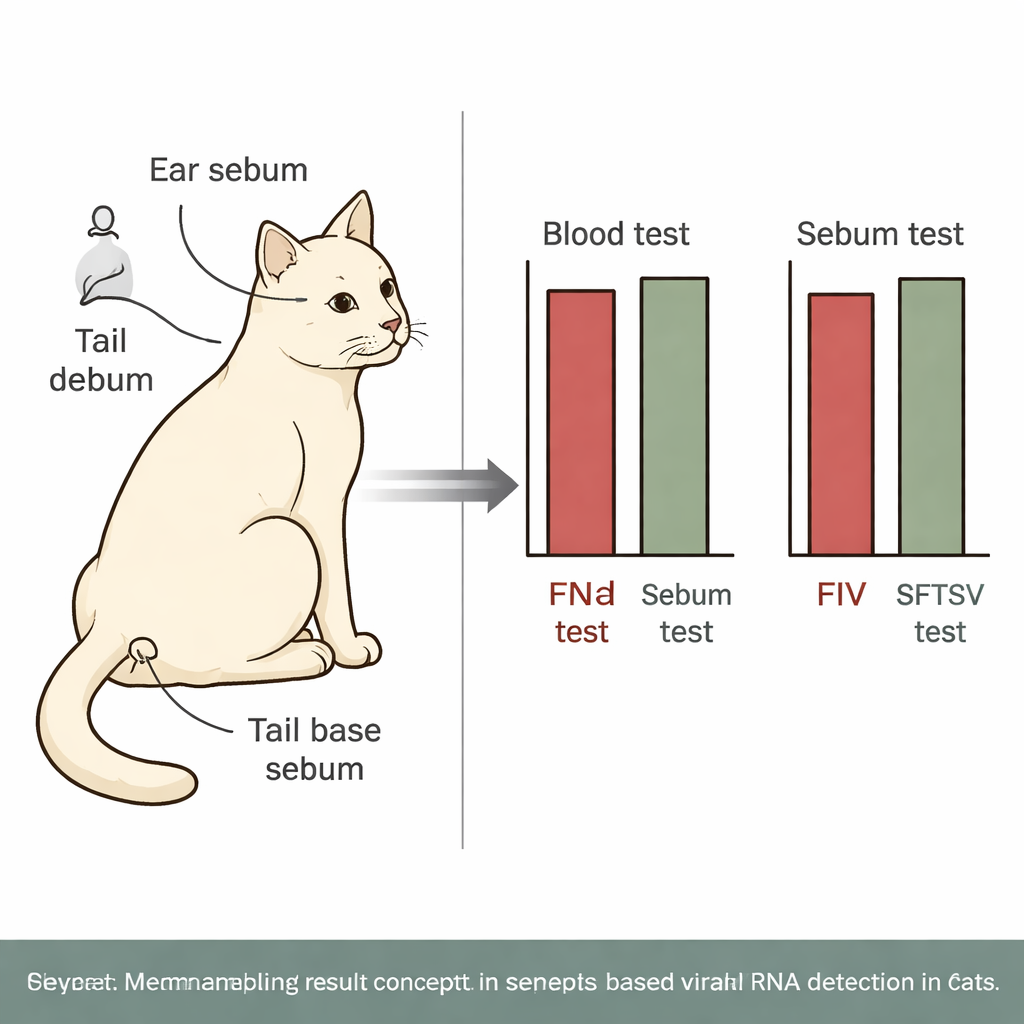
Not all parts of a cat’s body produce the same amount of sebum. By comparing samples from the armpit, tail base, tail, and ear, the team discovered that the ear consistently yielded strong and reliable signals for the B2M gene. They also showed that an automated RNA extraction system worked even better than a manual method, making the process both faster and more sensitive. Practical tests revealed that sebum samples stored on oil-blotting films remained stable for at least three days at temperatures ranging from household freezer levels to a warm summer day, suggesting that clinics and shelters could ship samples to testing centers without special conditions.
Checking for Real Viruses in Real Cats
The crucial question was whether this gentle ear-wiping method could actually detect important viruses. In shelter cats already known to be infected with FIV, the sebum-based test found viral RNA in the same animals that tested positive by blood, and negative cats remained negative. In other words, the new method matched the performance of standard blood-based testing for this major feline virus. As a further proof of concept, the researchers sampled a cat naturally infected with the SFTS virus and successfully detected its viral RNA from sebum collected at the base of the tail. These results indicate that oily skin surfaces can carry enough viral material to support reliable testing for at least two important RNA viruses.
What This Means for Cats and Their Caretakers
Replacing a needle stick with a simple ear wipe could ease fear and pain for cats, lower the risk of infection for veterinarians and shelter workers, and make large-scale screening more practical, especially in crowded shelters or among community cats. Owners might even be trained to collect samples at home. While blood tests will still be needed for full health assessments—such as checking blood cell counts—this sebum-based method offers a powerful new tool for quick, low-stress, and safer virus detection. By making diagnostics kinder for animals and safer for humans, this approach supports the broader One Health goal of protecting people, pets, and the environments they share.
Citation: Fukushima, Y.V., Saito, N., Mekata, H. et al. Development of a non-invasive diagnostic method for pathogenic RNA viruses using sebum wiped from the cat’s body surface. Sci Rep 16, 4101 (2026). https://doi.org/10.1038/s41598-026-37655-z
Keywords: feline viral infections, non-invasive diagnostics, sebum sampling, feline immunodeficiency virus, severe fever with thrombocytopenia syndrome