Clear Sky Science · en
Evaluation of mineral composition and in-vitro nutrient digestibility of macrophytes to assess their potential as sustainable animal feed
Turning Lake Weeds into Useful Feed
Aquatic "weeds" are often seen as a nuisance that clogs lakes and canals, but they may actually be a hidden resource for farmers. This study asks a practical question: can the fast-growing plants that blanket lakes in Kashmir be safely turned into nutritious feed for cattle, sheep, goats, poultry, and fish, while also helping clean polluted water?
What the Scientists Wanted to Find Out
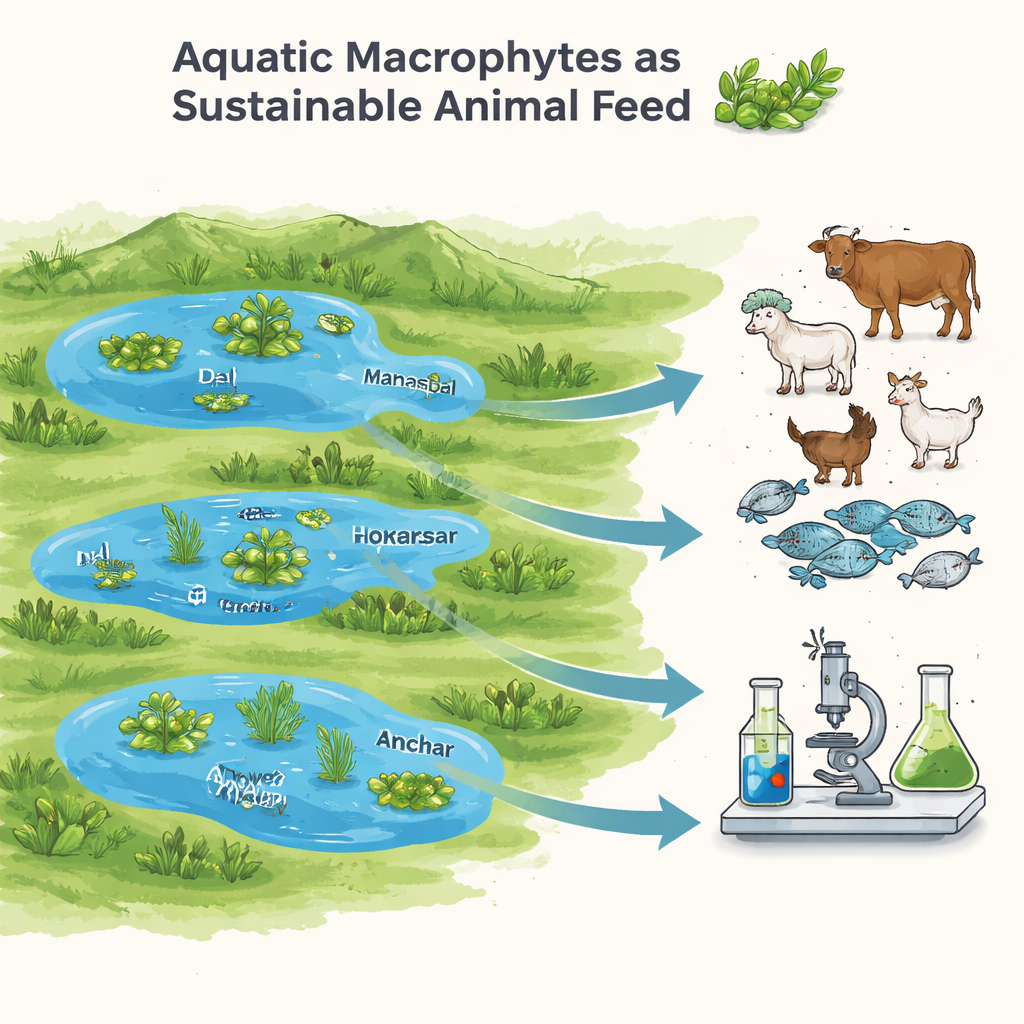
Researchers focused on common aquatic plants, or macrophytes, growing in four major lakes of central Kashmir: Dal, Manasbal, Hokersar, and Anchar. These lakes are choked with floating and submerged vegetation that currently has little economic use. The team set out to measure three things: how much essential mineral nutrition these plants contain, whether they also accumulate dangerous heavy metals, and how easily animals could digest them, using laboratory simulations of the stomach of a grazing sheep.
How the Study Was Done
The scientists collected large samples of different macrophyte species from multiple points in each lake, washed and dried them, and then ground them into fine powder. Using chemical analyses, they measured major nutrients such as calcium, phosphorus, sodium, magnesium, and potassium, along with trace elements like iron, zinc, copper, and manganese. They also checked for toxic metals including lead, arsenic, mercury, and chromium. To test how well the plants might be used as fodder, rumen fluid from sheep was used in standard "in-vitro" digestibility tests that mimic how plant material breaks down in the animal’s forestomach over time.
Rich in Minerals, but Not All Plants Are Equal
The results showed that these lake plants are surprisingly rich in minerals. Across the sites, potassium and iron were particularly abundant. Some species stood out as nutritional powerhouses: Lemna minor (duckweed) and Azolla cristata often had the highest levels of key macro-minerals like calcium, phosphorus, sodium, and potassium, while other plants such as Cladophora glomerata were especially rich in magnesium. For trace elements, iron peaked in waterlilies like Nymphaea tetragona, and zinc was highest in species such as Nelumbo nucifera (lotus) and Myriophyllum spicatum. However, mineral levels varied widely from lake to lake, showing how strongly local water quality and growing conditions shape the nutritional value of these plants.
Digestible Feed and a Built-In Filter
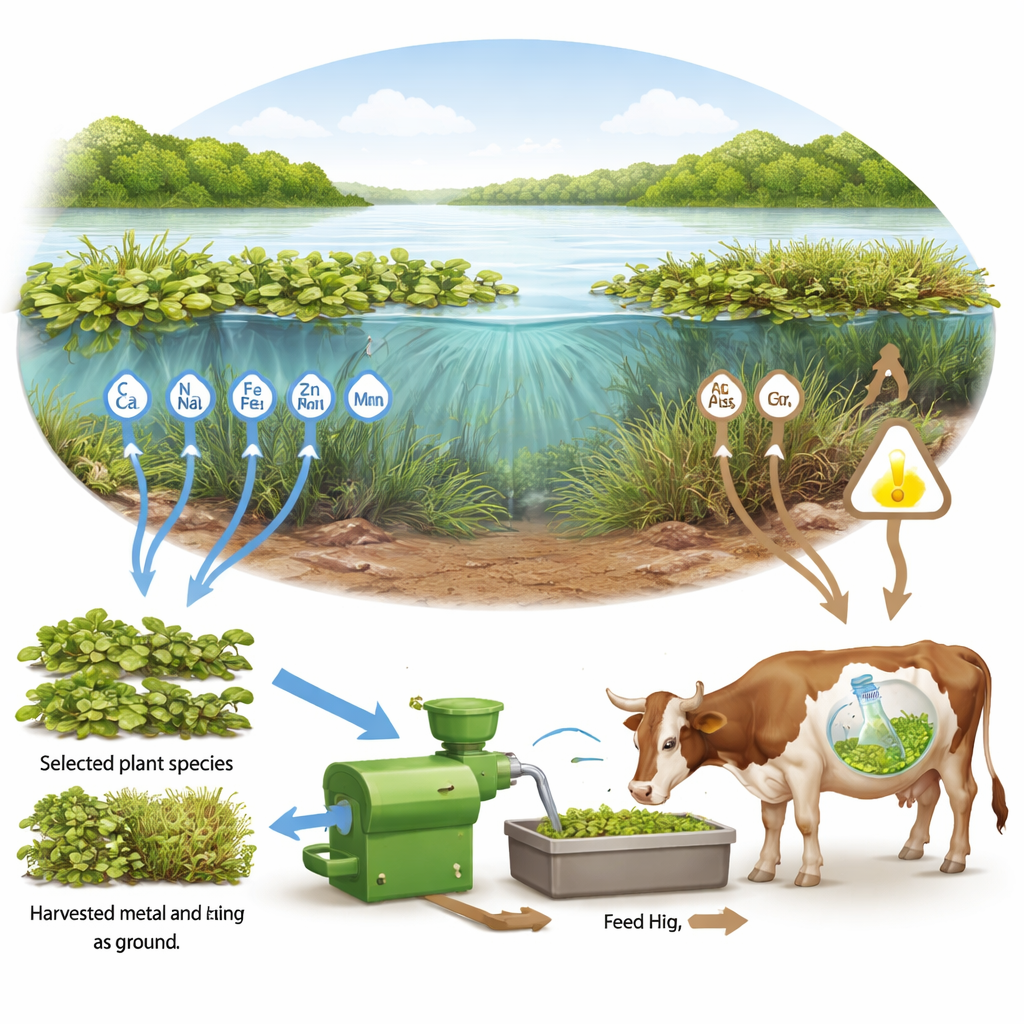
When the researchers tested how easily the plants could be broken down, several species performed as well as, or better than, many traditional fodders. Nelumbo nucifera, Trapa natans (water chestnut), and Lemna minor from Dal Lake showed high digestibility of dry matter and fiber, meaning a larger fraction of what the animal eats can actually be turned into energy and nutrients. In contrast, tall, tougher plants such as Typha angustata and some Nymphoides and Ceratophyllum species were much less digestible. At the same time, the study confirmed that many macrophytes act like sponges for pollution: they pulled in measurable amounts of heavy metals, especially lead and arsenic, likely from sewage and runoff entering the lakes. Certain species, notably Myriophyllum spicatum, accumulated enough metal to make them promising candidates for cleaning water, but also flagged them as risky to feed directly to animals unless carefully monitored.
What This Means for Farmers and Lakes
Overall, the work suggests that selected aquatic weeds with high nutrient content and good digestibility—such as Dysphania ambrosioides, Trapa natans, Lemna minor, Nelumbo nucifera, and Azolla species—could partly replace high-quality fodder crops in animal diets. This could ease feed shortages, particularly in regions with limited grazing land, while also turning an overabundant weed into a resource. At the same time, because many of these plants concentrate heavy metals above recommended limits, they cannot be used blindly. Instead, they need to be screened and managed so that safe species and clean sites are chosen for feed, while metal-rich plants are directed toward environmental cleanup. The study highlights a double benefit: with the right safeguards, lake weeds can both nourish livestock and help restore the health of freshwater ecosystems.
Citation: Islam, M., Sheikh, G.G., Sahib, Q.S. et al. Evaluation of mineral composition and in-vitro nutrient digestibility of macrophytes to assess their potential as sustainable animal feed. Sci Rep 16, 7063 (2026). https://doi.org/10.1038/s41598-026-37642-4
Keywords: aquatic plants, animal feed, lake weeds, heavy metals, phytoremediation