Clear Sky Science · en
Temporal influence maximization via continuous-time graph neural networks and deep reinforcement learning
Why timing matters in our connected world
From viral videos to the spread of diseases, much of modern life depends on how things ripple through networks of people. Companies want to know whom to target so an advertisement snowballs. Public health officials want to know whom to vaccinate first to halt an outbreak. Yet most tools used to pick these key individuals treat networks as if they were frozen in time, even though real interactions appear and vanish from moment to moment. This paper introduces a new approach, called TempRL-IM, that takes the flow of time seriously and shows how using the precise timing of connections can greatly improve our ability to steer information and influence in fast-changing social systems.
From static maps to living networks
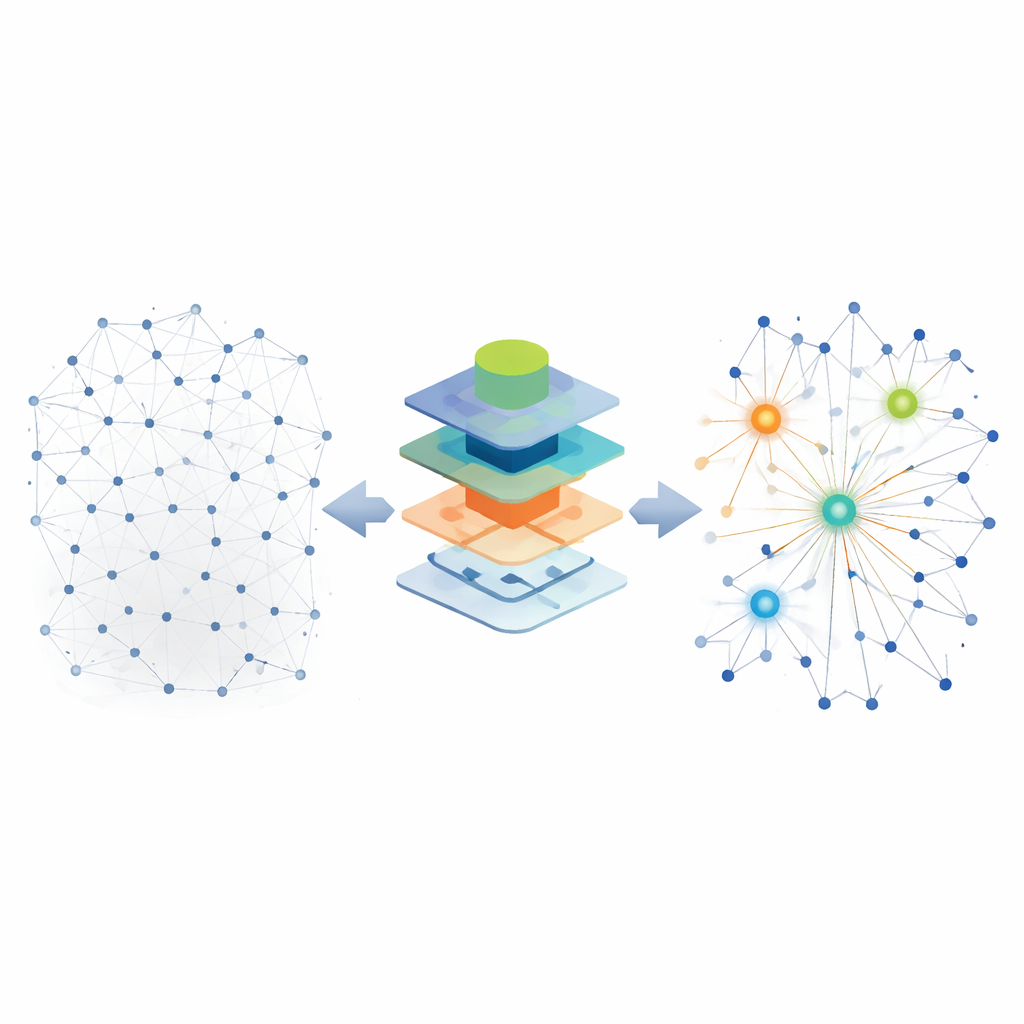
Traditional studies of influence in networks start with a simple question: if you could choose a small set of people to "activate"—perhaps by sending them free samples or vital alerts—which ones would cause the biggest chain reaction? Earlier methods answered this by looking only at a fixed snapshot of who is connected to whom. They assume that if person A is tied to person B, that tie is always available for influence to travel. But real systems are rarely so stable. Email exchanges, phone calls, online messages, and face-to-face encounters surge and fade throughout the day. Ignoring this rhythm can lead to poor choices, such as picking someone who appears central on paper but is actually inactive during the crucial time window when influence needs to spread.
Listening to the heartbeat of interaction
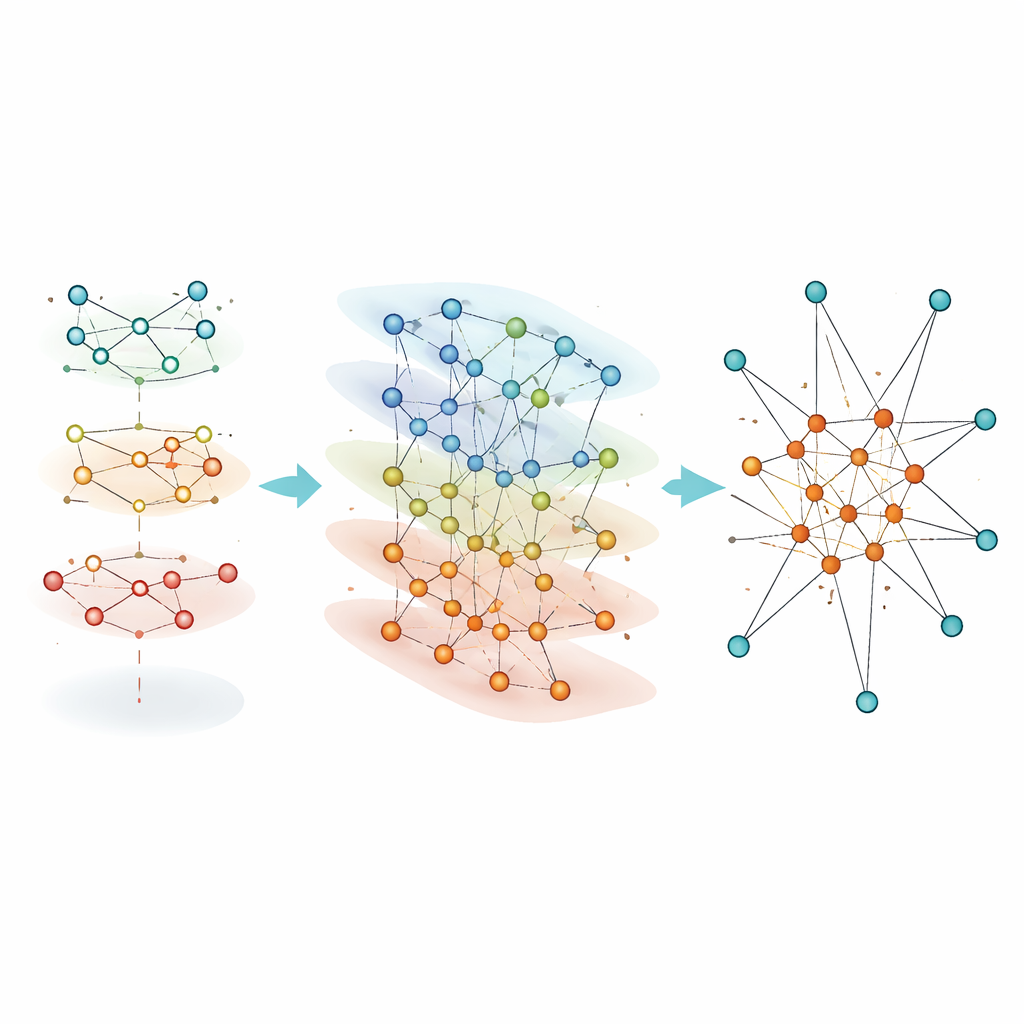
The authors argue that the exact moments when people interact—down to the sequence and spacing of events—carry vital clues about who is truly influential. Their framework, TempRL-IM, treats each contact in the network as a time-stamped event, like an entry in a detailed logbook. Instead of chopping time into coarse slices, it uses a continuous-time graph neural network, a type of machine-learning model that maintains a memory for every person in the network. Each time two people interact, both of their memories are updated, taking into account not only who talked to whom, but also how recently and how often. A temporal attention mechanism then focuses on the most relevant past neighbors and moments, distilling each person’s evolving "state" into a compact numerical fingerprint.
Teaching an AI to pick the right messengers
Once the network’s shifting patterns have been encoded, TempRL-IM passes these fingerprints to a decision-making module based on deep reinforcement learning. Here, an AI agent learns through trial and error to choose a small set of "seed" individuals at a particular observation time. In simulations of how influence would propagate after that moment, the agent receives higher rewards when its chosen seeds trigger large cascades. Over many rounds, it discovers subtle temporal strategies—for example, favoring people who become active just when a campaign is launched, or those whose contacts cluster during pivotal periods. Crucially, the model respects cause and effect: it never peeks into the future when forming its decisions, relying only on past and present events.
Proving the benefits on real-world data
To test TempRL-IM, the researchers applied it to six real temporal networks, including email exchanges in corporations, private messages on university social platforms, trust relationships in a cryptocurrency marketplace, and physical proximity among mobile phone users. They compared their method with popular static and snapshot-based algorithms, as well as recent deep-learning approaches. Across all datasets and for different numbers of seeds, TempRL-IM consistently activated more individuals—typically 15 to 28 percent more than the strongest learning-based competitors—while selecting seeds three to ten times faster at decision time. The method also held up under noisy conditions in which some interactions were removed, mistimed, or suddenly intensified, and it transferred well from one network to another with similar activity patterns.
What this means for everyday applications
In plain terms, this study shows that who you choose to influence is not just about where they sit in the network, but when they are connected. By modeling networks as living, time-aware structures and training an AI to exploit these temporal patterns, TempRL-IM can identify better messengers for marketing, earlier targets for vaccination or information campaigns, and more effective points of control in communication or transportation systems. The key conclusion is simple: timing and sequence matter, and tools that embrace the full timeline of our interactions can make smarter, faster decisions in the complex, ever-changing webs that shape our lives.
Citation: Wang, Y., Alawad, M.A., Alfilh, R.H.C. et al. Temporal influence maximization via continuous-time graph neural networks and deep reinforcement learning. Sci Rep 16, 8987 (2026). https://doi.org/10.1038/s41598-026-37640-6
Keywords: influence maximization, dynamic social networks, graph neural networks, reinforcement learning, information diffusion