Clear Sky Science · en
Proteomic signatures of sperm and extracellular vesicles associated with sperm freezability in Holstein bulls
Why Frozen Bull Sperm Matters for Your Milk and Meat
Behind every glass of milk or steak on the table is a long chain of breeding decisions. Modern cattle breeding relies heavily on frozen semen from elite bulls so that their genes can be shared worldwide. But not all sperm survives freezing equally well, and this can quietly lower pregnancy rates in cows and slow genetic progress. This study digs into what makes some bulls’ sperm more “freeze-tolerant” than others by examining the tiny protein machines inside sperm and the microscopic bubbles that surround them.
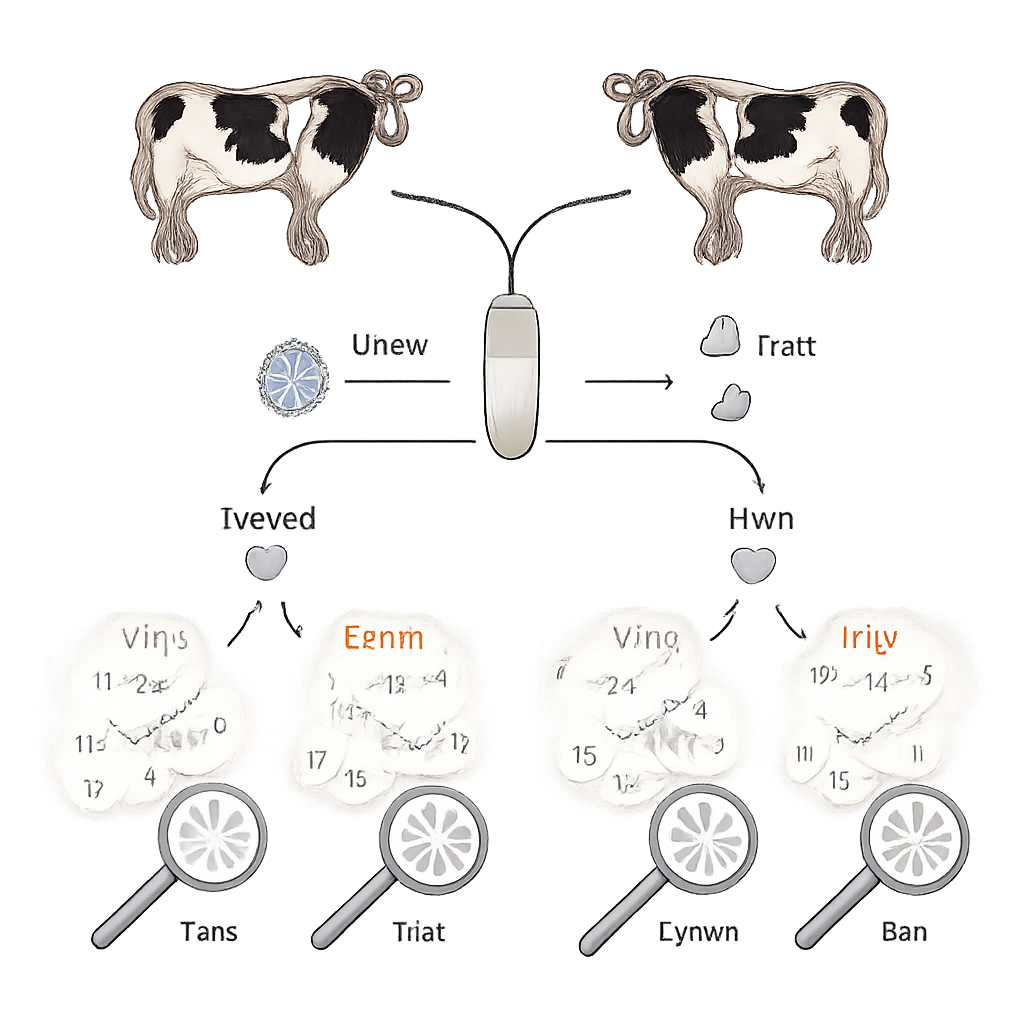
Strong Swimmers After the Deep Freeze
The researchers focused on 145 Holstein bulls from an artificial insemination center in China. Although many bulls had similar sperm movement before freezing, their performance after thawing varied widely. From this larger group, the team selected 15 bulls whose sperm behaved very differently after freezing: nine with high freezability and six with low freezability. Fresh semen from these bulls was collected and carefully analyzed before and after freezing. As expected, both groups started with similar sperm motility, but after thawing the high-freezability group kept much higher movement than the low-freezability group, confirming that the bulls truly differed in their ability to withstand the cold.
Tiny Bubbles with Big Influence
Semen is more than just sperm; it also contains seminal plasma, a fluid rich in microscopic packages called extracellular vesicles. These are nanosized bubbles surrounded by membranes that carry proteins, fat molecules, and genetic material. Using powerful microscopes and particle-tracking devices, the scientists confirmed that these vesicles from bull semen are about 50–100 nanometers across—thousands of them could fit across a human hair. Earlier work suggested these vesicles help keep sperm healthy, extending their life and supporting the integrity of their outer membrane. In this study, the team asked whether differences in the cargo of these vesicles, alongside the sperm themselves, might explain why some bulls’ sperm survives freezing better than others.
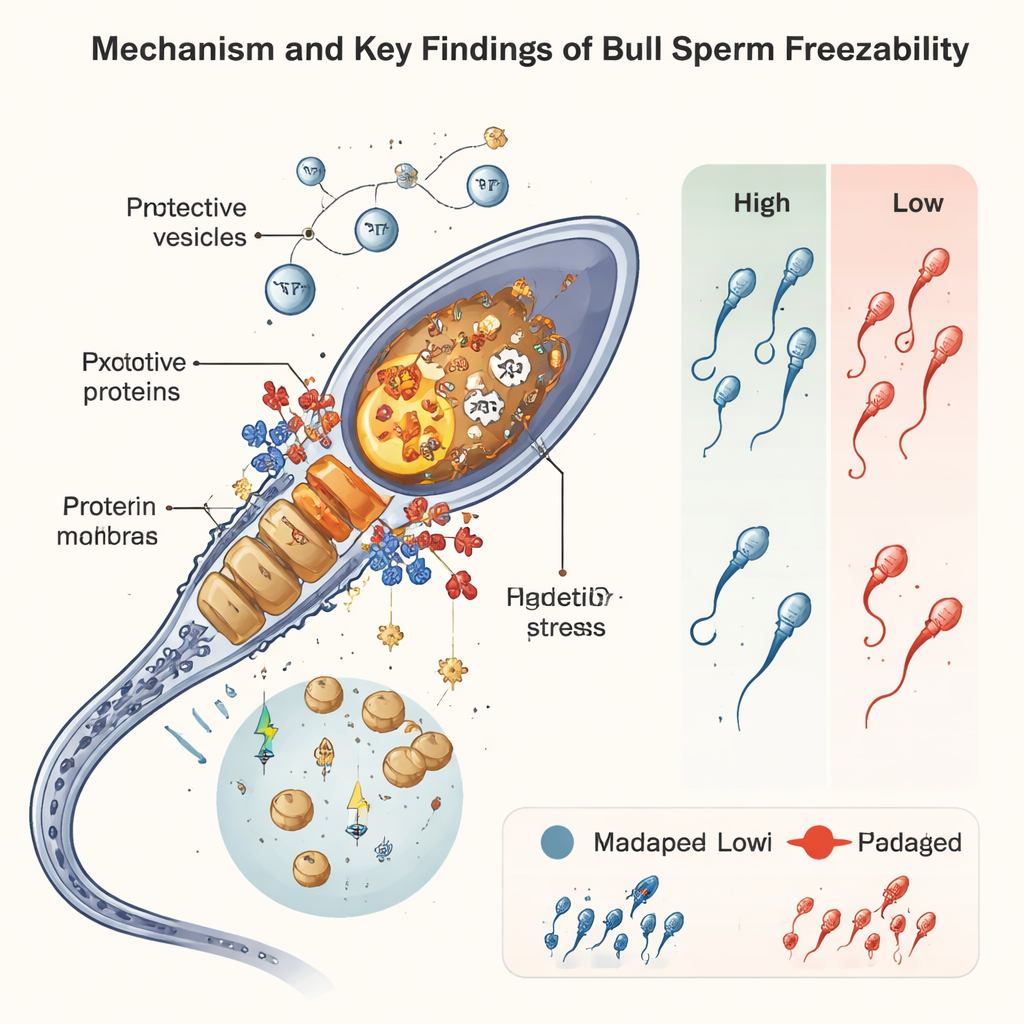
Reading the Protein Signatures
To answer this, the researchers performed a large-scale protein survey—called a proteomic analysis—on both sperm cells and the surrounding vesicles. They identified more than 2,500 different proteins in total. Comparing high and low freezability bulls, they found hundreds of proteins whose levels differed significantly between the two groups. Many of these proteins are involved in how cells produce energy, manage metabolism, and control the flow of electrons in mitochondria, the “power plants” of the cell. In particular, pathways related to general metabolism and oxidative phosphorylation—the process that cells use to convert fuel into energy—stood out. This points to energy management and control of harmful byproducts, like reactive oxygen molecules, as central to whether sperm can survive freezing and thawing.
Signals Shared Between Sperm and Vesicles
The study went further by examining how protein levels in sperm were linked to protein levels in the vesicles from the same bull. They discovered over 140 strongly correlated protein pairs, suggesting tight communication between sperm and these nanosized helpers. In bulls with high freezability, some vesicle proteins appeared to support protective proteins within sperm, helping them better handle oxidative stress and maintain structure during the freeze–thaw cycle. Advanced network analysis showed that one cluster of proteins was strongly associated with good freezing survival, while another cluster was tied to poorer outcomes, highlighting that different protein sets can push sperm resilience in opposite directions.
Genetic Clues for Better Bulls
Because breeding decisions often rely on DNA tests, the team also searched for specific genetic variants linked to sperm freezability. They focused on six promising genes and found 18 variants, including several in a gene called HSPA1A, which makes a stress-response protein. One particular change altered the very first building block of the HSPA1A protein and was linked to lower levels of this protein in sperm. Interestingly, bulls with better freezability tended to have reduced HSPA1A levels, suggesting that constant high stress signaling may actually reflect more vulnerable sperm. Overall, 63 key proteins emerged from combined analyses of protein patterns, statistical networks, and known fertility-related DNA regions, offering a toolkit of potential markers for selecting more freeze-tolerant sires.
From Lab Bench to Barn
For cattle breeders, the message is clear: frozen semen quality is not just about standard lab scores like initial sperm motility. It is deeply influenced by complex protein networks in sperm and their surrounding vesicles, as well as the underlying genetics that shape these molecules. By tracking specific proteins and DNA variants—especially those tied to energy production, oxidative stress, and stress-response proteins such as HSPA1A—breeding programs could more reliably pick bulls whose sperm survives freezing and still fertilizes cows efficiently. In time, these insights may help deliver higher fertility rates, faster genetic improvement, and more efficient milk and meat production from the same number of animals.
Citation: Cao, J., Leng, B., Zhang, C. et al. Proteomic signatures of sperm and extracellular vesicles associated with sperm freezability in Holstein bulls. Sci Rep 16, 6934 (2026). https://doi.org/10.1038/s41598-026-37628-2
Keywords: sperm freezability, Holstein bulls, extracellular vesicles, proteomics, semen cryopreservation