Clear Sky Science · en
Safety risk analysis of high dosage of phosphogypsum in limestone soil and yellow soil: a case study of potted amaranth
Turning Fertilizer Waste into a Soil Helper
Across the world, factories that make phosphate fertilizer leave behind mountains of a chalky waste called phosphogypsum. These piles take up land and can leak pollutants into nearby air, water, and soil. This study asks a simple but important question: instead of treating phosphogypsum as a dangerous leftover, could we safely mix large amounts of it into poor, rocky soils to create new farmland—without contaminating the food we grow?
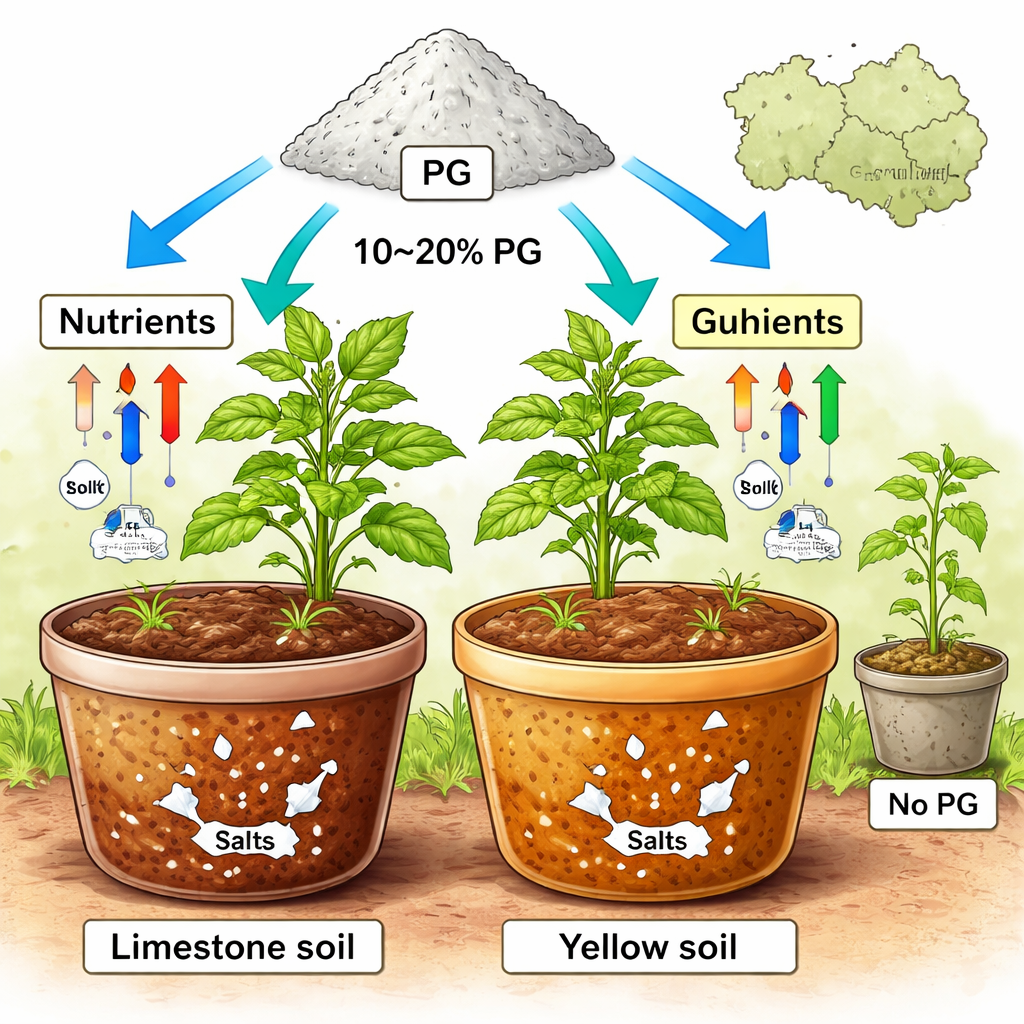
From Waste Piles to Potted Plants
The researchers focused on Guizhou Province in southwest China, a mountainous region where thin, fragile soils limit farming. They collected two common karst soils—"limestone soil" and "yellow soil"—and mixed them with high doses of phosphogypsum, equal to 10% or 20% of the soil’s weight. They then grew amaranth (Amaranthus tricolor), a fast-growing leafy vegetable, in pots for two months. By comparing these plants and soils to untreated controls, they could see both the benefits and risks of using so much phosphogypsum at once.
Greener Growth in Tough Soils
Adding phosphogypsum transformed the barren test soils. Organic carbon and total salts rose sharply, and calcium, sodium, phosphorus, and several micronutrients became more available. In yellow soil, acidity eased and the pH moved closer to neutral; in limestone soil, which started slightly alkaline, pH dropped a bit toward the same range. Amaranth responded dramatically: plant height and dry weight soared, with the best growth in yellow soil containing 20% phosphogypsum. These changes suggest that what began as an industrial waste acted like a powerful soil conditioner, improving water retention, nutrient supply, and the soil’s physical structure so that plants could thrive.
Hidden Metals in Healthy-Looking Leaves
The good news for soil did not fully extend to the crop. When the team measured potentially toxic elements in amaranth leaves, they found that copper, zinc, and chromium were above Chinese food safety limits, even though the plants looked healthy. Lead and cadmium were not detected, and the soil itself still met safety standards: metal levels in the soil stayed well below official risk thresholds. In other words, the soil was not heavily contaminated, but the plant was very efficient at pulling trace metals out of the phosphogypsum-enriched soil and concentrating them in edible tissues. This makes such amaranth unsuitable for food, but very promising as a “hyperaccumulator” plant for cleaning up metals.
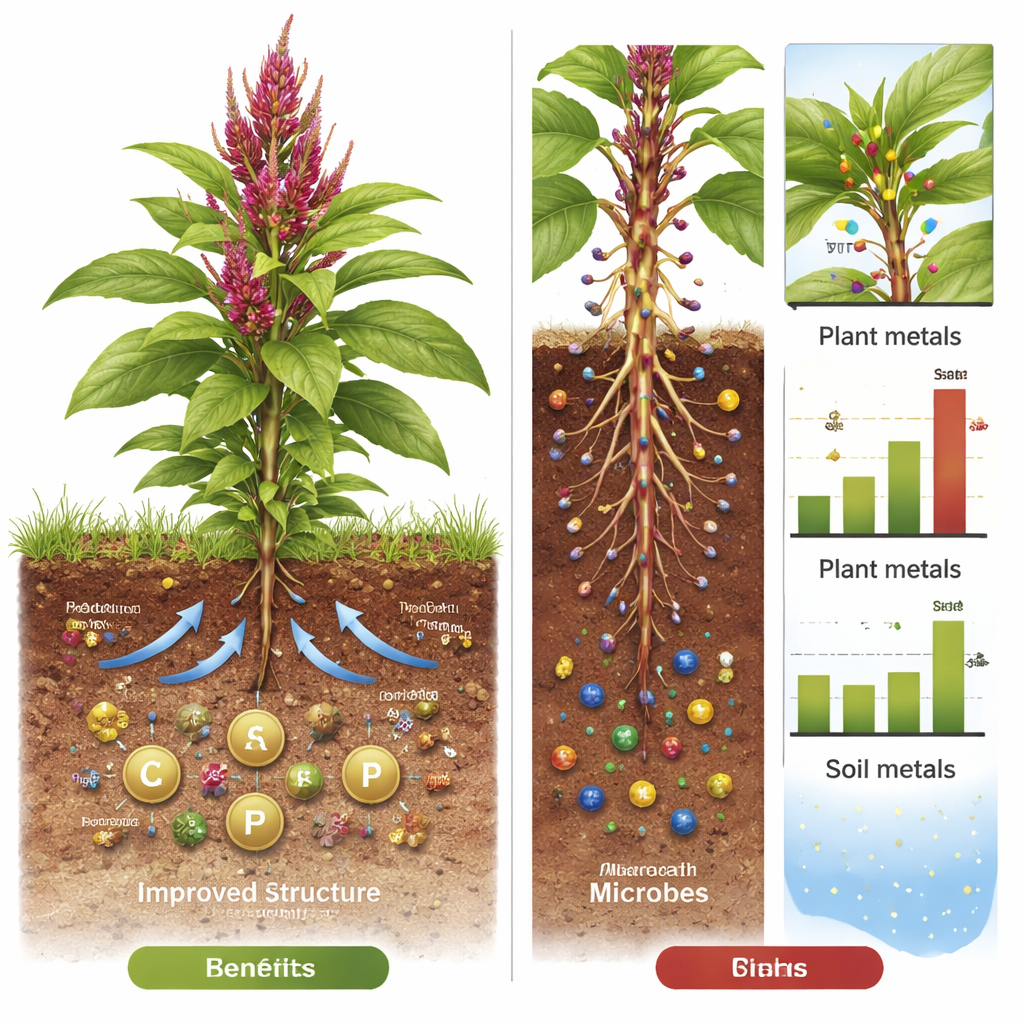
Shifting Life Below Ground
The study also examined the microscopic life around the roots. Using DNA sequencing, the researchers showed that adding phosphogypsum changed the mix of bacteria and fungi, especially in yellow soil. Some groups that help break down organic matter and cycle nutrients became more common, while certain saprophytic fungi and plant pathogens declined. In limestone soil, fungal communities shifted more than bacteria, but overall changes were gentler. These results suggest that phosphogypsum can nudge soil life toward communities that support plant growth and may suppress some harmful fungi, though the long-term impacts remain uncertain.
Building New Soil Safely
To everyday readers, the key message is that phosphogypsum can be both a blessing and a warning. Mixed into thin mountain soils, it improves fertility, boosts plant growth, and reshapes the underground ecosystem without clearly poisoning the soil itself. Yet edible crops like amaranth can accumulate metals to unsafe levels when phosphogypsum is used at high doses. The authors propose a stepwise approach: first use non-food plants that are good at taking up metals to “clean” and enrich the soil, then, after careful testing of metals, radioactivity, and fluoride, shift the land toward food production. Done carefully, this strategy could turn a stubborn industrial waste problem into a tool for restoring poor farmlands—while keeping people and ecosystems safe.
Citation: Wang, X., Hu, M., Li, Y. et al. Safety risk analysis of high dosage of phosphogypsum in limestone soil and yellow soil: a case study of potted amaranth. Sci Rep 16, 6214 (2026). https://doi.org/10.1038/s41598-026-37627-3
Keywords: phosphogypsum, soil remediation, karst agriculture, amaranth, heavy metal uptake