Clear Sky Science · en
A noninferiority trial evaluating the efficacy of bedinvetmab compared to grapiprant for osteoarthritis-pain in dogs using force plate gait analysis
Helping Stiff Dogs Move Again
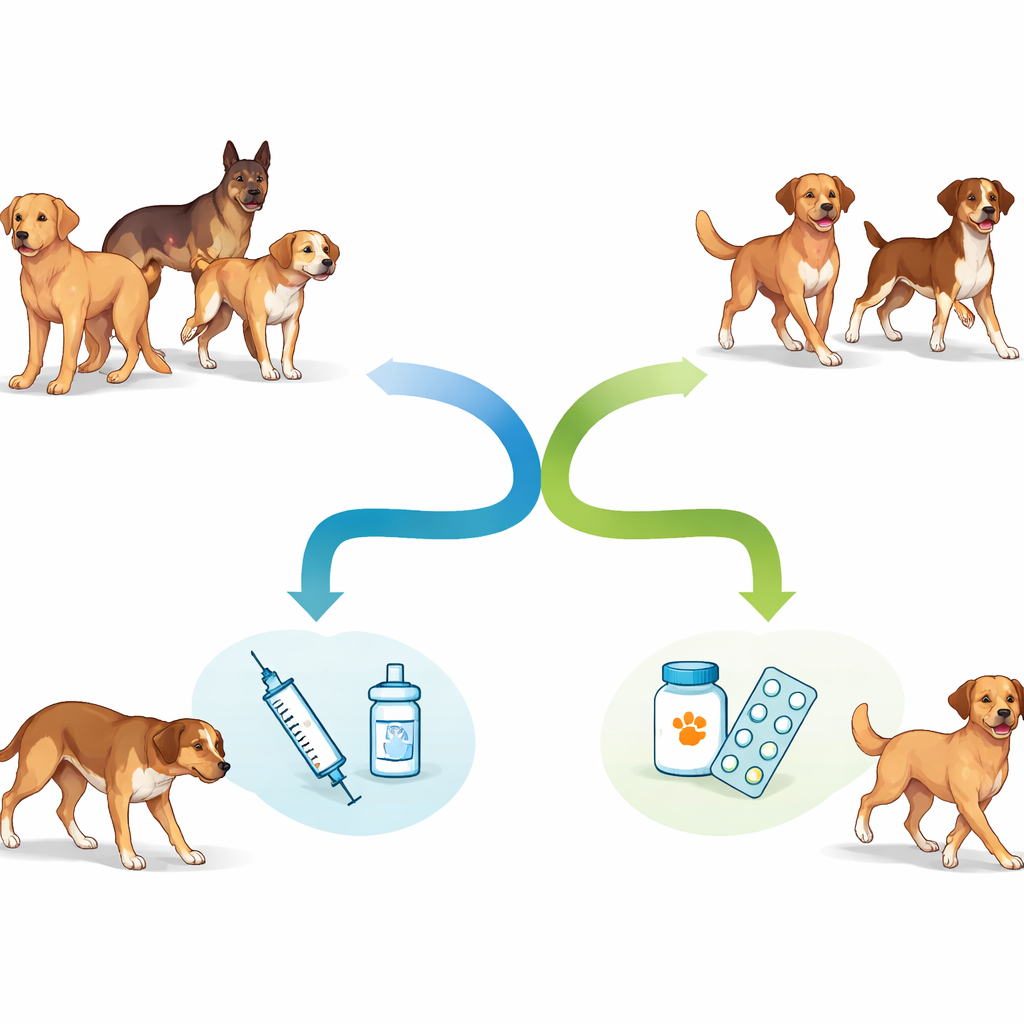
Many dog owners watch their companions slow down with age, unsure whether the change is "just getting old" or something more. Osteoarthritis, a painful wear-and-tear joint condition, affects a large share of pet dogs and can quietly erode their quality of life. This study asks a question that matters to veterinarians and families alike: how well does a newer monthly injection, bedinvetmab, stack up against an established daily pill, grapiprant, for easing arthritis pain in dogs when their movement is measured objectively rather than just by eye?
Why Dog Joint Pain Is Hard to Judge
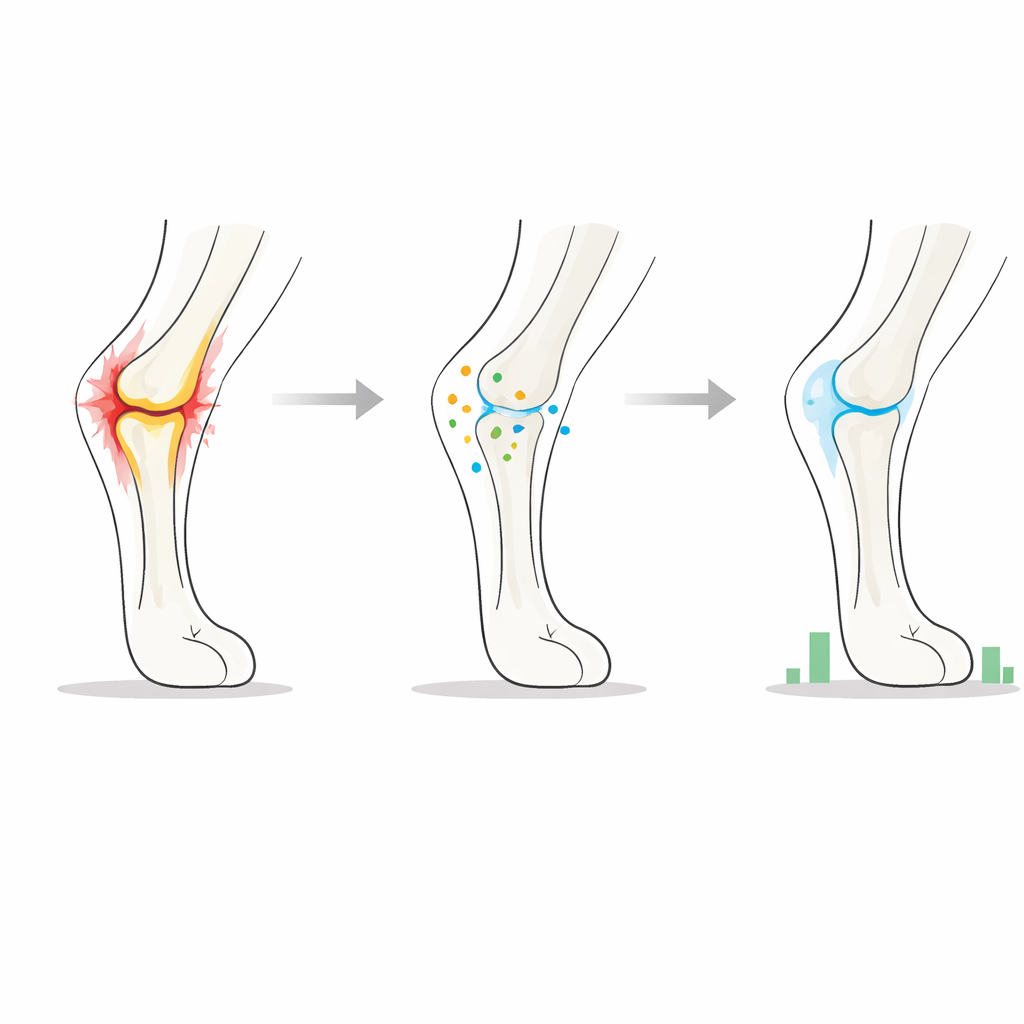
Osteoarthritis in dogs damages the cushioning and surfaces of joints, especially in the hips and knees, leading to chronic pain, stiffness, and reduced willingness to walk, play, or climb stairs. For years, non-steroidal anti-inflammatory drugs (NSAIDs) such as grapiprant have been the mainstay of treatment. More recently, bedinvetmab, a monthly injection that blocks nerve growth factor—a key chemical signal in pain pathways—has emerged as an alternative first-line option. Earlier research showed both drugs help, but most of those studies relied on owner questionnaires and veterinary scoring systems. These are valuable, but they are still subjective. To know whether a treatment truly improves how a dog uses a painful leg, researchers increasingly turn to force plate gait analysis, which measures precisely how much weight a dog puts on each limb while moving.
How the Trial Was Set Up
The research team ran a prospective, randomized, double-blind study at a veterinary teaching hospital. Thirty-two medium-to-large dogs with naturally occurring osteoarthritis affecting hips and/or knees were enrolled. All had clear signs of pain and lameness and met strict health criteria. Dogs were randomly assigned to one of two groups: a monthly under-the-skin injection of bedinvetmab plus a daily placebo pill, or a daily oral dose of grapiprant plus a monthly saline injection. Neither owners nor the veterinarians assessing the dogs knew which treatment each dog received. Over two months, the dogs visited the clinic every two weeks. At each visit, they trotted over a specialized walkway with force plates that captured ground reaction forces—how hard each paw pushed against the ground. The main focus was peak vertical force in the most affected limb on day 42, a time when both drugs are expected to show full effect. A dog was considered a success if that force increased by at least 3.5% from its own baseline, a change previously linked to meaningful clinical improvement.
What the Objective Tests Revealed
By day 42, 68.8% of dogs receiving bedinvetmab and 56.3% receiving grapiprant met the success definition based on peak vertical force. When researchers compared these rates using a pre-planned noninferiority analysis, the difference between the two groups fell safely within a margin that regulators and statisticians consider acceptable for declaring the new treatment "no worse than" the comparator. In other words, bedinvetmab performed at least as well as grapiprant at improving how much weight dogs put on their sore limb. Across the entire 56-day study, both treatments produced statistically and clinically important gains in peak vertical force and in vertical impulse (a measure of how force is applied over time during each step). Improvements consistently exceeded the threshold regarded as meaningful for osteoarthritis trials in dogs.
What Owners and Vets Saw at Home and in the Clinic
Numbers from the force plates were backed up by multiple reports of how the dogs behaved in daily life. Owners completed several validated questionnaires about lameness, activity, pain severity, how pain interfered with everyday tasks, and sleep quality. These included the Liverpool Osteoarthritis in Dogs (LOAD) score and the Canine Brief Pain Inventory, along with a sleep-and-restlessness survey and a custom checklist of activities important for each dog. On average, scores improved significantly in both groups, meaning less pain and better function. When researchers applied established cutoffs for a "clinically important" change in these questionnaires, a majority of dogs in both groups counted as treatment successes, with somewhat higher percentages in the bedinvetmab group for several measures. Owners’ overall impressions, captured by a simple global change question, also trended toward more dogs on bedinvetmab being rated as "much" or "very much" improved, though this difference did not reach formal statistical significance.
Safety, Limitations, and Real-World Fit
Routine blood and urine tests stayed within normal limits for most dogs, and the types and frequencies of side effects matched what is already known for each drug. Digestive upsets appeared somewhat more often in grapiprant-treated dogs, while minor skin issues were more common in the bedinvetmab group; joint-related complications were rare in both. The study does have limits: it involved only 32 dogs at a single center, and there was no placebo group, so natural fluctuations or owner expectations may have influenced some of the subjective scores. Owners also knew their pets were receiving active treatment, which could bias their reports.
What This Means for Dogs and Their People
For families weighing options to help a dog with aching hips or knees, this trial offers a reassuring message. Using rigorous motion analysis, the researchers found that monthly bedinvetmab injections were not inferior to daily grapiprant pills in restoring how dogs bear weight on painful limbs, and that both approaches led to meaningful improvements in comfort, mobility, and day-to-day behavior. Put simply, the dogs walked and lived more like their old selves again. The findings support current guidelines that place both anti-nerve-growth-factor antibodies and NSAIDs among the first choices for treating canine osteoarthritis pain, giving veterinarians and owners flexibility to choose the regimen that best fits a dog’s health status, lifestyle, and the household’s preferences for injections versus pills.
Citation: Enomoto, M., Buslinger, L., Thonen-Fleck, C. et al. A noninferiority trial evaluating the efficacy of bedinvetmab compared to grapiprant for osteoarthritis-pain in dogs using force plate gait analysis. Sci Rep 16, 8986 (2026). https://doi.org/10.1038/s41598-026-37626-4
Keywords: dog osteoarthritis, bedinvetmab, grapiprant, canine pain relief, gait analysis