Clear Sky Science · en
Metabolomic profiling and biological evaluation demonstrate the antioxidant, PPAR-γ, TAAR1, and FABP4 modulatory potential of Strelitzia species
Colorful garden plants with hidden health potential
The bird of paradise is best known as a show-stopping ornamental plant, but its vivid flowers may also harbor compounds that influence blood sugar, fats in the blood, and even brain chemistry. This study explores two bird of paradise species grown in Egypt to find out what chemicals they contain and whether those natural ingredients might someday inspire new treatments for diabetes, heart disease, and mood or movement disorders.
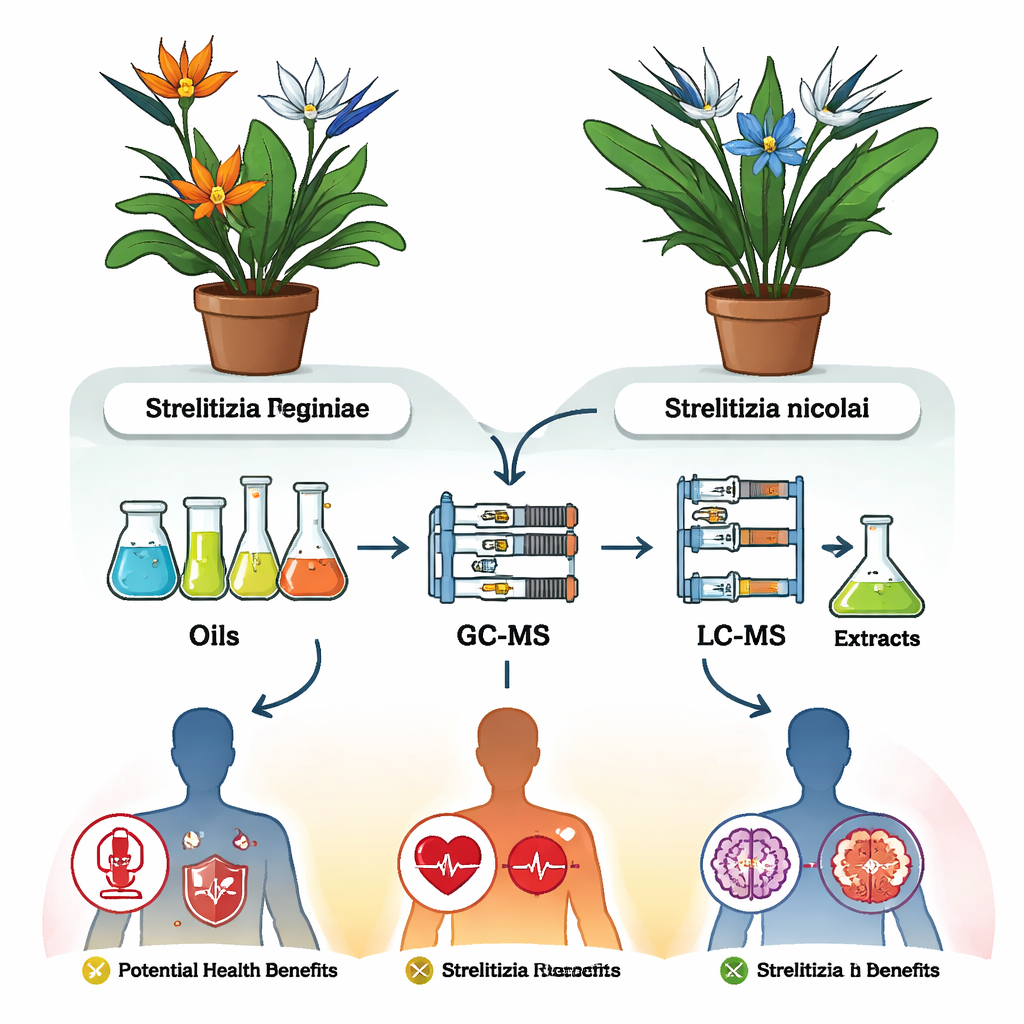
Peeking inside the bird of paradise
Researchers focused on two close relatives: Strelitzia reginae, the classic orange-and-blue bird of paradise, and Strelitzia nicolai, the larger white bird of paradise. Using advanced analytical tools that act like chemical fingerprint scanners, they examined both oily and alcohol-based extracts from the plants’ flowers and leaves. Gas chromatography–mass spectrometry (GC–MS) was used to profile the volatile, oily components, while liquid chromatography–mass spectrometry (LC–MS/MS) catalogued hundreds of heavier, less volatile molecules. Together, these methods revealed a complex mixture that included fatty acids, long-chain hydrocarbons, plant pigments, and a rich assortment of phenolic compounds and flavonoids—classes of molecules often linked to antioxidant and protective effects in plants and people.
Different species, different chemical signatures
The two species turned out to have quite distinct chemical personalities. In S. reginae flower oils, the team found high levels of fatty acids such as linoleic acid and 17‑octadecynoic acid, along with long hydrocarbon chains like heneicosane. The distilled oil from its flowers was rich in certain diterpenes and other oily components. By contrast, S. nicolai flower extracts were dominated by aromatic compounds such as cumene and its relatives, as well as saturated alkanes in the distilled oil. When the researchers compared the alcohol extracts of leaves and flowers, they found that S. reginae leaves were particularly packed with flavonoids and phenolic derivatives, while S. nicolai flowers carried more flavonoids than its leaves. These patterns helped explain which plant parts showed the strongest antioxidant power in follow-up tests.
Antioxidant strength and early biological tests
To gauge how well the extracts could neutralize damaging free radicals, the team ran several established antioxidant assays. The methanol extract from S. reginae leaves stood out, scoring especially high in tests that measure free radical scavenging, metal chelation, and overall oxygen radical absorbance. In simple terms, these leaf extracts acted as potent chemical “shields” against oxidative damage in the lab. On the other hand, when the researchers tested flower extracts for antibacterial effects, they saw little to no activity against a panel of microbes, and anti-inflammatory effects in immune cells were weak. This suggests that the strongest promise of these plants lies less in fighting infections and more in modulating metabolism and oxidative stress.
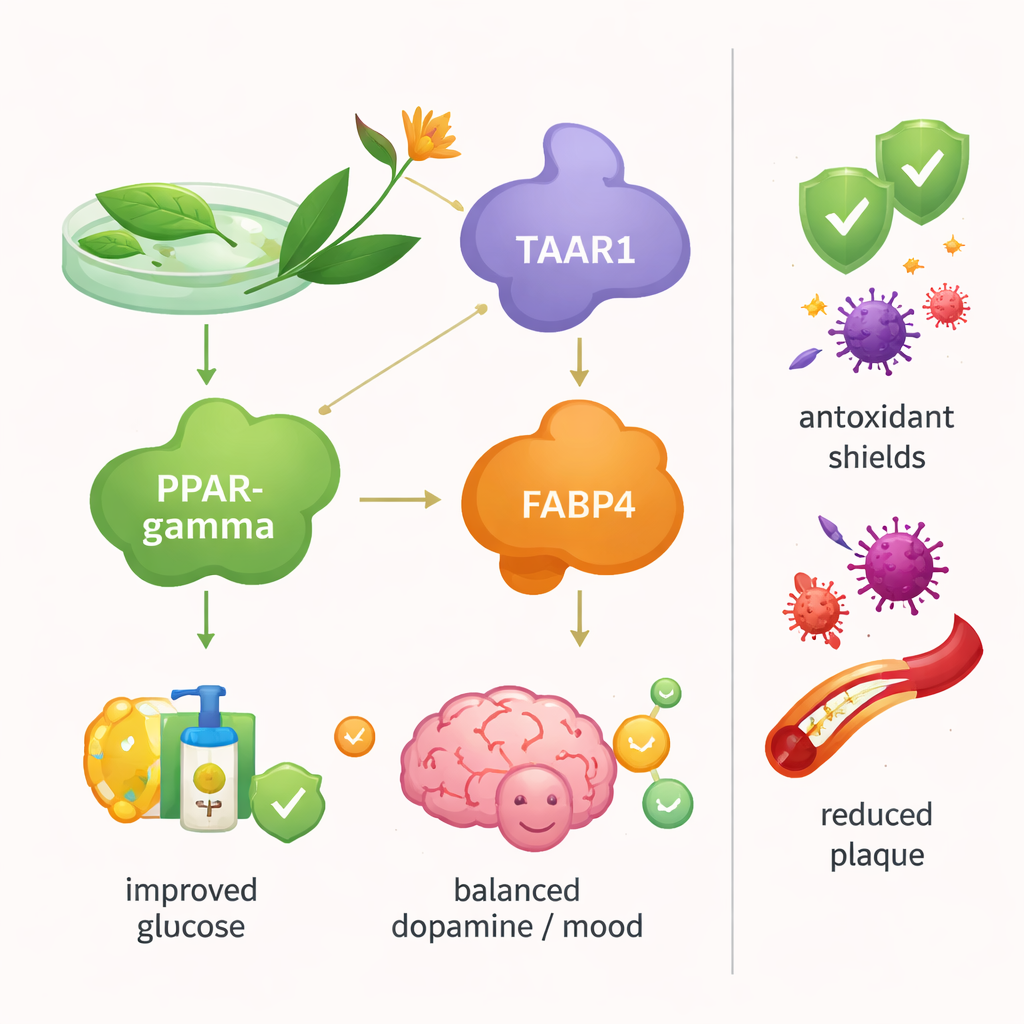
Links to blood sugar, fats, and brain signaling
Because some of the major fatty components resemble known signaling molecules in the body, the team turned to computer modeling and cell-based assays to see whether the extracts might interact with specific protein targets. They focused on three: PPAR-γ, a nuclear receptor that helps regulate blood sugar and fat storage; FABP4, a fatty acid binding protein linked to high blood lipids and artery plaque; and TAAR1, a brain receptor that influences dopamine, a key chemical involved in mood and movement. The hexane (oil-like) flower extract of S. reginae activated PPAR-γ in a human reporter cell system, with a potency about one-quarter that of the antidiabetic drug rosiglitazone, hinting at a possible role in improving insulin sensitivity. The same extract moderately blocked FABP4, which could, in theory, help reduce atherosclerosis risk. Meanwhile, the hexane extract of S. nicolai significantly lowered TAAR1 levels in lung cancer–derived cells, suggesting that its aromatic components, such as cumene, can dampen this receptor’s signaling and potentially shift dopamine activity in the brain.
What this could mean for future medicines
For non-specialists, the takeaway is that the bird of paradise is more than just a decorative plant: its leaves and flowers contain natural chemicals that, in lab tests, can strongly counter oxidative damage and nudge key metabolic and brain-related proteins in useful directions. These are early-stage findings, based on cell systems and computer docking rather than human trials, so it is far too soon to think of bird of paradise extracts as treatments. But the work maps out a detailed chemical toolkit inside these plants and shows that some ingredients interact with targets important in diabetes, high blood fats, atherosclerosis, depression, and Parkinson’s disease. Future studies can now isolate individual compounds, test them more rigorously in animals and humans, and explore whether these striking garden plants might one day contribute to new drugs for metabolic and neurological disorders.
Citation: Rashad, Y.M., Fayez, S., El-Ezz, R.F.A. et al. Metabolomic profiling and biological evaluation demonstrate the antioxidant, PPAR-γ, TAAR1, and FABP4 modulatory potential of Strelitzia species. Sci Rep 16, 7177 (2026). https://doi.org/10.1038/s41598-026-37621-9
Keywords: Strelitzia, antioxidant, PPAR-gamma, TAAR1, FABP4