Clear Sky Science · en
Performance on the one-minute sit-to-stand test predicts long-term adverse outcomes in pulmonary hypertension
Why a simple standing test matters
Pulmonary hypertension is a serious condition in which the blood pressure in the vessels of the lungs is too high, putting strain on the heart and often shortening life. Doctors need practical ways to spot which patients are at highest risk of landing in the hospital or dying, so that treatment can be stepped up in time. This study asks a surprisingly down‑to‑earth question: can counting how many times a person stands up from a chair in one minute help predict their long‑term future?
A quick test in the clinic
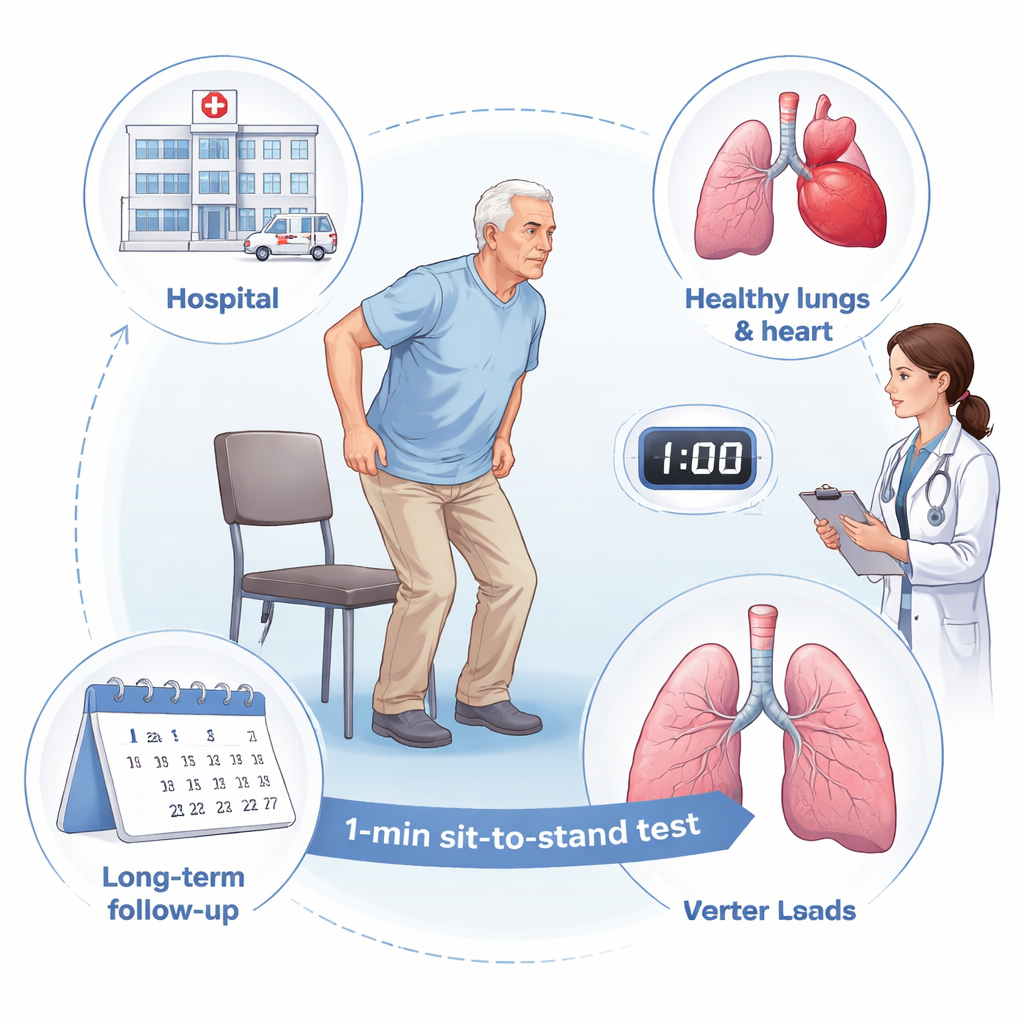
The test at the center of this research is called the one‑minute sit‑to‑stand test. Patients sit on a standard chair and are asked to stand up and sit down as many times as possible in 60 seconds, without using their arms. Because it requires only a chair, a timer and a small amount of space, it can be performed almost anywhere—from a large hospital to a small doctor’s office. The test offers a snapshot of how well the heart, lungs and muscles can cope with everyday effort, without the need for long walking corridors or special equipment.
Following patients over years
Researchers in Vienna followed 117 adults with confirmed pulmonary hypertension for up to five years. At the beginning of the study, each person completed both the one‑minute sit‑to‑stand test and the more established six‑minute walk test, in which patients walk back and forth along a hallway for six minutes. The team also collected detailed information about heart and lung pressures, blood tests, other illnesses and symptoms. Over time, they tracked whether patients were hospitalized for heart failure, underwent lung or heart‑lung transplantation, or died from any cause—events that together reflect the most serious outcomes of the disease.
How performance linked to risk
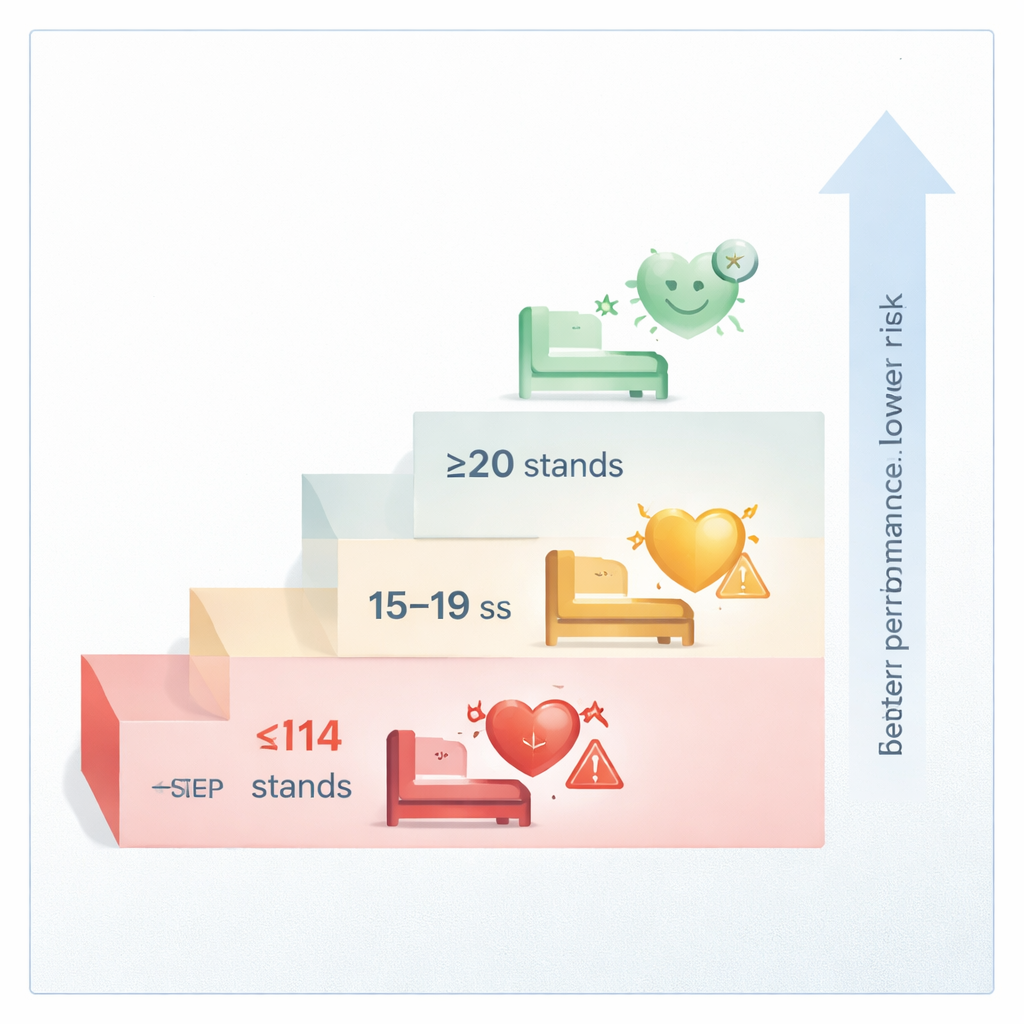
On average, patients managed 17 sit‑to‑stand repetitions in one minute, but performance varied widely. The researchers grouped people into three categories based on previous work: 14 or fewer stands, 15 to 19 stands, and 20 or more stands. Those with the lowest scores were older, had higher levels of a heart stress marker and generally sicker lungs and hearts. Over a median of 2.7 years, just over half of all patients experienced at least one major event. When the team compared groups, clear patterns emerged: patients who did 14 or fewer stands had the worst long‑term outlook, with more hospital stays and deaths, while those reaching 20 or more stands fared best.
Numbers behind the prediction
Statistical analyses showed that each extra sit‑to‑stand repetition was linked to about a 6% lower risk of the combined outcome of hospitalization, transplantation or death. Put differently, doing five more stands than another patient was associated with roughly a one‑quarter lower risk over the following years. This relationship held even after accounting for age, sex, body weight, major co‑existing illnesses and blood levels of a hormone that reflects heart strain. The sit‑to‑stand scores were also tied to how often patients needed to be admitted to the hospital: those with weaker performance had earlier and more frequent admissions for breathing problems and fluid overload.
What this means for everyday care
For people living with pulmonary hypertension, the findings suggest that a brief, low‑tech exercise can offer valuable clues about their future health. While it does not replace more detailed tests, the one‑minute sit‑to‑stand test can help doctors quickly spot patients who may need closer follow‑up, more aggressive treatment or support to maintain their physical abilities. For patients and families, it highlights the importance of everyday functional strength: the simple act of repeatedly rising from a chair reflects how well the body is coping with this demanding disease.
Citation: Kronberger, C., Mousavi, R.A., Ermolaev, N. et al. Performance on the one-minute sit-to-stand test predicts long-term adverse outcomes in pulmonary hypertension. Sci Rep 16, 6562 (2026). https://doi.org/10.1038/s41598-026-37611-x
Keywords: pulmonary hypertension, sit-to-stand test, functional capacity, risk stratification, exercise testing