Clear Sky Science · en
Prevalence, types, and demographic characteristics associated with major life changes following psychedelic use
Why big shifts after psychedelics matter
Stories about people changing their lives after taking psychedelic substances are everywhere—from quitting smoking to leaving unfulfilling jobs. But how common are these turning points, and who is most likely to experience them? This study tackles those questions using large surveys of adults in the United States, offering one of the clearest pictures yet of how often psychedelic experiences are followed by major life changes, and which kinds of people report them.
Looking for life turning points
The researchers focused on classic psychedelics such as psilocybin (the active compound in many "magic" mushrooms), LSD, DMT, and related substances. Earlier small or self-selected surveys had suggested that dramatic, long-lasting changes—sometimes called "quantum changes"—were very common after these experiences. But those samples tended to attract people who already felt that psychedelics had transformed their lives. To get a less biased view, the team drew on two online surveys of U.S. adults. One was structured to mirror the country’s population by age, race or ethnicity, and sex, while the second was larger and more diverse but not nationally representative. In both, participants first answered general questions, and only later were asked whether they had ever used psychedelics and whether that use had led to specific major life changes.
What kinds of changes do people report?
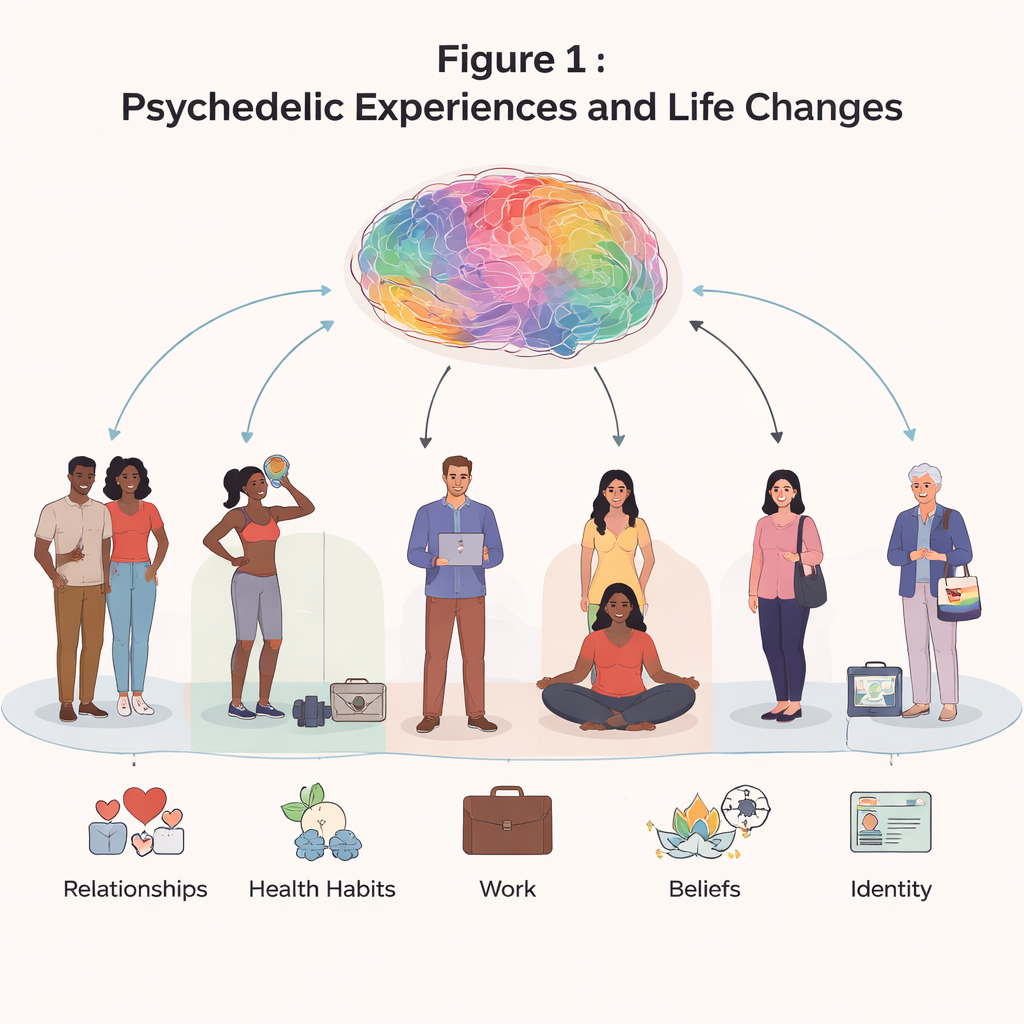
Among people who had ever used psychedelics, about one in five in the nationally representative group said they had made at least one major life change they directly linked to those experiences. In the larger, more diverse group, roughly one in four did so. Most people who reported change listed only a single major shift. The most common areas involved intimate or family relationships, big changes in diet or exercise, stopping or cutting back on alcohol, tobacco, or other drugs, and shifts in religious or spiritual beliefs. Less frequent but still notable were quitting a job or career path, changing plans about having children, or coming out with a new sexual orientation or gender identity. These findings suggest that psychedelic experiences can ripple into many different corners of a person’s life, but not for everyone and not usually all at once.
Who is more likely to change?
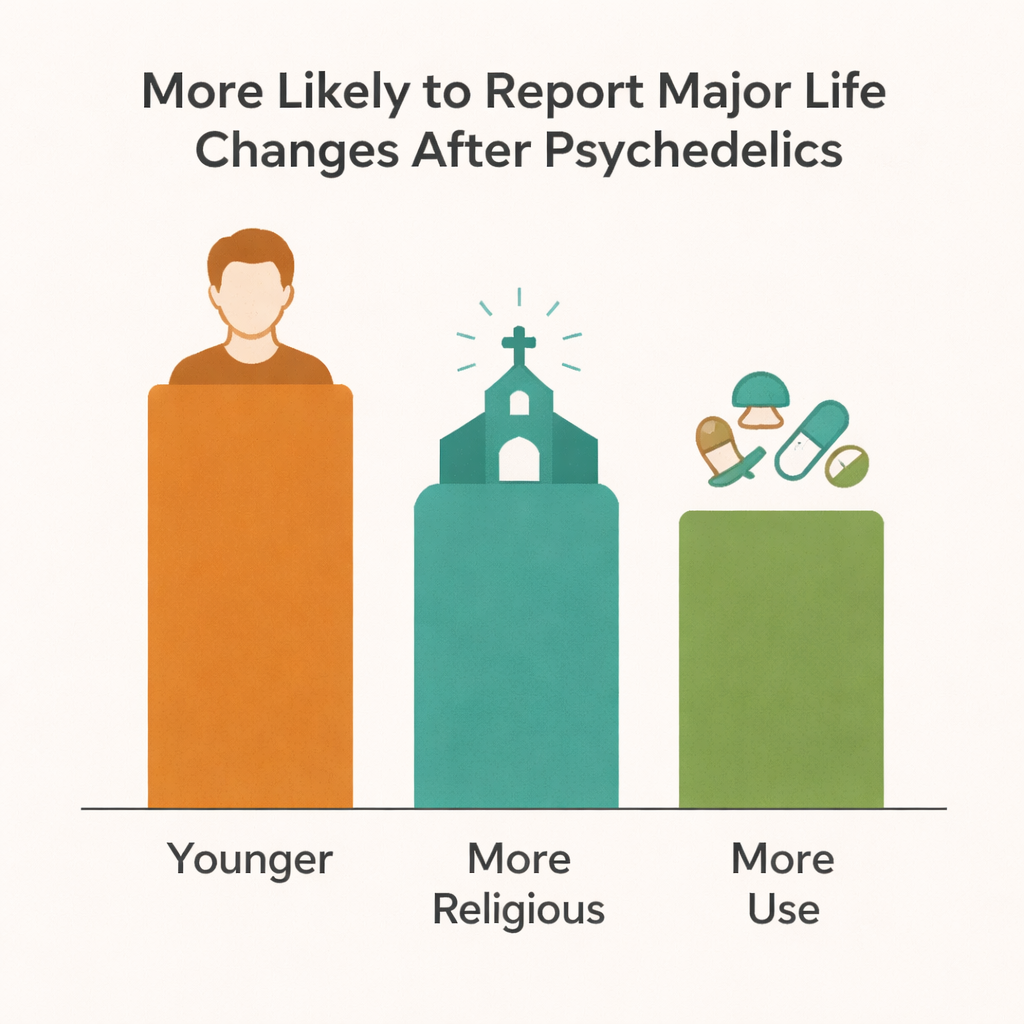
The team then examined which background traits were linked to reporting any major life change. Three stood out clearly. Younger adults had much higher odds of saying psychedelics led to big shifts than those in their forties. People who described themselves as quite or very religious were also more likely to report major changes than those who were not religious at all, even when the researchers set aside cases where people specifically reported changing their religious beliefs. Finally, frequency mattered a great deal: compared with those who had tried psychedelics only once, people who had used them a handful of times were more likely to report major changes, and heavy users—those reporting more than 20 lifetime uses—were about ten times as likely to say that psychedelics had led to a major turning point. Experiences with less commonly used psychedelics, often taken in ceremonial or high-dose settings, were especially likely to be linked with reported life changes.
Why beliefs, identity, and context matter
Other social and personal factors showed more modest links. Men were more likely than women to say they had quit a job or career after psychedelics. Sexual and gender minority participants—those who did not identify as straight or cisgender—were much more likely to say their experiences were tied to changes in sexual orientation or gender identity, raising the possibility that psychedelics might sometimes help people work through shame, self-acceptance, or identity questions. Across many types of change, being more religious predicted a higher chance of reporting a major shift. The authors suggest that strong belief systems may shape how people interpret and integrate intense experiences, making them more likely to redraw life priorities afterward. Still, because the data were collected at a single point in time, the study cannot fully untangle whether these traits lead to more change, are altered by psychedelic use, or both.
What this means for expectations
For the general public and for people considering psychedelic-assisted therapy, the message is both hopeful and sobering. Psychedelic experiences can indeed be followed by meaningful life changes in health behaviors, relationships, beliefs, and identity, but such transformations are not guaranteed, even among frequent users. On average, only a minority—about one in five to one in four users—report these kinds of turning points, and the likelihood depends on who you are, how often you use, and perhaps the context and type of substance. The authors argue that doctors, therapists, and public health officials should present psychedelics not as magic bullets that inevitably “change your life,” but as powerful tools whose effects are shaped by personal history, beliefs, and environment. Future long-term studies will be needed to learn which changes last, whether they help or harm health, and how best to support people before and after psychedelic experiences.
Citation: Carlisle, N.A., Simonsson, O., MacCarthy, S. et al. Prevalence, types, and demographic characteristics associated with major life changes following psychedelic use. Sci Rep 16, 6458 (2026). https://doi.org/10.1038/s41598-026-37609-5
Keywords: psychedelics, life changes, mental health, religiosity, drug use