Clear Sky Science · en
Feasibility of cow-dung groundnut-shell composite as a decentralized renewable fuel for clean cooking
Turning Farm Waste into Safer Kitchen Fires
For many families in rural areas, the daily act of cooking still means burning firewood or raw cow dung in smoky kitchens. This smoke is not just a nuisance; it can damage lungs, strain hearts, and contribute to climate change. This study explores a simple idea with big potential: mixing cow dung with discarded groundnut (peanut) shells to make small fuel cakes that burn hotter and cleaner, using materials villages already have in abundance.
Why Smoky Kitchens Are a Hidden Health Crisis
Around one in three people worldwide still rely on traditional fuels such as wood, crop waste, and animal dung for everyday cooking and heating. These fuels are often burned in basic stoves or open fires inside poorly ventilated homes. The resulting smoke carries fine particles, gases, and chemicals that can penetrate deep into the lungs. Women and children, who tend to spend more time near the hearth, are especially at risk. Health agencies link millions of premature deaths each year to indoor air pollution from such household fuels. At the same time, this way of cooking releases large amounts of carbon dioxide and other climate-warming pollutants, making it harder to meet global goals for cleaner air and a safer climate.
A New Use for Cow Dung and Peanut Shells
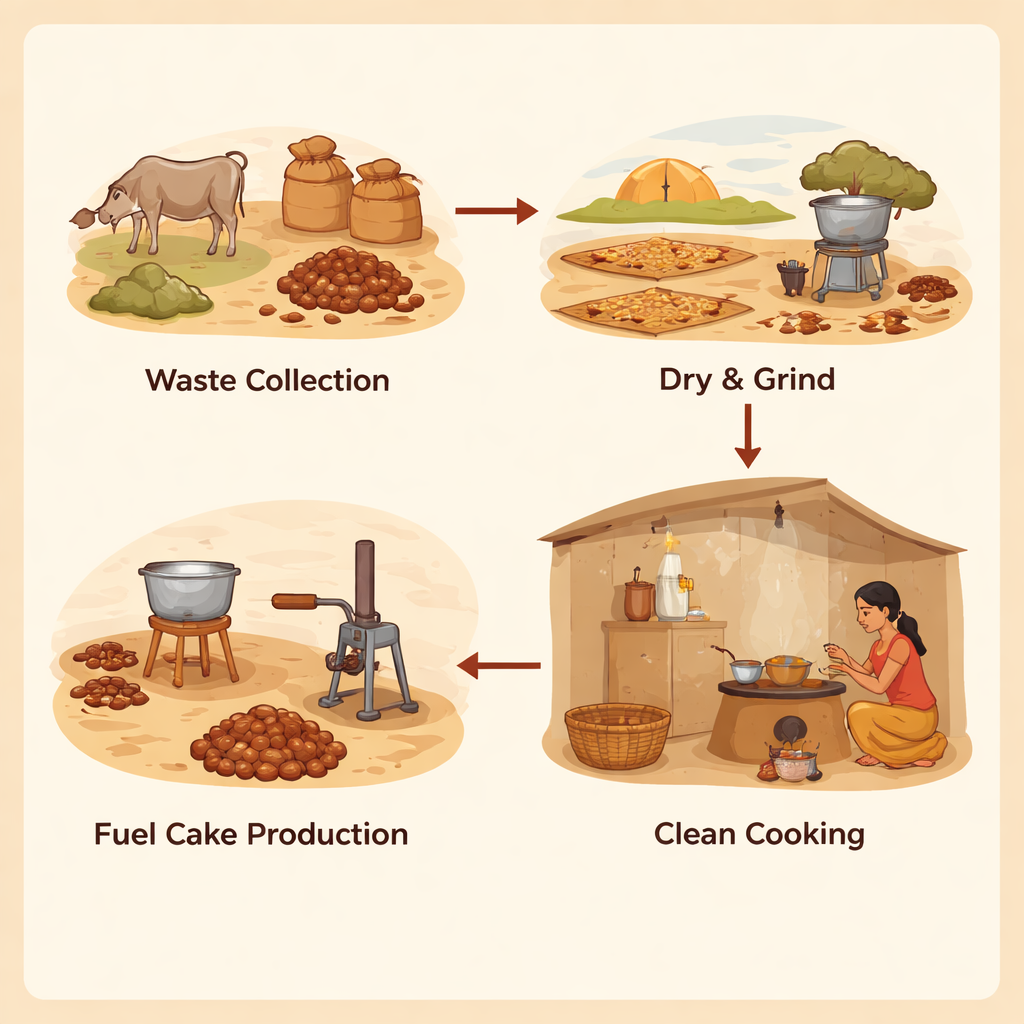
In the study, researchers in southern India focused on two wastes that rural communities know well: cow dung and groundnut shells from peanut processing. Cow dung is already shaped into hand-made cakes for fuel, but it burns with lots of ash and modest heat. Groundnut shells, on the other hand, are light but energy-rich and burn more cleanly. The team ground both materials into fine powders, mixed them with water, and pressed them into small uniform discs about four centimeters wide and just over one and a half centimeters thick. By keeping the shape similar to familiar dung cakes, the new fuel could slide straight into existing village cookstoves with almost no change in how people cook.
Testing Which Mix Burns Best
The scientists prepared four kinds of fuel cakes: pure cow dung, and three blends with increasing amounts of groundnut shell (25%, 50%, and 75%). In the laboratory, they measured how much energy each type released when burned and how much pollution it produced. Energy content was checked with a bomb calorimeter, a device that captures and measures all the heat released. To track air quality, they burned the cakes in a controlled chamber and measured tiny particles (known as PM2.5), carbon dioxide, and formaldehyde, a harmful gas formed during incomplete burning. This allowed them to see not only which fuel burned hottest, but also which was gentlest on lungs and the wider environment.
Hotter Flames, Cleaner Air
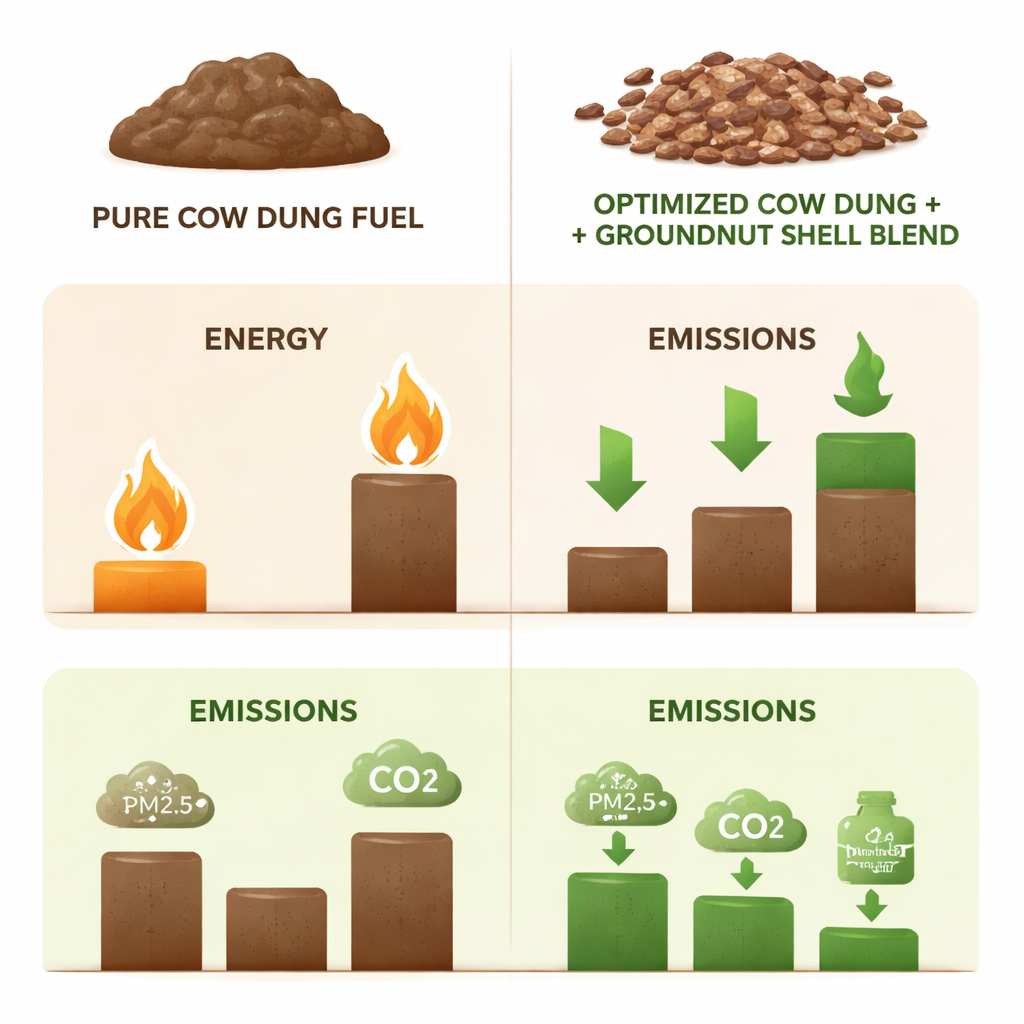
The results were striking. As more groundnut shell was added to the mix, each fuel cake released more energy and less pollution. The blend with 75% groundnut shell delivered nearly 30% more heat than pure cow dung, meaning less fuel would be needed to cook the same meal. At the same time, it cut fine particle pollution by about 43%, carbon dioxide by nearly 30%, and formaldehyde by more than half. The groundnut shells’ fibrous structure and low ash content helped the fuel burn more completely, with fewer smoky leftovers. Compared with similar studies that focused only on energy, this work stands out because it shows you can boost heat output and clean up emissions at once, without adding costly ingredients or complex technology.
What This Could Mean for Everyday Cooking
For households that still depend on smoky fires, these simple fuel cakes offer a practical step toward safer kitchens and cleaner skies. The ingredients are common farm wastes, the production process is straightforward, and the finished discs can be used in the same stoves people already own. If adopted at scale, such fuels could lower health risks from indoor smoke, reduce pressure on forests for firewood, and help cut climate-warming emissions—all while staying affordable for low-income families. In plain terms, this study shows that with a bit of smart mixing, yesterday’s waste can help cook tomorrow’s meals more safely and sustainably.
Citation: Gautam, S., Asirvatham, L.G., Rakshith, B.L. et al. Feasibility of cow-dung groundnut-shell composite as a decentralized renewable fuel for clean cooking. Sci Rep 16, 5143 (2026). https://doi.org/10.1038/s41598-026-37608-6
Keywords: clean cooking, biomass fuel, indoor air pollution, rural energy, waste-to-energy