Clear Sky Science · en
SIRT1 activation by SRT2104 enhances mitophagy and reduces senescence in auditory cells
Why this study matters for aging ears
Many people notice that conversations become harder to follow with age, especially in noisy places. This age-related hearing loss isn’t just an inconvenience—it can contribute to social isolation, depression, and even dementia. Scientists are trying to understand why the delicate sound-sensing cells in our inner ear wear out over time and how to slow or prevent this decline. This study explores a drug called SRT2104 that targets the cell’s internal “maintenance crew” and asks whether it can keep auditory cells younger and healthier for longer.
Power plants and garbage removal inside hearing cells
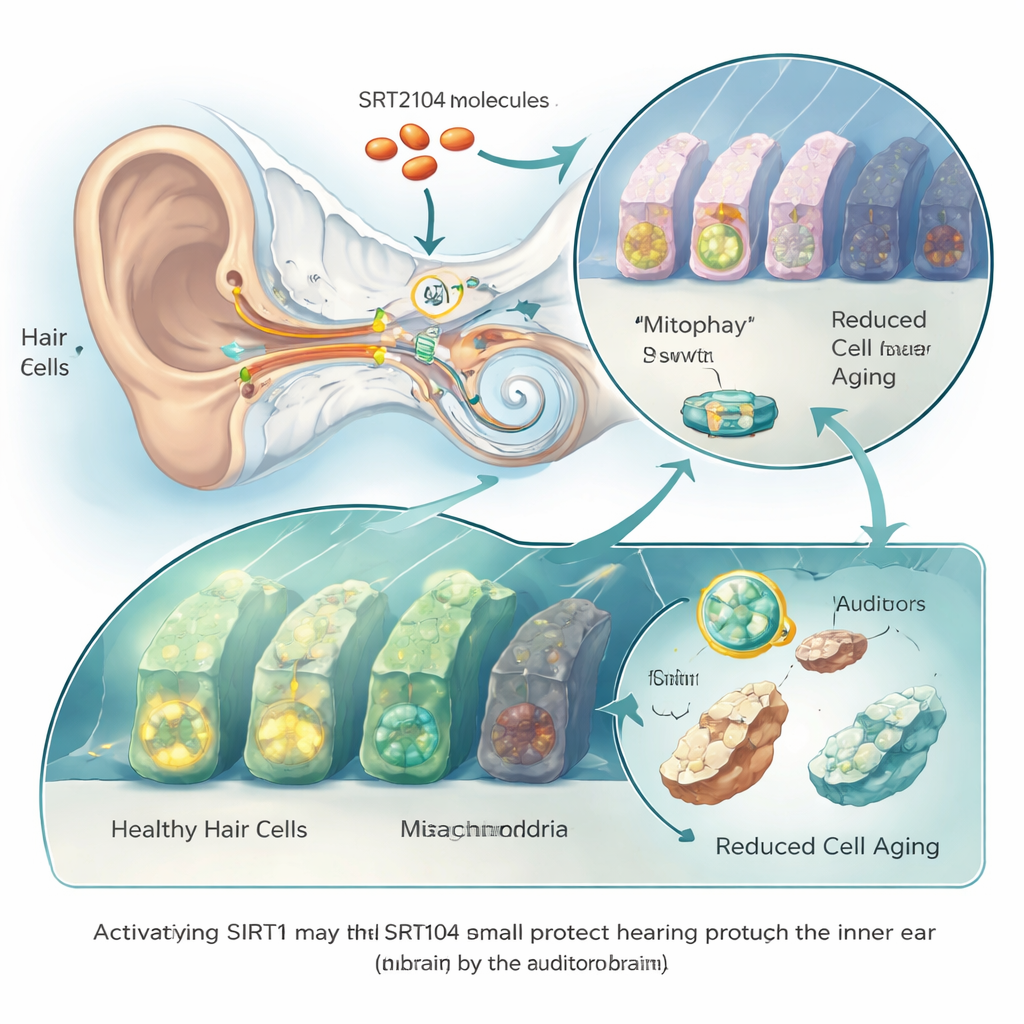
Hearing depends on tiny sensory cells in the cochlea, a spiral-shaped structure in the inner ear. These cells are packed with mitochondria, often called the cell’s power plants, which generate the energy needed to convert sound waves into electrical signals for the brain. As we age, mitochondria become damaged and less efficient, producing more harmful by-products known as reactive oxygen species. Normally, cells remove faulty mitochondria through a specialized cleanup process called mitophagy. But this system weakens with age, allowing damaged mitochondria to build up, drain energy, and push cells toward a state of irreversible aging known as senescence.
A molecular switch for cellular youth
The researchers focused on a protein called SIRT1, a key regulator of cellular aging and mitochondrial quality control. SIRT1 acts like a molecular switch that can turn on protective pathways, including those that support mitophagy. Previous work suggested that boosting SIRT1 activity might protect brain cells in neurodegenerative diseases. SRT2104 is a synthetic compound designed to activate SIRT1 more potently and reliably than natural substances like resveratrol, which has poor stability and low absorption in the body. Until now, however, no one had tested whether SRT2104 could protect auditory cells from aging-like damage.
Testing SRT2104 in auditory cells and mini inner ears
To model premature aging, the team exposed mouse auditory cells (HEI-OC1 cells) and cultured cochlear tissues to low doses of hydrogen peroxide, a chemical that mimics the oxidative stress seen in aging. This treatment reduced cell growth, damaged mitochondria, lowered energy production, and increased classic markers of senescence. When the cells were pre-treated with SRT2104, SIRT1 activity rose significantly. At the same time, levels of proteins that drive mitophagy—PINK1, Parkin, BNIP3, and LC3-II—increased, while senescence markers p53 and p21 fell. Cells treated with SRT2104 showed fewer blue-stained, aging cells and better mitochondrial DNA integrity, stronger mitochondrial membrane potential, higher ATP (energy) levels, and preserved antioxidant enzyme activity.
Proving SIRT1 is the key player
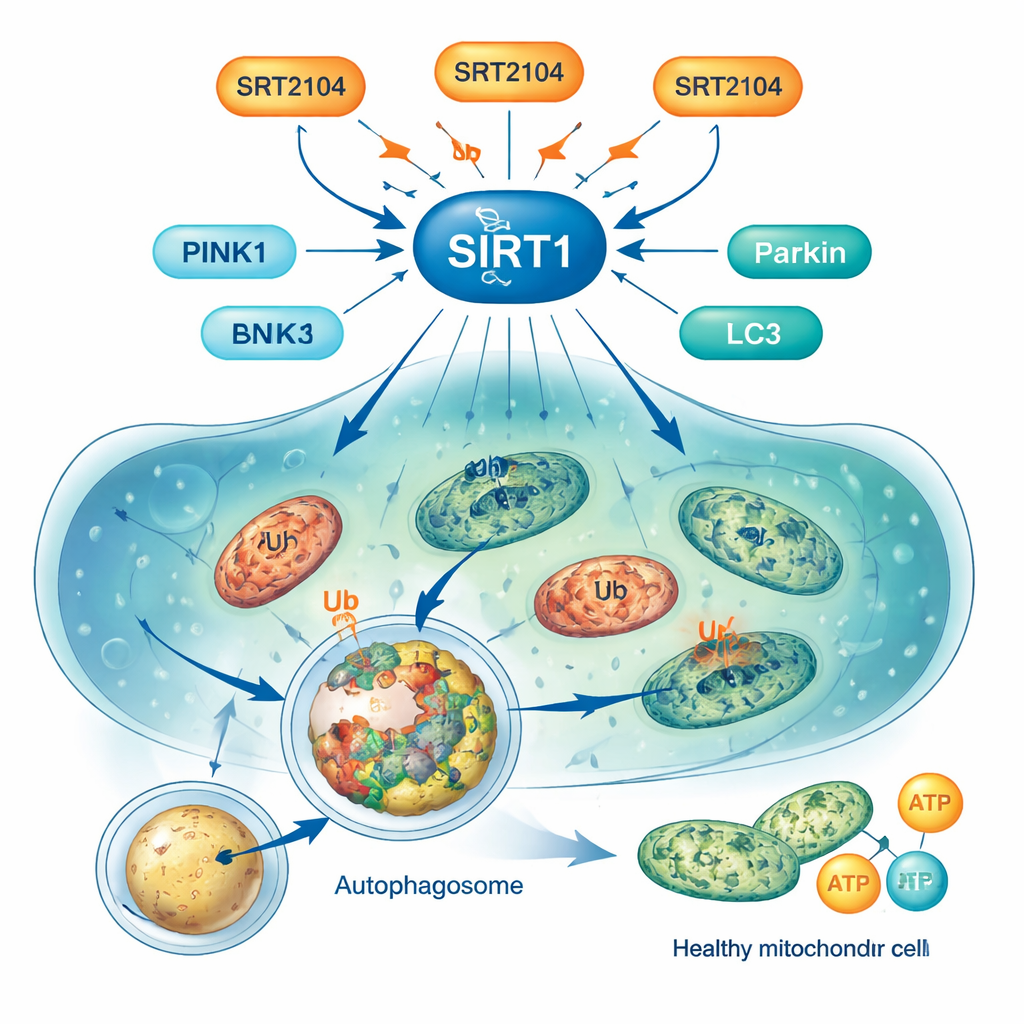
To be sure that SRT2104 was working specifically through SIRT1, the researchers used small interfering RNA to reduce SIRT1 production in auditory cells. When SIRT1 was knocked down, SRT2104 could no longer boost the pairing of PINK1 and Parkin on damaged mitochondria or increase the overlap between mitophagy and lysosome markers—signals of active mitochondrial cleanup. The drug also lost much of its ability to lower senescence markers and raise mitophagy-related proteins. These experiments showed that SIRT1 is essential for SRT2104’s protective effects: without SIRT1, the mitochondrial quality-control system could not be restored.
What this could mean for preserving hearing
Overall, the study shows that activating SIRT1 with SRT2104 can enhance the internal recycling of damaged mitochondria, maintain energy production, and reduce signs of cellular aging in auditory cells and cochlear tissues. In simple terms, SRT2104 helps the ear’s cells clean house and keep their power plants in good shape, which may delay the wear and tear that leads to hearing loss with age. While these results are limited to cell cultures and inner-ear tissues from young animals, they point to SRT2104 and similar SIRT1 activators as promising candidates for future therapies aimed at slowing or preventing age-related hearing decline in humans. Further studies in aged animal models and, eventually, clinical trials will be needed to determine whether these benefits translate into real-world protection of hearing.
Citation: Cho, S.I., Jo, ER. & Jang, H.S. SIRT1 activation by SRT2104 enhances mitophagy and reduces senescence in auditory cells. Sci Rep 16, 6404 (2026). https://doi.org/10.1038/s41598-026-37606-8
Keywords: age-related hearing loss, SIRT1, mitophagy, mitochondria, SRT2104